• Login
Saturday, September 12, 2026
No Result
View All Result
  • es Español
  • en English
subscribe
thediplomatinspain
Publicaciones
  • Frontpage
  • News
    • Spain
    • World
    • The world in Spain
    • Diplomatic Breakfast
    • Diplomacy with a history
    • The bag
    • Social life
  • Analysis
    • Tribune
    • Trends
  • Embassies
    • Embassies Directory
    • Protocol
    • International legislation
  • Security and Defense
  • UNWTO News
  • Leisure
    • Libros
    • Culture & Art
    • Música
    • Movies
    • Niños
    • Espectáculos
    • Teatro
  • Diplomatic club
  • Vip Club
  • Frontpage
  • News
    • Spain
    • World
    • The world in Spain
    • Diplomatic Breakfast
    • Diplomacy with a history
    • The bag
    • Social life
  • Analysis
    • Tribune
    • Trends
  • Embassies
    • Embassies Directory
    • Protocol
    • International legislation
  • Security and Defense
  • UNWTO News
  • Leisure
    • Libros
    • Culture & Art
    • Música
    • Movies
    • Niños
    • Espectáculos
    • Teatro
  • Diplomatic club
  • Vip Club
No Result
View All Result
No Result
View All Result
thediplomatinspain
Home News

Russia and Israel reject Sánchez’s accusations of alleged involvement in the Ceuta migration crisis

Brussels asserts that the amplification of Russian content about the Ceuta incidents occurred after the mass entry

Redacción The Diplomat
1 de September de 2026
in News
0
Russia and Israel reject Sánchez’s accusations of alleged involvement in the Ceuta migration crisis

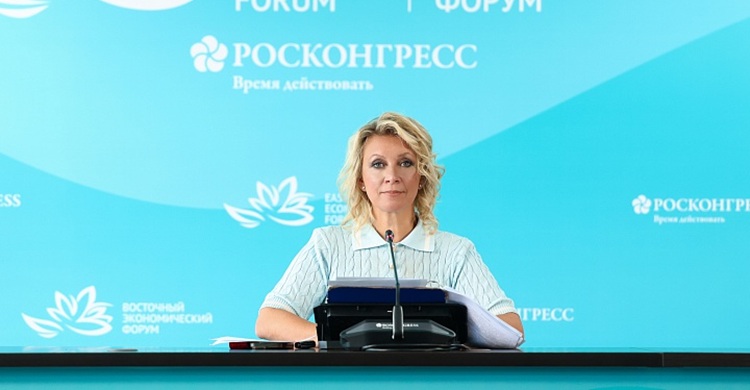
Maria Zakharova. / MOFA Russia

Share on FacebookShare on Twitter
The Diplomat

The governments of Russia and Israel have categorically rejected the accusations made by Spanish Prime Minister Pedro Sánchez regarding their possible involvement in the migration crisis that erupted in Ceuta on July 30 and 31.

In statements to the Cadena SER radio program “Hoy por Hoy” on Monday, Sánchez asserted that the crisis began as a result of “fake news” spread on social media following the Supreme Court ruling that prohibits summary deportations of migrants who swim across the border. These “fake news” accounts, he added, were disseminated by social media networks “associated with both Russia and Israel, and with an international far-right movement that always uses migration, not only to attack Spain, but also Europe.”

Sánchez also asserted that he had consulted a report by the European External Action Service (EEAS) on disinformation campaigns related to Russia and Israel. “If Russia engages in disinformation on this issue, or if Israel also engages in disinformation by criticizing the Spanish government, it won’t be because they are concerned about migration in Spain or Europe,” he stated, but rather because of the Spanish government’s “courageous political stances” regarding Gaza and the Russian invasion of Ukraine.

In response to these remarks, Russian Foreign Ministry spokeswoman Maria Zakharova demanded on Tuesday that Moscow be provided with “some material to support Spain’s concerns—transcripts, photographs, video footage, or a screenshot,” because “when there are accusations, there must be verifiable facts.”

“Instead of going to our Embassy in Madrid, to the specialized channels for bilateral relations, they rush to a microphone to make statements without any backing, without providing any evidence,” she added, as quoted by the Interfax news agency.

“Instead of going to our Embassy in Madrid, to the specialized channels for bilateral relations, they rush to a microphone to make statements without any support, without providing any evidence,” she added.

Russian presidential spokesman Dmitry Peskov also asserted that Russian authorities “have no connection whatsoever” with the mass arrival of migrants in Ceuta. “Statements about Russia’s alleged involvement in the migration crisis in the Spanish autonomous city of Ceuta do not correspond to reality,” the Russian Embassy in Madrid posted on its Telegram channel.

Meanwhile, Israeli Foreign Minister Gideon Sa’ar accused Sánchez of “blatantly” lying. “He has lied again by surprisingly accusing Israel of spreading misleading information about the events in Ceuta,” he posted on social media. “Continuing to spread defamatory lies will not distract from Sánchez’s shameful failure to manage his country’s affairs,” he added.

For her part, government spokesperson Elma Saiz asserted on Tuesday that the Executive is working “with evidence” and maintained that actors linked to the international far right and various digital forums, including profiles associated with Russia and Israel, amplified the events “with the intention of fracturing and polarizing Europe and, consequently, even Spanish society.”

In the press conference following the Council of Ministers meeting, Saiz added that she was referring to internal reports from the Ministry of Foreign Affairs and affirmed that the European Commission “already identified Russia on August 6 as a source, or rather, a source of disinformation regarding the events in Ceuta in recent days.”

The EU

The European Commission, in fact, avoided commenting on the substance of the matter on Tuesday and referred to the work of the European External Action Service (EEAS) on foreign information manipulation and interference (FIMI).

EU spokesperson Paula Pinho explained that the issue falls under the purview of the EEAS and stated that the Commission has no information of its own on this matter. “We have no independent information on this matter,” he stated, before referring the questions to the informal Foreign Affairs Council and the hearings scheduled for these days to obtain more information.

However, EU sources previously indicated that the amplification of content linked to Russia regarding the Ceuta incidents occurred in the days following July 30, the date of the mass entry, and that they did not detect any such activity prior to those events.

EU sources explained that, from the perspective of the FIMI (International Federation of Migration and Foreign Affairs), various channels linked to Russia rapidly amplified the situation once the events had taken place. These channels included state-controlled media, diplomatic channels, and sources aligned with Moscow.

“What we have seen is that, through different FIMI channels, particularly Russian ones, they rapidly amplified the situation we had observed on the ground after the events,” these sources indicated.

The same sources specified that “before July 30 we did not detect any amplification,” placing this activity in the days following the mass entry and not as an element prior to the events.

 

ADVERTISEMENT
Previous Post

Spain and ten other countries urge Kaja Kallas to make greater use of qualified majority voting in EU foreign policy

Next Post

Spain condemns Russian attack with explosive drones on Leipzig airport

Redacción The Diplomat

Redacción The Diplomat

Next Post
Albares rejects the Russian “mock election” in the “occupied Ukrainian territories”

Spain condemns Russian attack with explosive drones on Leipzig airport

Recommended

Emilio Cassinello, former Spanish consul in New York, relives the tragedy of 9/11

Emilio Cassinello, former Spanish consul in New York, relives the tragedy of 9/11

1 day ago

Newsletter

"Stay informed through our pages and always stay one step ahead. With in-depth analysis, exclusive reports and comprehensive coverage of the events that are shaping our present, our newspaper is more than just news, it is a window to the future."

Newspaper archive

September 2026
M T W T F S S
 123456
78910111213
14151617181920
21222324252627
282930  
« Aug    

About Us

The Diplomat in Spain is the reference digital newspaper for diplomats and companies that want to be well informed.

© 2024 The Diplomat in Spain.

Welcome Back!

Login to your account below

Forgotten Password?

Retrieve your password

Please enter your username or email address to reset your password.

Log In
Gestionar consentimiento
Para ofrecer las mejores experiencias, utilizamos tecnologías como las cookies para almacenar y/o acceder a la información del dispositivo. El consentimiento de estas tecnologías nos permitirá procesar datos como el comportamiento de navegación o las identificaciones únicas en este sitio. No consentir o retirar el consentimiento, puede afectar negativamente a ciertas características y funciones.
Funcional Always active
El almacenamiento o acceso técnico es estrictamente necesario para el propósito legítimo de permitir el uso de un servicio específico explícitamente solicitado por el abonado o usuario, o con el único propósito de llevar a cabo la transmisión de una comunicación a través de una red de comunicaciones electrónicas.
Preferencias
El almacenamiento o acceso técnico es necesario para la finalidad legítima de almacenar preferencias no solicitadas por el abonado o usuario.
Estadísticas
El almacenamiento o acceso técnico que es utilizado exclusivamente con fines estadísticos. El almacenamiento o acceso técnico que se utiliza exclusivamente con fines estadísticos anónimos. Sin un requerimiento, el cumplimiento voluntario por parte de tu proveedor de servicios de Internet, o los registros adicionales de un tercero, la información almacenada o recuperada sólo para este propósito no se puede utilizar para identificarte.
Marketing
El almacenamiento o acceso técnico es necesario para crear perfiles de usuario para enviar publicidad, o para rastrear al usuario en una web o en varias web con fines de marketing similares.
  • Manage options
  • Manage services
  • Manage {vendor_count} vendors
  • Read more about these purposes
Ver preferencias
  • {title}
  • {title}
  • {title}
Gestionar consentimiento
Para ofrecer las mejores experiencias, utilizamos tecnologías como las cookies para almacenar y/o acceder a la información del dispositivo. El consentimiento de estas tecnologías nos permitirá procesar datos como el comportamiento de navegación o las identificaciones únicas en este sitio. No consentir o retirar el consentimiento, puede afectar negativamente a ciertas características y funciones.
Funcional Always active
El almacenamiento o acceso técnico es estrictamente necesario para el propósito legítimo de permitir el uso de un servicio específico explícitamente solicitado por el abonado o usuario, o con el único propósito de llevar a cabo la transmisión de una comunicación a través de una red de comunicaciones electrónicas.
Preferencias
El almacenamiento o acceso técnico es necesario para la finalidad legítima de almacenar preferencias no solicitadas por el abonado o usuario.
Estadísticas
El almacenamiento o acceso técnico que es utilizado exclusivamente con fines estadísticos. El almacenamiento o acceso técnico que se utiliza exclusivamente con fines estadísticos anónimos. Sin un requerimiento, el cumplimiento voluntario por parte de tu proveedor de servicios de Internet, o los registros adicionales de un tercero, la información almacenada o recuperada sólo para este propósito no se puede utilizar para identificarte.
Marketing
El almacenamiento o acceso técnico es necesario para crear perfiles de usuario para enviar publicidad, o para rastrear al usuario en una web o en varias web con fines de marketing similares.
  • Manage options
  • Manage services
  • Manage {vendor_count} vendors
  • Read more about these purposes
Ver preferencias
  • {title}
  • {title}
  • {title}
  • Login
No Result
View All Result
  • Frontpage
  • News
    • Spain
    • World
    • The world in Spain
    • Diplomatic Breakfast
    • Diplomacy with a history
    • The bag
    • Social life
  • Analysis
    • Tribune
    • Trends
  • Embassies
    • Embassies Directory
    • Protocol
    • International legislation
  • Security and Defense
  • UNWTO News
  • Leisure
    • Libros
    • Culture & Art
    • Música
    • Movies
    • Niños
    • Espectáculos
    • Teatro
  • Diplomatic club
  • Vip Club

© 2024 The Diplomat in Spain.

Go to mobile version
  • English
  • Español