
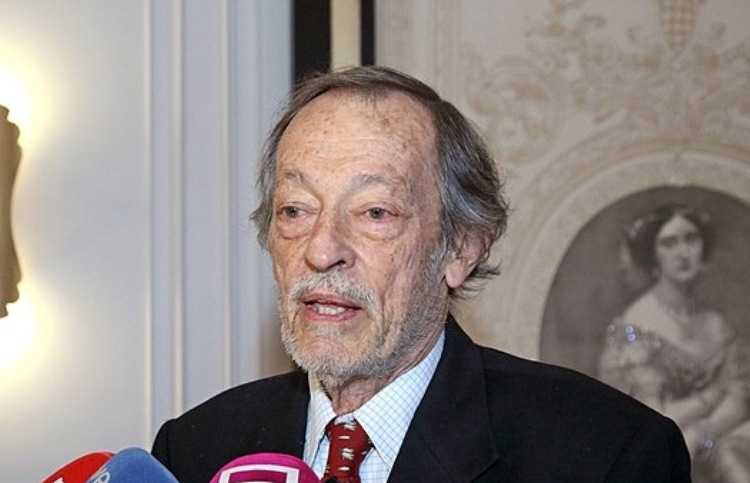
Eduardo González
Emilio Cassinello, one of Spain’s most prestigious diplomats and experts in international politics, experienced firsthand the madness of the September 11, 2001 attacks in New York, where, as Spain’s consul general, he was forced to assist around 3,000 Spanish tourists who were literally trapped in the Big Apple.
Like so many New Yorkers, the worst terrorist attack in history (whose 25th anniversary is this Friday) caught him by surprise while he was going about his normal daily life. “I had just left the consul’s residence, located at the corner of Fifth Avenue and 63rd Street, when my driver told me, ‘A small plane has crashed into the Twin Towers,’” Cassinello explained in an interview with The Diplomat exactly five years ago, on the twentieth anniversary of the tragedy.
“My first thought was, ‘How clumsy! How could a small plane crash into the Twin Towers, as if they weren’t visible?’ I thought of it as nothing more than an accident. A serious one, with some fatalities, but on that scale,” he admitted. “When I got out of the car, I saw on a monitor the second plane crashing, and that was something else entirely,” he recalled.
“I rushed to the Foreign Ministry and the first thing I asked was what time the North Tower observation deck opened, where there might be Spanish tourists, and they told me nine in the morning. From that moment on, the news became more alarming and more tragic,” he continued.
September 11, 2001, coincided with a conference of ambassadors being held in Madrid, so “neither the Permanent Representative to the UN, Inocencio Arias, nor the Spanish Ambassador to the United States, Javier Rupérez, were present, and I was the highest-ranking representative of the State,” explained Cassinello, who served as Consul General in New York between 1998 and 2003.
According to the former consul, immediately after the attacks, a large number of Spaniards began arriving at the consulate. “We estimated there were about 3,000 Spaniards in transit who were stranded in Manhattan, in New York, without flights, boats, or any other means of transportation,” he recalled. “People were gathering at the office hoping to get to the airport, but the airspace was completely closed.”
“We wanted to contact Madrid, but we couldn’t because all communications were down,” until, at the suggestion of a Spanish citizen, they decided to use the collect call service España Directo. “That was how we got in touch with the OID and the minister’s office.” In addition, the consulate was flooded with calls from “relatives who didn’t know where their family members were, who didn’t even know if they were in New York.”
“The consulate was open for seven days and seven nights. We all stood guard—the permanent mission, the tourism, commercial, and consular offices—guiding the people who arrived and distributing consular aid that Madrid had provided us: $20,000, repayable $200 per Spaniard,” explained Emilio Cassinello.
From a human perspective, Cassinello is left with the memories of the tragedy. “One of the things that impressed me most was the electrifying silence in New York. It smelled of fire. I remember the words of a man who said, ‘We have communed with the ashes of the dead.’”