
The Diplomat
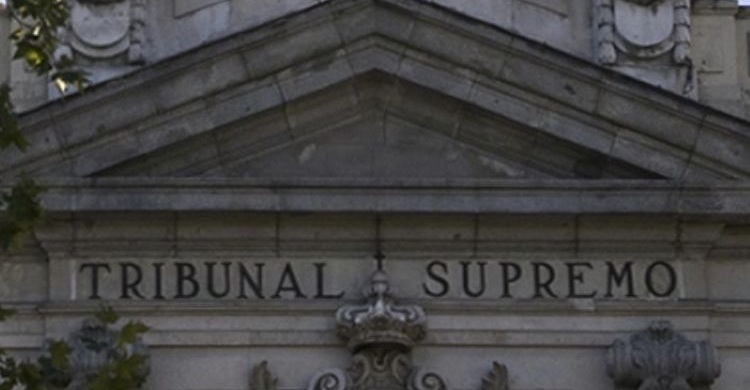
The Supreme Court has provisionally suspended the voting rights of individuals who registered in the Electoral Census of Absent Residents (CERA) after obtaining Spanish nationality under the Democratic Memory Law (“Grandchildren Law”), in order to preserve “the transparency of the electoral process and public confidence in its results” and taking into account the “extraordinary increase in the number of voters.”
Last Tuesday, the Fourth Section of the Administrative Chamber of the Supreme Court granted the provisional measure requested in the appeals filed by Iustitia Europa and Vox against the agreement of the Central Electoral Board, dated July 16, regarding the registration in the Electoral Census of Absent Residents abroad of individuals who have been granted Spanish nationality.
In both rulings, the Supreme Court warns that the “extraordinary increase in the number of registered voters in the CERA (Register of Absent Voters Residing Abroad)” could “affect the transparency of the electoral process and public confidence in its results.” Specifically, the census has increased by 408,262 voters in the last three years, from 2,328,260 in the 2023 general elections to 2,736,522 on July 1st of this year.
This increase, it continues, “generates a well-founded, real, and serious risk of severely affecting the objectivity and transparency of the electoral process, thus causing irreversible damage.” For this reason, the Administrative Chamber has granted the request for precautionary measures in order to avoid “a well-founded circumstance of uncertainty regarding the election results.” The suspension will be temporary and subject to the Supreme Court’s final ruling.
At the end of June, the president of the People’s Party (PP), Alberto Núñez Feijóo, denounced the “Grandchildren Law” as an “electoral ploy” implemented by Prime Minister Pedro Sánchez to grant voting rights to 2.5 million people in a very short period. He also asserted that there is “a great deal of arbitrariness” in the registration process for new Spanish citizens on the electoral roll, which could lead to the assignment of provinces to these new citizens based on the electoral needs of the Socialist Party (PSOE).
Meanwhile, the secretary general of Vox in Congress, José María Figaredo, declared that this law constitutes a “slow-motion coup d’état” and demanded that Spaniards residing abroad be denied the right to vote by mail.
Following the PP’s complaints, Foreign Minister José Manuel Albares stated that “what the Popular Party wants is for three and a half million Spaniards to be unable to vote,” and denounced the “enormous hypocrisy” of Feijóo and the PP because “what they included in their 2023 electoral program was precisely this law.”