Eduardo González
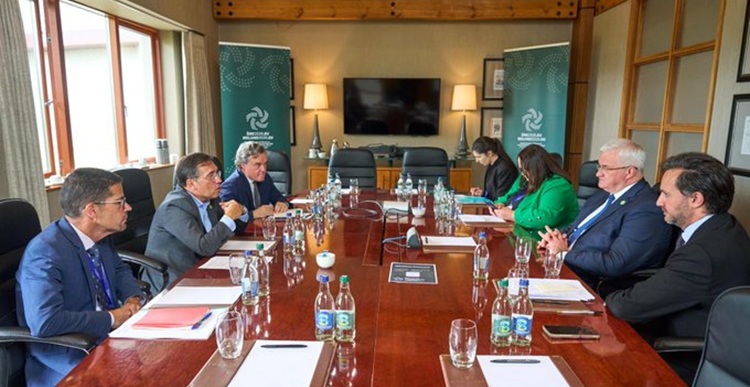
Foreign Minister José Manuel Albares held a bilateral meeting on Wednesday with his Ukrainian counterpart, Andrii Sybiha, with whom he discussed, among other issues, “Russia’s efforts to destabilize European democracies through disinformation and acts of sabotage.”
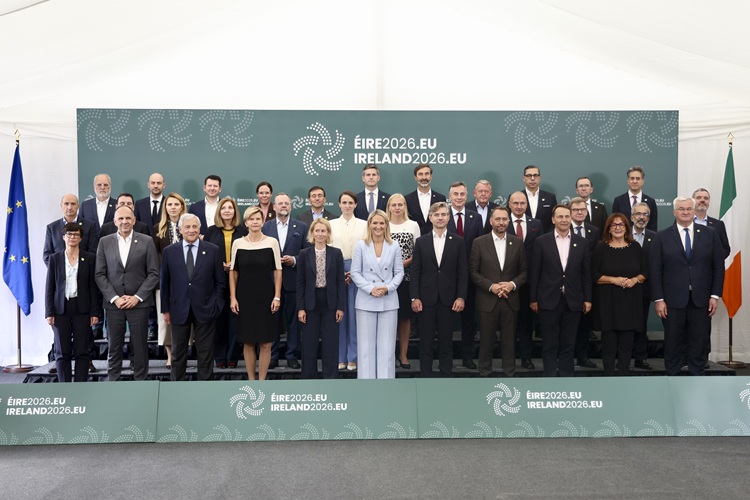
“Meeting today in Ireland with my counterpart and friend Andrii Sybiha to reiterate Spain’s support for Ukraine,” Albares posted on social media after the meeting, which took place on the sidelines of the informal meeting of European Union foreign ministers (Gymnich format), held in Newtownmountkennedy, Ireland, during the Irish Presidency of the Council of the EU. “We continue to support navigational safety, the protection of civilians and critical infrastructure, and the building of a just and lasting peace for the Ukrainian people,” he added.
For his part, Sybiha wrote on social media that the two ministers had discussed “ways to deter Russia’s efforts to destabilize European democracies through disinformation and acts of sabotage.”
This meeting took place two days after statements by the Spanish Prime Minister, Pedro Sánchez, in which he asserted that Russia’s migration crisis began as a result of “fake news” spread through social media “associated with both Russia and Israel, and with an international far-right movement that always uses migration, not only to attack Spain, but also Europe.”
In response to these remarks, the spokeswoman for the Russian Foreign Ministry, Maria Zakharova, demanded that Madrid provide Moscow with “some material to support Spain’s concerns—transcripts, photographs, video footage, or a screenshot,” because “when there are accusations, there must be verifiable facts.” “Instead of going to our Embassy in Madrid, to the specialized channels for bilateral relations, he rushes to a microphone to make statements without any backing, without providing any evidence,” she added, as quoted by the Interfax news agency.
For his part, the spokesman for the Russian Presidency, Dmitry Peskov, also asserted that Russian authorities “have no connection whatsoever” with the mass arrival of migrants in Ceuta. “The statements about the alleged involvement of Russia in the migration crisis in the Spanish autonomous city of Ceuta do not correspond to reality,” the Russian Embassy in Madrid posted on its Telegram channel.
Furthermore, Andrii Sybiha briefed Albares on “the escalation of terror in Russia” and on the “urgent need to strengthen air defenses and ballistic missile defenses,” and affirmed that “Spain’s political weight in the EU and its role in the international maritime sector are important to strengthen pressure on Russia, protect civilian shipping, and guarantee the resilience of Ukrainian exports and global food security.” The two ministers also discussed “Ukraine’s accession to the EU, the opening of the remaining trading clusters and additional Spanish energy aid for the coming winter.”