
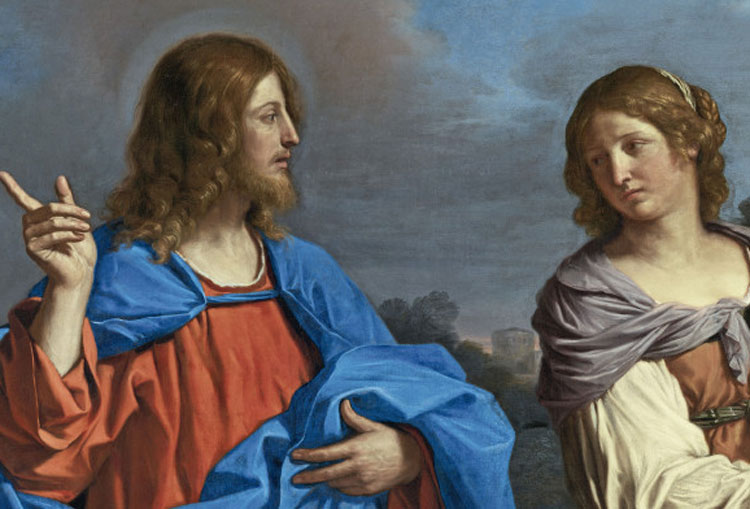
Until June 14, the Museo Nacional Thyssen Bornemisza hosts a small exhibition with a select group of works by Giovanni Francesco Barbieri (Cento, 1591-Bologna, 1666), better known as Il Guercino, key figure in the development of baroque painting in northern Italy.
Around the masterpiece that the Museo Thyssen possesses of this artist, entitled Jesus and the Samaritan woman in the well -in the photo- (about 1640-1641), a series of key paintings is gathered to study and show the public how the painter approaches the image of women in biblical themes, which also relies on loans from other institutions.
The exhibition allows us to deepen the importance of the representation of the female figure in the artist’s religious thematic production through works in which she recreates certain biblical passages in which she plays the main role, such as Susana and the old (Madrid, Museo Nacional del Prado), La mujer adúltera (London, Dulwich Gallery) and Sansón y Dalila (Strasbourg, Musée des Beaux Arts).
This selection of six canvases shows his narrative ability and his mastery of sign language in compositions where the woman embodies different biblical figures under the painter’s personal gaze. Anonymous women of the New Testament such as the woman of Samaria and the adulteress personify in these paintings the model of a repentant sinful woman. They share the scenes of Susanna and the old, and Abraham repudiates Hagar and Ishmael, in which the painter has wanted to convey the innocence of two victims of unjust situations described in the Old Testament. The last chapter is dedicated to the femmes fatales, considered by traditional Christian iconography, and which Guercino now rescues in order to give them a new role. Delilah wields the scissors to cut Samson’s hair herself and her image is that of a classic heroine, while Salome with her head tilted does not embody here the young seductress, but rather a victim subjected to her mother’s wishes according to the biblical account.