
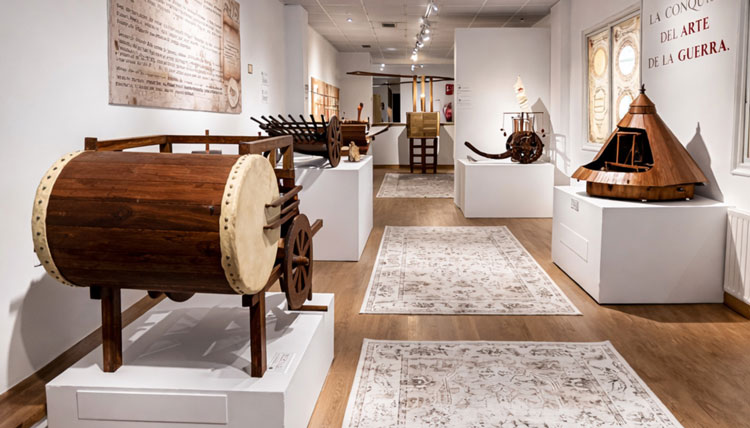
On Calle San Bernardo, 39 in Madrid is the Museo Leonardo da Vinci (there are only six in the world), where you can explore the universe of one of the greatest geniuses in history and immerse yourself in his creations, inventions, pictorial work and travels.
At the Leonardo Da Vinci Museum in Madrid you will find a wide range of his most representative inventions, each of them meticulously made by hand, using original materials, faithfully following the guidelines he left written in his codices.
The exhibition is distributed in six themed rooms along more than 300 square meters, including an exclusive room dedicated to his pictorial work. The exhibition has information panels in several languages and is especially aimed at both family and educational audiences as well as national and international visitors interested in culture, science and history.
The project was born with an artistic, cultural and educational vocation and aims to consolidate itself as a new point of stable cultural interest in the city, reinforcing the positioning of Madrid as a cultural capital and destination for cultural and family tourism. The museum offers a cultural, informative, accessible and contemporary experience that connects the legacy of the Renaissance with the challenges of the present.
Functional machines, anatomical studies and pictorial reproductions allow us to understand not only their creations, but also their way of thinking: a mind that combined observation, experimentation and imagination. Each room proposes a dialogue between past and future, showing how Leonardo’s ideas continue to inspire innovation and contemporary thinking.
Conceived as a living and dynamic place, the museum is prepared to host institutional activities, professional meetings and cultural and informative events. His approach goes beyond permanent exhibition to become an active cultural agent. The museum provides institutions with a suitable space for private institutional visits, cultural receptions, meetings with public officials, ceremonial events or presentations related to culture, education or innovation. These activities can be adapted to different formats and levels of representation, respecting the museum and cultural character of the space.