
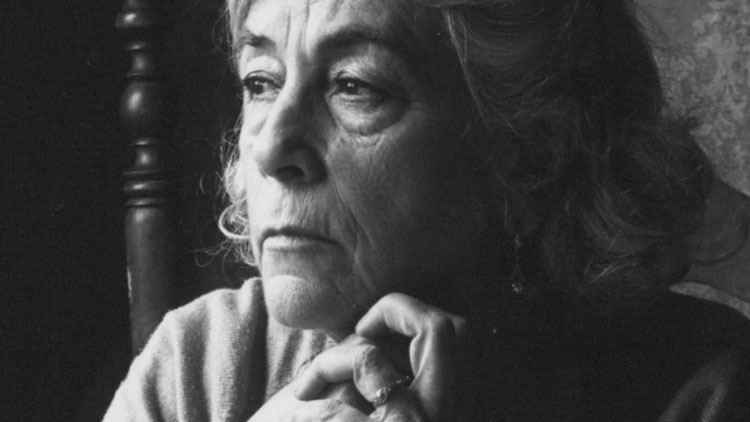
Until next 14 June the Recoletos Room of the Biblioteca Nacional of Madrid (Paseo de Recoletos, 20-22) presents the exhibition Carmen Martín Gaite. A woman of letters paradigm.
This exhibition, on the occasion of the centenary of the birth of Carmen Martín Gaite (Salamanca, 1925 – Madrid, 2000), shows the milestones of her life and intellectual career and her cultural legacy through the selection of photographs, portraits, manuscripts and mechanographs of his main titles and notebooks, letters, collages, books from his personal library, audiovisual materials, personal objects, and the author’s international exposure through translations of her work into Community and extra-Community languages.
The different areas of the exhibition will cover his family background, his childhood and youth in Salamanca (Civil War, Instituto Femenino de Segunda Enseñanza, first writings and readings, Universidad de Salamanca), his arrival in Madrid in 1948 and the adventure of Revista Española (nucleus of the group of young Madrilenian prosts of the 1950s), his marriage to Rafael Sánchez Ferlosio, the 1957 Nadal Prize for Entre visillos, the call of the essay after the publication of Ritmo lento, the choice of his place in the world at the end of the 1970s: to inhabit loneliness with all its fruitful consequences, the significance of the United States in his life and work, the narration of the mourning after the death of his daughter Marta, and the public recognitions in the last decade of her life or what she called «the age to deserve».
This path will highlight the heterogeneity of their literary interests and how they were deployed in different directions: from the genres known (poetry, short story, short novel, novel, essay and theater) to that hybrid that his daughter named as notebook of everything, from historical research to literary criticism, from opinion articles to collages, from theatrical adaptations of classics and television scripts to the literary translation into six languages (English, French, Italian, Portuguese, Galician and Romanian). With a gaze dominated by curiosity and a vocation of witness to the future of the Spain in which he lived, his intellectual career is a paradigm of what could be called «woman of letters». It is difficult to find another example of a writer with a greater variety of interests in the Spanish culture of the last century.