
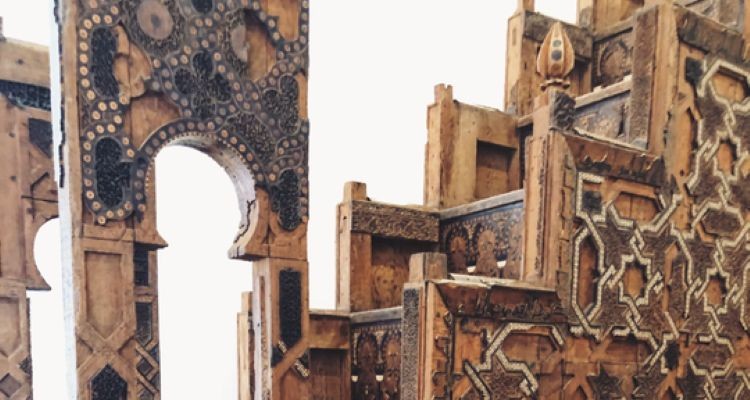
On Thursday, June 25, Professor Miguel Ángel Manzano Rodríguez, from the University of Salamanca, will give a new lecture in the “Amazigh Spaces” series. He will discuss the emergence, between the 8th and 10th centuries, of three Emirati dynasties within the tribal environment that attempted to unify the Maghreb and al-Andalus. The lecture will take place at 7:00 p.m. in the Auditorium of Casa Árabe in Córdoba (9 Samuel de los Santos Gener Street). Admission is free until the auditorium reaches capacity. The lecture will be given in Spanish.

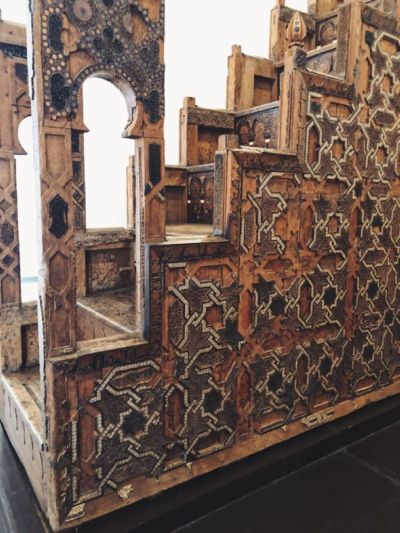
Following a complex period encompassing expansion across North Africa and the conquest of the Iberian Peninsula, North Africa experienced another equally challenging era characterized by political instability and religious conflicts. These were the 8th to 10th centuries, marked by the heterodoxy of emirates such as the Barhawati of Tamasna, the Hariid emirates of Thart, Tlemcen, and Sijilmasa, and the Fatimid Caliphate of al-Qayrawan, whose hegemony over North Africa was contested by the Umayyads of Córdoba. It seemed unlikely that new dynasties would emerge from a desert-bound tribal environment in the immediately following period and change the course of Islamic history. But it happened: the Almoravids, Almohads, and Marinids attempted to unify the Maghreb and al-Andalus under a single political authority and left a doctrinal imprint, whether through a new religious project, the revival of traditional values, or the imposition of a clearly defined official ideology. The conference will address the commonalities and differences among the three dynasties and their Berber-Maghrebi identity, as well as other topics of interest.
This scientific outreach activity is the result of the coordinated research project MAGNA II, “Transitions and Transformations in Maghrebi Space and Population” (TRAMAGHIS. PID2021-122872NB-C21 and DIANA. PID2021-122872NB-C22), and is funded by MICIN/AEI/10.13039/501100011033 and FEDER. A way of building Europe.
Miguel Ángel Manzano Rodríguez
With a degree and doctorate from the Complutense University of Madrid, Miguel Ángel Manzano Rodríguez is a Professor in the Department of Arabic and Islamic Studies at the University of Salamanca and the principal investigator of the GIR ESARIS (Arabic and Islamic Studies) research group, affiliated with the IEMYRhd (Institute of Arabic and Islamic Studies) at the same university.
He has participated in approximately twenty research projects, most recently coordinating the MAGNA (2018-2021) and MAGNA II (2022-2026) projects, and serving as Principal Investigator for GEOMAGRED and TRAMAGHIS. He has served on several editorial boards, coordinated doctoral programs, and been a member of committees for scientific and academic quality and faculty accreditation.
His main research focus has been on the history and historiography of the Maghreb during the Late Middle Ages (specifically the history of the Marinid Sultanate of Fez). He has recently focused on the cultural geography of the Maghreb, particularly through sources from the Islamic East. He has also contributed to Arabic language teaching (Alatul, Herder, 2010) and the Digital Humanities (creation of the first Spanish-language website on the Arabic language—Arabismo.com—with Jesús Zanón and Xavier Cassasas; a transcription module using the Keyman program (SIL Global); and a website on Islamic chronology currently under development). Since 2015, he has been a collaborating member of the al-Andalus Maghreb Chair at the Adolfo Ibáñez University in Santiago, Chile.
Among his latest publications are “On the Marinid Army: Clarifications and Data,” in Javier Albarrán (ed.), Al-Andalus and the War (2024, Madrid: La Ergástula, pp. 97–123). “Ibn Sūda Family”, The Encyclopaedia of Islam, (2022, THREE, Brill online); “The Maghreb in the Muʿǧam al-buldān of Yāqūt al-Rūmī (d. 626/1229): Analysis of content and sources”, (2022, al-Qanṭara, 42/2, e17: 1-11); and with Helena de Felipe Rodríguez (eds.), MAGNA. A cultural and human geography of the Maghreb (2021, Granada: Editorial Comares).