
The Diplomat
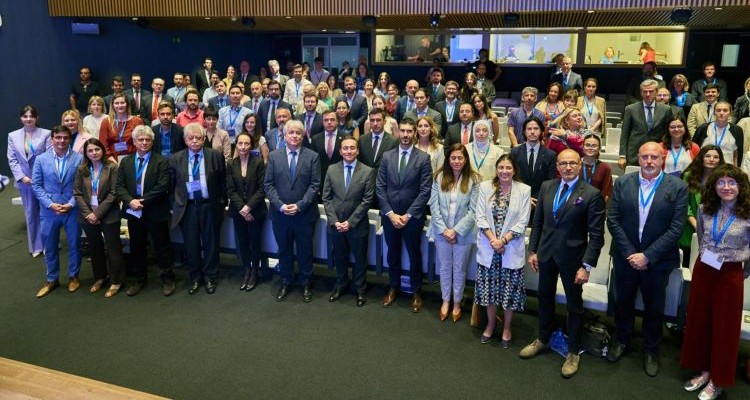
The headquarters of the Ministry of Foreign Affairs in Madrid is hosting the plenary session of the Venice Club, which has been taking place since Thursday. The meeting brings together more than 70 heads of information and communication services from numerous European countries and various EU organizations and institutions.
This is the first time Spain has hosted the plenary session of the Venice Club, of which it has been a member since its founding. The meeting was co-organized by the Club’s Organizational Secretariat and the Directorate General for Communication, Public Diplomacy, and Networks, as reported by the Ministry in a press release.
During his address to the plenary, the Minister of Foreign Affairs, José Manuel Albares, warned against disinformation in our societies, stating that “there is no democracy without information and no robust democracy without trust in reliable, high-quality, verifiable information.” He also emphasized the importance of applying democratic governance to the digital and artificial intelligence environment because, he stressed, public communication is at the foundation of our multilateral system.
The plenary session in Madrid takes place over two days to address issues such as governmental and institutional information strategies, public communication trends, and the role of civil administration in government communication. Various panels and roundtables discuss topics of relevance in the current geopolitical climate, such as the fight against disinformation and foreign interference (FIMI), the technological challenge, with particular attention to the impact of AI on public communication and the credibility of information, and crisis management, which is increasingly common in the current global context.
Participants in the various roundtables and panels include Stefano Rolando, President of the Club of Venice; Vincenzo Le Voci, Secretary General; Antonio Asencio, Director General of Communication, Public Diplomacy and Networks at the Ministry of Foreign Affairs; and Mónica Colomer, Director General of Spanish in the World at the Ministry of Foreign Affairs. Antón Leis, Director of the Spanish Agency for International Development Cooperation; representatives from the DSN, the SEGIB, the General Secretariat of the Council of the European Union, and the NATO Centre of Excellence for Strategic Communication.
Also participating are communication officers from the governments and foreign ministries of EU countries, the United Kingdom, and candidate countries; representatives from the European Commission and the European Parliament; experts from think tanks; journalists such as Marc Marginedas from “El Periódico”; academics; professionals from fact-checking agencies like Maldita and Newtral; and members of civil society.
Representatives from the State Secretariat for Communication of the Prime Minister’s Office, the Ministry for Ecological Transition and the Demographic Challenge, the AESIA (Spanish Agency for the Supervision of Artificial Intelligence), attached to the Ministry for Digital Transformation and Public Administration, and the Ministry of Foreign Affairs, European Union and Cooperation are also participating.
The Venice Club
The Venice Club, founded in 1986, aims to foster the exchange of information and experiences in all areas of public information and communication.
The discussions in recent sessions have increasingly focused on crisis communication at both the national and EU levels (the COVID-19 pandemic, hybrid threats and the fight against terrorism, combating disinformation and misinformation, and the refugee and migration crisis), as well as other communication priorities such as economic recovery measures and public diplomacy.