
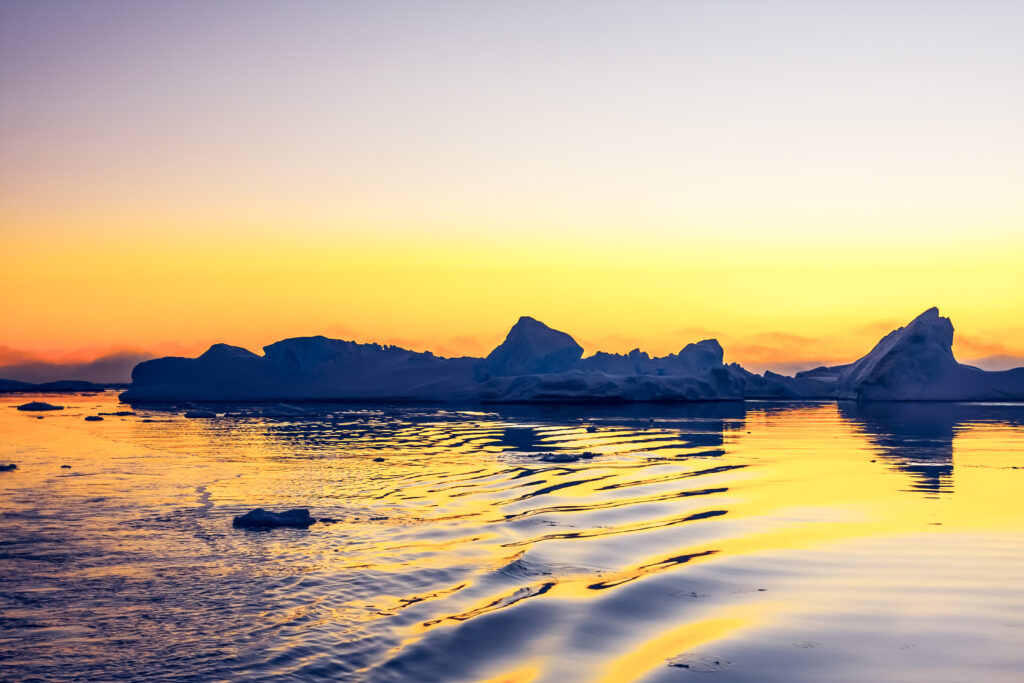
Winter is a good time to talk about heat. Heat is a magnitude that all bodies possess, in greater or lesser quantity. Heat—or its absence—can be felt, but the quantity of cold cannot be known; it is not a magnitude. Global warming, according to those who understand the matter, means that the entire land–water–air system at the Earth’s surface is accumulating more thermal energy than it once did. Where has our heat gone? How useful it would be now. Something of the sort must have crossed Mr. Trump’s mind when he visited the east coast of the United States during a harsh winter—if memory serves, around January 30, 2019. His conscientious wisdom, steadily growing in these matters of “NO climate change,” as we have seen during his second term, led him to exclaim: “Please, heat, come back soon—we need you!” He was referring to global warming, of course. I am not inventing this. The New York Times reported it. The wisdom of the president, who does not distinguish between weather and climate, has only deepened during his second term, of which we have now endured a full year.
In general, we are not much inclined to make projections based on objective data. TikTok quips and the entanglements of social media tend to carry more weight. But climate is a serious matter; it is far wiser to rely on demonstrable evidence. This is why governments and supranational entities seek to assist us. Such is the case of the European Union’s Copernicus programme (Europe’s Eyes on Earth), which aims to spare us the transitory—or perhaps definitive—blindness of voluntary ignorance. In its latest report, Global Climate Highlights 2025, it tells us plainly that we must change our lifestyles. We cannot wait until events overwhelm us. Ecosocial coherence should be the bond uniting all Member States and their citizens.
To avoid exhausting readers who are interested less in the report itself than in the consequences it outlines, let us highlight several defining points. Those wishing to explore further have access to the link. A visit to the website will surely prove enlightening. Let us therefore summarise a few fundamental ideas and conclusions:
-
Global surface air temperature continues to exhibit persistent anomalies.
-
The year 2025 was slightly less warm than 2023. By contrast, 2024 remains the warmest year on record and the first with a global average temperature clearly exceeding the pre-industrial level by 1.5 °C.
-
Monthly temperature records have been broken repeatedly over the past three years.
-
Globally, January 2025 was the warmest January ever recorded. March, April, and May 2025 were the second warmest months for their respective periods.
-
In 2025, annual surface air temperatures were above the 1991–2020 average across 91% of the planet—the same proportion as in 2024.
-
Nearly half the planet (48%) experienced annual temperatures far above average in 2025.
-
When temperature anomalies are analysed by latitudinal bands, all regions show a clear long-term warming trend.
-
Lower temperature anomalies in the tropics reflect the persistence of neutral ENSO (El Niño–Southern Oscillation) conditions, alongside weak La Niña episodes throughout 2025.
-
Temperature anomalies in polar regions were notably high, reaching a historic maximum in Antarctica and the second highest level in the Arctic.
-
Global sea surface temperatures remained historically high throughout 2025, despite the absence of El Niño conditions.
-
The average annual sea surface temperature in 2025 was 0.38 °C above the 1991–2020 average, making it the third highest on record.
-
February recorded the lowest global sea ice extent since satellite observations began in the late 1970s.
-
In 2025, half the planet experienced more days than average with severe heat stress (a perceived temperature of 32 °C or higher).
We should take note of—and reflect upon—all these data. They are not merely a sum of figures. They reveal a series of ecosocial uncertainties. Their effects will vary depending on territory and inequality. They also affect the dwindling biodiversity upon which we depend. They show how global warming and climate change strike at human health. We should be aware that both also affect ocular health. This is reported by Knowable Magazine in its article “How climate change affects eye health.” It presents the findings of the study Analysing the Evidence of the Effects of Climate Change, Air Pollutants, and Occupational Factors in the Appearance of Cataracts, led by Lucía Echevarría-Lucas and conducted in Andalusia several years ago. The research detected an increase in the standardised incidence of senile cataracts. The incidence of such cataracts is associated with the annual rise in maximum temperatures, especially among men. Moreover, “the distribution of the standardised incidence of early cataracts in men exhibits a bivariate correlation with the presence of various pollutants (CO, N₂O, PM₁, PM₂, and total pollutants).”
Faced with this panorama, no one can remain petrified—climate-blind. In Ensaio sobre a Cegueira (Blindness), José Saramago described his novel as an essay portraying, criticising, and exposing a rotten and dislocated society. It is a psychological novel narrated by an omniscient voice. An ever-deepening selfishness marks the characters in their struggle for survival; it becomes a parable of certain behaviours in contemporary society, which is not physically blind but is, in some sense, mentally so. Indeed, it seems voluntarily deaf—the blindness of thought—to what science tells us. In the author’s words: “I do not think we went blind; I think we are blind—blind people who can see, but do not see.”
The European Union must make the findings of Copernicus a central axis of its way of life. Otherwise, we do not know how far this path may lead us. That said, an ecosocial transformation remains possible. In some spheres, it has already begun. But then Mr. Trump arrived, and the world began to spin on its axis in abrupt, unreasoned jolts. If only Galileo Galilei were here today.
Carmelo Marcén Albero
Ecosocial researcher and analyst at Fundación Alternativas
He holds a teaching degree and a PhD in Geography. He has taught at the Primary and Secondary levels, as well as in teacher training. He is the author of numerous articles and research studies on environmental issues and education, published in specialised journals such as Cuadernos de Pedagogía, Investigación en la Escuela, and Aula de Innovación Educativa.
He was awarded the National “Education and Society” Prize in 1992 and 1993 for his educational proposals centred on lived experiences of rivers and landscapes. He has published several books on these subjects. He is a collaborating researcher with the Department of Geography at the University of Zaragoza and with Fundación Alternativas in Madrid. He is also a member of the Board of ECODES (Ecology and Development Foundation).