
Text and photos: Juan David Latorre
Last Thursday, the Indian Embassy held a reception to commemorate the 77th Republic Day, with the presence of the new ambassador, Jayant N. Khobragade.
Ambassador Jayant N. Khobragade emphasized the 77th anniversary of the proclamation of the Indian Republic on January 26, 1950. “Since then,” he noted, “India is the most popular country in the world, but, more importantly, it is the most inclusive democracy, and India is one of the best examples demonstrating how democracy and development can go hand in hand. India is also a young country,” he continued. “Our median age is only 29 years.”
“Today we celebrate our nation’s achievements, the viability of our democracy, our growth in science, technology, and the economy, and our advancements in culture, the arts, sports, and more. The atmosphere in India is filled with patriotism, not only in Delhi and state capitals, but also in other cities, towns, schools, colleges, and streets, every single day,” the ambassador noted.
Jayant N. Khobragade welcomed the signing of the free trade agreement between the European Union and India on January 27. “The EU called it the mother of all treaties,” he said. “We are talking about a combined market of 2 billion people, 25% of global GDP, and encompassing a third of global trade.”
Furthermore, the Indian ambassador highlighted the commemoration of the 70th anniversary of the establishment of diplomatic relations with Spain, noting the signing of an agreement on culture, tourism, and artificial intelligence on January 21st. “And during the week, we organized the Spain-India conference on artificial intelligence for the Artificial Intelligence Impact Competition, which will take place in India next month. We are expecting a very large delegation of visitors from Spain to participate in this competition.”
Referring to trade relations with Spain, the Indian ambassador noted that “they are growing very well and will increase after India’s Free Trade Agreement (FTA) becomes a force to be reckoned with. Under the India-Spain-Europe-Culture-Tourism-Arts plan, we will have many exciting events during the India-Spain Dual Year. We will be holding many interesting events. I encourage everyone to follow our social media accounts for more information about these activities.”
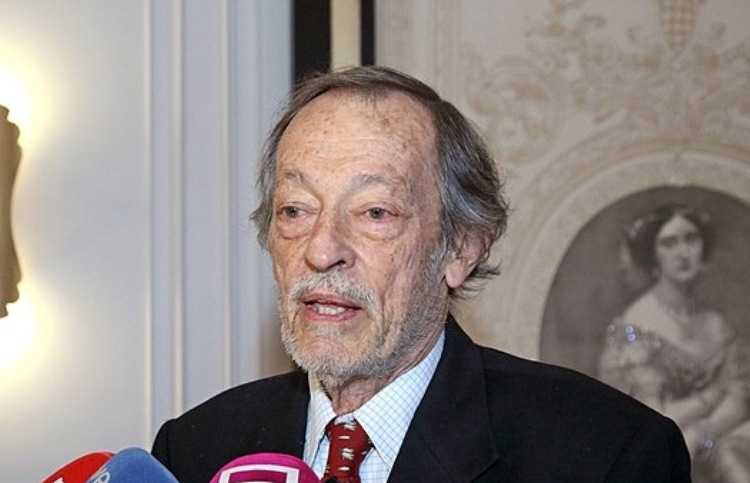
Next, Fernando Sampedro, Secretary of State for the European Union, took the floor and highlighted the Indian Constitution, with “its vision of fundamental rights, social justice, and democracy, which still define India today. 76 years later, we can rightfully say that India is and remains the world’s largest democracy.”
“Spain and India share these same democratic values and the same commitment to an international order governed by international law and based on cooperation,” the Secretary of State continued. Democracy and an international order based on principles and rules, such as sovereign equality, territorial integrity, and cooperation, are two sides of the same coin. To emphasize that democracy, harmony, understanding, and the knowledge of coexistence are precisely to highlight how much unites Spain and India as societies and as states. These are foundations that we must defend by collaborating against threats such as terrorism, which both countries have suffered and condemn,” he noted.
“This year we celebrate 70 years since our two countries established themselves as fully democratic. In fact, two years ago, the respective heads of government reached an agreement to celebrate this year as a dual year: the Year of India in Spain and the Year of Spain in India. These agreements mark an anniversary that both leaders did not want to miss.” “That is why the three areas on which it focuses, culture, terrorism, and artificial intelligence, as I already mentioned, represent both the strengths of our two countries and the future potential we preserve together,” Fernando Sampedro noted.
“This relationship between our two countries,” he continued, “has also materialized in cultural and academic spaces that bring our societies closer together. These ties are also part of a broader tradition of community and solidarity. In this context, I want to highlight the impact that the humanitarian work in Anantapur by Vicente Ferrer, then Prince of Asturias Award laureate for Concord, had on me and many members of my generation. His legacy teaches us that cooperation transcends institutions. It is, above all, a work of social and human transformation.”
“Our experience shows that Europe is not only an economic or institutional project, but, above all, a political and human project based on solidarity and cooperation.”
Respect for the rule of law and the principle of equality. Prime Minister Pedro Sánchez and Deputy Prime Minister José Manuel Albares have, in recent months, emphasized the importance of political parties with ties to Spain and Spain’s role as a political force in Asia and within the framework of its strategic relationship with the European Union, as exemplified by the EU-India military agreement.
Fernando Sampedro also referred to the agreement signed between the European Union and India, which, in his words, established the world’s largest free trade area. As the former President of the European Union stated, this is clearly the model for all agreements. Together, we have eliminated more than 96% of all global tariffs, effectively establishing a united market of over two billion people, generating a potential of over €100 billion, and strengthening the economic alliance between the European Union, the world’s second-largest economy, and the world’s largest economy very soon. This agreement demonstrates a unified commitment to collaboration, trust, integration, and a dedicated resolve to multilateral support.