
Introduction
The escalation of tensions in Iran has brought the Middle East back to the center of the international agenda and has placed Spain before one of the most complex dilemmas of its recent foreign policy. In a scenario marked by indirect confrontation between regional powers, pressure from the United States, the destabilizing role of armed actors allied with Tehran, and the constant risk of the conflict spreading across the region, Madrid is navigating between strategic caution, European coordination, and the defense of a diplomatic solution that avoids open war.
Spain is not a central actor in the Iranian crisis, but neither is it irrelevant. Its status as an Atlantic ally, its membership in the European Union, its military presence in missions in the region, and its tradition of multilateral diplomacy place it in a delicate position: supporting its partners without losing autonomy, and advocating de-escalation without appearing passive in the face of one of the main threats to international stability.
Iran as the Epicenter of a Systemic Crisis
Iran is not merely a country under tension; it is a strategic node in the balance of the Middle East. The combination of its nuclear program, its influence over regional militias and allies, and its structural confrontation with Israel and the United States turns any incident into a potential trigger for a wider conflict. In this context, the current crisis cannot be understood as an isolated episode, but rather as a new phase in a prolonged confrontation.
For Spain, this reality implies recognizing that any escalation will have effects beyond Iran: impacts on energy markets, risks to maritime navigation, migratory pressures, and increased instability in areas where Spain has direct interests, such as the Eastern Mediterranean and the Gulf. Spain’s assessment is therefore necessarily broad and preventive.
Spain’s Position: Containment, Legality, and Diplomacy
Madrid’s response has been structured around three clear pillars. First, the defense of international law and multilateralism as an indispensable framework for managing the crisis. Spain has avoided endorsing unilateral actions that could worsen the situation, insisting instead on the need for restraint and respect for existing diplomatic channels.
Second, support for a negotiated solution that, in some form, revives the spirit of the nuclear agreement with Iran. Although the current context is far more adverse than in previous years, Spain shares with other European partners the conviction that the diplomatic path—however imperfect—is preferable to a logic of military confrontation with unpredictable consequences.
The third pillar is coordination with allies. Spain is aware that its room for maneuver depends largely on its basic alignment with the EU and the United States. However, this coordination has not meant automatic followership, but rather a constant search for balance between strategic loyalty and political autonomy.
Spain, the EU, and the Difficulty of a Common Voice
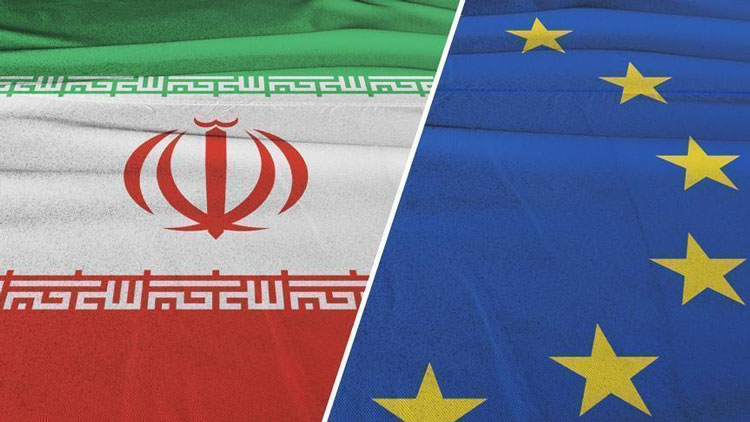
Within the EU, the Iranian crisis once again highlights the difficulties of articulating a fully cohesive foreign policy. Different sensitivities exist among Member States, shaped by their bilateral relations, energy interests, and threat perceptions. Spain aligns itself with the group of countries advocating a cautious approach, oriented toward de-escalation and the strengthening of Europe’s role as a diplomatic actor.
Madrid has argued that the EU must avoid becoming trapped in a bloc-based dynamic that would reduce its capacity for mediation. At the same time, it is aware that European credibility depends on the ability to act coherently and to protect its interests and citizens in the region. This tension between ambition and reality limits the scope of European action, but does not nullify its relevance.
Spain has sought to reinforce the EU’s role as a space for coordination and legitimation of common positions, fully aware that unanimity is fragile and that the most sensitive decisions often shift toward the intergovernmental sphere.
Relations with the United States: Alliance and Nuance
Relations with the United States are a key element in Spain’s management of the crisis. Washington remains the external actor with the greatest capacity for influence—and escalation—in the conflict with Iran. Spain, as an ally, shares concerns about nuclear proliferation and regional security, but does not always coincide with the U.S. approach.
Madrid has chosen to draw clear distinctions, emphasizing the need to avoid actions that could trigger a regional war. This stance does not call into question the transatlantic alliance, but it does reflect a more cautious European view regarding the use of force and the medium-term consequences of direct confrontation with Tehran.
Spain’s challenge is to maintain a fluid relationship with Washington without renouncing its own strategic analysis. Experience shows that an ally’s credibility is measured not only by support, but also by the ability to warn of risks and propose alternatives.
Implications for Spanish Security and Interests
The Iranian crisis has direct implications for Spain’s security. The presence of Spanish personnel in international missions in the region requires constant attention to the evolution of the conflict and the risks of spillover. In addition, the stability of energy and trade routes is a central concern for an open economy such as Spain’s.
This is compounded by the indirect impact on the Mediterranean and North Africa—regions where Spain has clear strategic interests. A prolonged escalation could intensify existing tensions, affect cooperation on migration, and generate new pockets of instability in Europe’s immediate neighborhood.
From this perspective, Spain’s commitment to de-escalation is not only a moral or diplomatic choice, but a strategic necessity. Preventing a broader conflict in Iran largely equates to protecting vital Spanish and European interests.
Spain as an Intermediate Diplomatic Actor
Although it is not a primary mediator, Spain aspires to play the role of an intermediate diplomatic actor, capable of contributing to dialogue initiatives and supporting multilateral efforts. Its tradition in international forums, its experience in peacekeeping missions, and its image as a relatively balanced actor grant it a degree of credibility in this field.
This role should neither be overstated nor underestimated. In a context where distrust dominates international relations, actors capable of building bridges—even discreetly—acquire added value. Spain may find in this function a way to strengthen its international profile without assuming disproportionate risks.
Conclusion
The crisis in Iran puts Spanish foreign policy to the test in a highly complex and risky environment. Madrid has opted for a strategy of balance: defense of international law, commitment to diplomacy, and coordination with allies, without renouncing its own voice. This position, although discreet, reflects a realistic reading of Spain’s capabilities and interests.
In a world marked by the erosion of norms and the multiplication of conflicts, Spain seeks to assert itself as a responsible and prudent actor, aware that true influence is not always exercised through confrontation, but through diplomatic persistence and the capacity to contribute to stability. The evolution of the Iranian crisis will determine to what extent this approach can be sustained in an increasingly volatile environment.
Copyright. All rights reserved. Prensamedia Group.