
Introduction
The prolonged crisis in the Red Sea has ceased to be a regional episode and has become a structural factor in global maritime security. Attacks on commercial shipping and the militarisation of a key international trade corridor have exposed the fragility of routes on which European economies are directly dependent. For Spain, this scenario is far from peripheral. It affects its commercial, energy and strategic interests and reopens the debate on the expanded southern flank as a priority area for diplomatic and military attention.
In 2025, insecurity in the Red Sea is directly connected to the Mediterranean, the Atlantic and the Indian Ocean, shaping an arc of instability that forces a rethinking of Spain’s external projection. The question is no longer whether Spain should be involved, but how to do so effectively in an environment increasingly crowded with actors and missions.
The Red Sea as a Strategic Chokepoint
The Red Sea is one of the world’s main trade chokepoints. A substantial share of maritime traffic between Asia and Europe transits through it, including hydrocarbons, liquefied natural gas and intermediate goods essential to European supply chains. Disruption to this corridor has immediate effects on prices, transit times and logistical stability.
The persistence of threats to navigation has forced vessels to reroute around the Cape of Good Hope, leading to higher freight costs and increased pressure on European ports. For Spain, a country heavily dependent on maritime trade, this impact is far from abstract. It affects competitiveness, its position as a logistics hub and the security of its energy supply.
The Red Sea thus ceases to be a distant theatre and becomes a central element in Spain’s strategic equation.
Naval Missions and Spain’s Operational Commitment
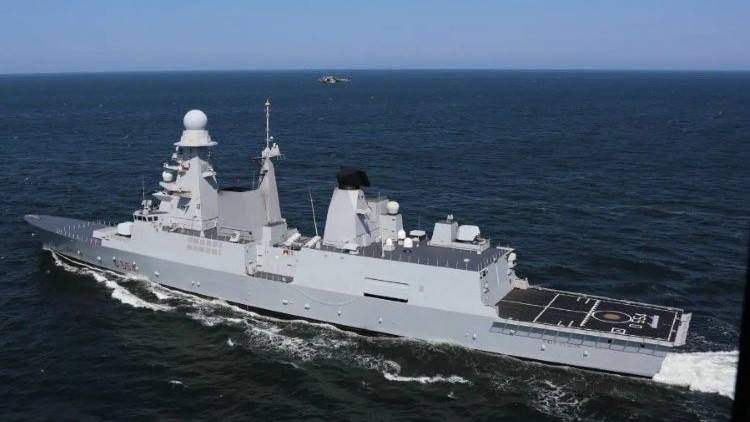
Spain has reinforced its presence in international naval missions aimed at ensuring freedom of navigation in the area. This commitment responds both to the defence of international maritime law and to direct economic interests. The Spanish Navy has well-established capabilities in surveillance, escort and maritime control operations, making it a relevant partner within multinational deployments.
However, Spain’s involvement goes beyond military contribution. Participation in these missions enhances Spain’s international visibility as a committed actor in global security and allows it to influence the definition of operational priorities. At the same time, it requires a delicate balance between available resources and strategic ambition, in a context of multiple open fronts along the southern flank.
The key question is how to sustain this commitment without dispersing efforts or diluting objectives.
The Expanded Southern Flank: From Concept to Real Priority
The Red Sea crisis has reactivated the concept of the expanded southern flank, which is no longer limited to the Mediterranean but encompasses the Sahel, the Horn of Africa and the maritime routes linking both spaces. This approach recognises that threats to European security are not concentrated exclusively on the continent’s eastern flank, but emerge forcefully in its southern neighbourhood.
For Spain, a long-standing advocate of balanced attention between flanks, this context offers an opportunity to refocus the European strategic debate. Instability in the Red Sea demonstrates that the security of the Mediterranean and the Atlantic is closely tied to developments beyond their immediate borders.
The challenge lies in translating this diagnosis into concrete priorities within NATO and the EU, preventing the southern flank from being sidelined in favour of other geopolitical urgencies.
Impact on Spanish Economic and Energy Interests
Maritime insecurity has direct consequences for key sectors of the Spanish economy. Rising logistical costs affect export-oriented industries, while tensions along energy routes increase price volatility. Spain, as a major energy gateway to southern Europe, closely monitors any disruption to flows from the Middle East and Asia.
Spanish ports are also affected by the reconfiguration of maritime routes. Increased traffic at certain ports of call and competition to attract new flows require adaptations in infrastructure and logistics strategies. In this sense, maritime security is not merely a military issue, but a central element of external economic policy.
Coordination between diplomacy, defence and industrial policy becomes essential to mitigate these impacts.
Diplomacy, Alliances and Room for Manoeuvre
Spain operates in the Red Sea within a complex web of alliances. Coordination with European partners, the United States and regional actors is essential to avoid duplication and maximise the effectiveness of missions. At the same time, the presence of multiple powers in the area introduces an element of strategic competition that conditions any action.
Spanish diplomacy seeks to combine firmness in the defence of navigation with political prudence. Avoiding regional escalation and keeping channels of dialogue open is as important as ensuring the immediate security of vessels. This approach reinforces Spain’s image as a responsible and pragmatic actor, capable of contributing to stability without overreach.
Nevertheless, this room for manoeuvre is constrained by Spain’s actual capacity for influence and by the need to act coherently within European and Atlantic frameworks.
A Scenario That Redefines Priorities
The Red Sea crisis forces Spain to reassess its strategic priorities. Maritime security ceases to be a specialised domain and becomes a cross-cutting axis of foreign policy. The link between trade, energy and defence is made explicit, demanding integrated responses.
This scenario reinforces the idea that the southern flank is not a secondary concern, but a decisive space for European stability. Spain, by virtue of its geographic position and capabilities, is called upon to play a relevant role in this redefinition. The question is whether it will have the necessary resources and political backing to do so in a sustained manner.
Key Takeaways
Context
Insecurity in the Red Sea has transformed a regional corridor into a global problem that directly affects European and Spanish interests.
Implications
Spain is strengthening its commitment to maritime security as part of a broader strategy focused on the expanded southern flank, with direct economic and energy consequences.
Outlook
Spain’s role will depend on its ability to integrate defence, diplomacy and economic policy, and to position the southern flank as a genuine priority on the European and Atlantic agenda.
Copyright. All rights reserved. Prensamedia Group.