
Augusto Manzanal Ciancaglini
Political scientist


The United States, diplomatically supported by Egypt, Qatar and Turkey, has won this war between Israel and Hamas: Donald Trump brings nervous laughter, excited applause and all the headlines; beyond the continuous and unsurpassed leadership of the US, the world has never projected so clearly the image of a global company where regional heads orbit around an undisputed CEO. Much pragmatism, with some embarrassment, floats in this picture.
The words of Hun Manet, the Cambodian prime minister, serve as a summary of this situation: after the end of the last border conflict with Thailand, he declared that Trump must win the Nobel Peace Prize, since his “innovative diplomacy” contributed to the cessation of hostilities there as well.
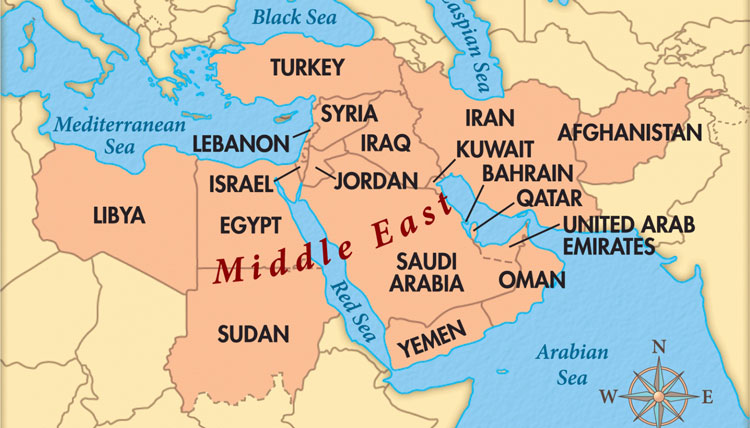
The war, which began with the worst massacre of Jews in a single day since World War II and ended with the destruction of Gaza, is waiting to be channeled towards peace through an international stabilization mission, which should serve as the starting point of a technocracy for reconstruction outside Hamas.
With a Palestinian state increasingly recognized at the diplomatic level and less recognizable at the geographical level, the political transition finds the terrorist group very weakened, and most importantly, the same is happening to its Persian sponsor. In that sense, Hizbollah is also low. Nevertheless, Hamas probably still retains the ability to radiate its influence; its operational plasticity could allow it to remain crouched and recover without the burden of government responsibilities. The forms of the next conflict will be seen.
Israel, for its part, in the current context and with the certainty that the predominant Arab face is no longer that of Bashar al-Assad, Saddam Hussein or Muammar el-Qadhafi, can reflect and use the moment to advance its strategic objectives in the region, this between apologies to Doha and a little more compliance with what Washington says, that is, through an essential torrent of realism. In addition, the buffer zones have become more complex, multiplying into small mobile actions.
With this provisional reality in the Middle East, the Western political debate, playing with the blood of others, has solidified the ideological revolution or narrative exchange of the poles. The ideological heirs of those who have tortured Jews for centuries today defend their state vehemently. On the other hand, in order for that state to disappear, those who preach certain ideas at home align themselves with those who relentlessly carry them away. Some place the integral scapegoat as the vanguard of this epoch, others point to him as an oppressor overturning all orphan revolutionary frustration in the form of hatred, using the Palestinians as embodied merchandising. What does not change is that Judaism remains the preferred symbolic tool.
It is of intellectual breadth to be interested in distant events and democratic health to be indignant with the behavior of governments, military or terrorists. However, the passion discharged knowledge, which is only lit in one place, very clearly illuminates the intentions, which, before informative pauses, end up finding another instrument.
For now, the world continues to spin and digitally tangled folly, like it or not, greases. However, détente in the Middle East will slip better if its virtual prominence is reduced.