
Roberto Veiga González,

lawyer and political scientist and a contributor to the Fundación Alternativas
Hegemonic Readjustment and the Return of Spheres of Influence
The international system is undergoing a structural transformation that goes beyond a mere transition of power among states. What we are witnessing is the erosion of the postwar global order—grounded in multilateralism and international law—giving way to a fragmented and asymmetric logic. In this new landscape, major powers operate through agreements, often tacit, that delineate or impose spheres of influence, evoking nineteenth-century practices.
This dynamic is less normative and more transactional in nature. Three priorities prevail: the maximization of economic benefits, political and territorial control, and the projection of power as a guarantee of stability. In this process, sovereignty ceases to function as a universal principle and instead becomes a selective argument, invoked by dominant actors according to their strategic convenience.
The United States and Its New Continental Policy
Within this context, the United States appears to have entered a new phase in its policy toward Latin America, characterized by a combination of strategic pragmatism and renewed hegemonic assertion. The normalization of a strong military presence in the Caribbean, together with sustained efforts to limit or displace the economic influence of China and the European Union in the region, points to a redesign of the hemisphere as a priority space for U.S. control.
This policy responds to a multidimensional strategy. On the one hand, it is articulated around national security, broadly conceived: control of maritime routes, containment of illicit flows, and the fight against so-called “narco-terrorism.” On the other, it incorporates energy and commercial interests aimed at securing markets favorable to the dollar and U.S. companies. Finally, it is embedded in a direct geopolitical competition with extra-hemispheric powers, whose presence in Latin America is perceived in Washington as a long-term strategic threat.
The implicit message is clear: the political autonomy of Latin American governments encounters precise limits when it comes into conflict with the core interests of the White House. Within this framework, regional deterrence becomes a key instrument vis-à-vis states that attempt to pursue sovereign policies not aligned with the United States.
Venezuela as a Political Laboratory
The choice of Venezuela as the starting point for this new policy is far from accidental. The political fragility of madurismo following the controversial 2024 electoral process offered an exceptional window of opportunity. From the U.S. perspective, Caracas met two decisive conditions: a severe internal legitimacy crisis and a documented record of human rights violations—elements that tend to weaken any robust defense of the principle of state sovereignty.
This situation also makes it possible to counter regional governments that radically challenge U.S. interventionism. The argument may prove effective: those who invoke sovereignty to reject pressure on Venezuela remained silent—or proved ineffective—when faced with the violation of their own populations’ fundamental rights.
At this point, a central issue emerges: sovereignty should not be conceived exclusively as a formal prerogative of the state, but rather as the real capacity to guarantee the full exercise of human rights. Achieving this requires conditions that are often fragile in Latin America, such as a solid rule of law, an inclusive social pact, and a democracy capable of reconciling freedom with well-being. When these elements are absent, sovereign discourse degenerates into a defense of power for its own sake or into a mere ideological alibi.
The recent—still opaque—convergence between hardline sectors of Chavismo and President Donald Trump, together with his inner circle, suggests a possible pattern for future U.S. action in the hemisphere. It also anticipates the type of responses Washington might expect from Latin American governments: pragmatic cooperation, conflict containment, and tacit acceptance of a regional hierarchy. However, given the political, economic, and geostrategic conditions under which this understanding is taking shape, it is extremely difficult to foresee its immediate effects and, above all, its medium-term consequences.
Cuba at a Structural Crossroads
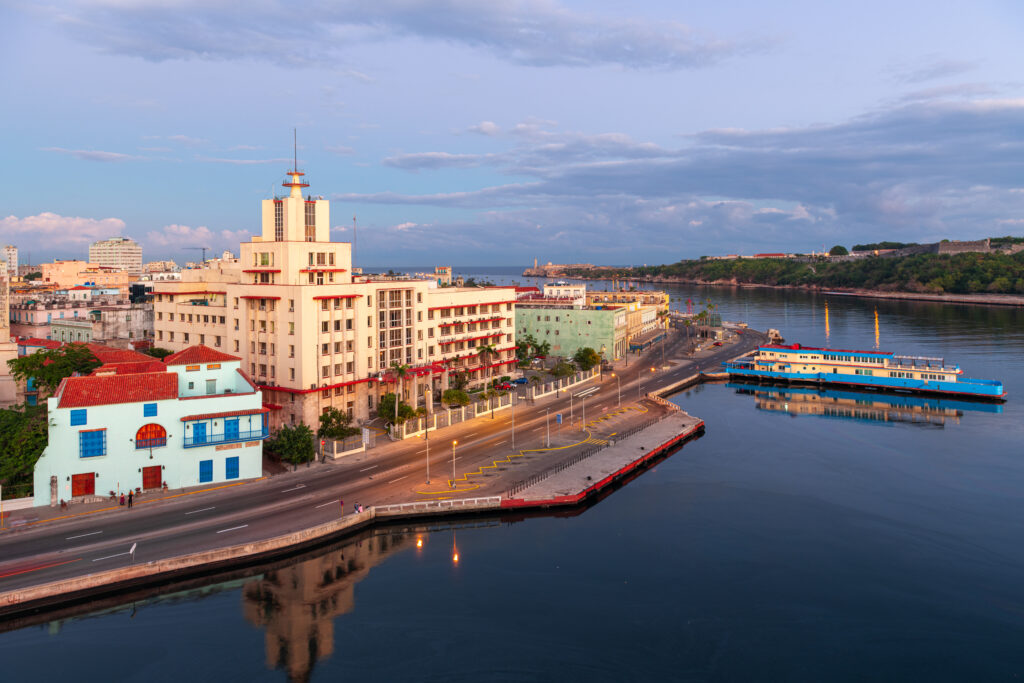
Cuba finds itself in a position of extreme fragility. The unsustainability of its economic system—dependent on oil from Venezuela and Mexico—forces the government in Havana to make a survival decision: to accept a definitive descent into the “fourth world” or to undertake profound transformations.
It is likely that the Cuban elite will opt for changes that preserve its control and security. However, it should not be assumed that these reforms will automatically lead to full democracy or the rule of law. In the new transactional order, Washington may be interested in a Cuba that contributes to the fight against organized crime and achieves a level of well-being sufficient to curb mass emigration.
Under this logic, the United States might even contemplate a bilateral agreement of mutual benefit. There is, however, a conditioning factor: the electoral influence of the Cuban community in Florida. This turns relations with the island into a matter of U.S. domestic politics, which would compel Washington to demand some form of political opening in Cuba as a quid pro quo for any negotiation.
Reconfiguring hegemonies are not governed by normative principles, but by the same three priorities that appear to structure the emerging order: economy, control, and power. If these logics already allow cooperation between hardline sectors of Chavismo and an ideologically distant U.S. administration, it is not implausible that, under certain conditions, they could extend to sectors of power in Cuba. History shows that ideological antagonisms can yield to shared strategic interests.
A Window for Parallel Processes?
Despite the uncertainty, this scenario could facilitate a necessary proposal: the articulation of two interdependent processes.
First, an internal process among Cubans aimed at addressing the causes of the national crisis, which constitutes the fundamental political rationale for any sustainable solution.
Second, a process between Cuba and the United States, because although the bilateral conflict is not the “efficient cause” of the crisis, the normalization of bilateral relations would alleviate suffocating conditions and provide Cuban society with greater room to decide its future.
Conclusion: The Democratic Challenge
The reconfiguration of the international order does not herald the end of sovereignty, but rather its redefinition in starker and more unequal terms. In a world where rules are subordinated to power, true sovereignty will not be measured by the ability to resist external pressure, but by the capacity to build legitimate states capable of protecting their citizens and negotiating from institutional strength rather than fragility.
Latin America—and particularly countries such as Venezuela and Cuba—faces a historic crossroads. It can remain a passive object of new hegemonies, or it can become a political subject capable of articulating democracy, rights, and genuine autonomy. In an international order that is beginning to resemble, dangerously, that of the nineteenth century, the only sustainable defense against naked power is neither isolation nor rhetoric, but democratic legitimacy as the ultimate source of authority and resilience.