The Diplomat
The President of the European Commission, Ursula von der Leyen, yesterday congratulated Spain on its “successful” Presidency of the Council of the European Union during 2023, recognizing her “hard” work to achieve some “key projects.”
“Thank you and congratulations on a successful presidency. Her hard work and dedication have gotten some key projects over the finish line,” Von der Leyen said in a message on her X social network profile.
“From the AI and Critical Raw Materials Law, to the Pact on Migration and Asylum,” she highlighted, adding in Spanish: “We are very grateful.”
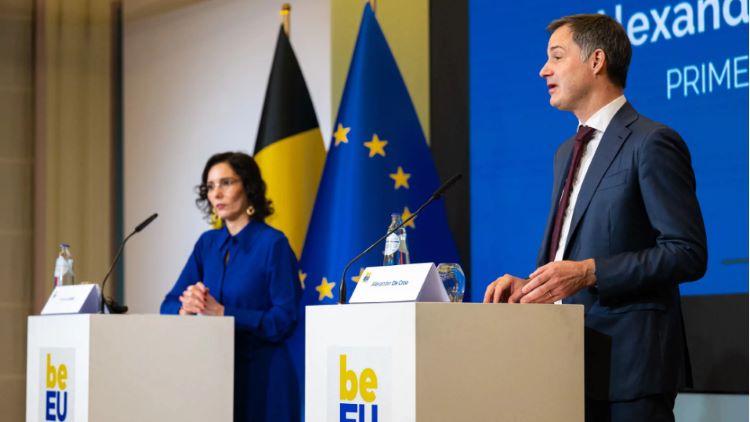
For his part, the President of the Government, Pedro Sánchez, said goodbye to the Spanish Presidency of the Council of the European Union, ensuring that Europe emerges “stronger, fairer and more cohesive to face the challenges of the future”, and wishing “all the fate of the world” to the Prime Minister of Belgium, Alexander de Croo, whose country has taken over from Spain since January 1.
Sánchez considers that “historic” agreements have been reached, among which he cites the opening of accession negotiations for Ukraine and Moldova.
Furthermore, he highlights that in the last six months “more than 70 files have been closed, a figure much higher than the average of other presidencies” and underlines the work of Spain “to strengthen the competitiveness of Europe and the Member States to reduce vulnerabilities and dependence on third countries in key sectors such as energy, food and health.”
Furthermore, he indicates that the Spanish Presidency has promoted mechanisms to “promote domestic industry, the creation of more companies and generate more jobs,” with “agreements on key regulations such as the Critical Raw Materials Law.” And he is especially satisfied with the agreement reached to reform the electricity market and for the first Artificial Intelligence Law, which he indicates is “a pioneering regulation in the world.”
Likewise, Sánchez defended the Pact on Migration and Asylum, ensuring that “it will allow the reform of the management system for migratory flows, after eight years of negotiation.” He also valued the suppression of air and maritime controls on the internal borders with Bulgaria and Romania, “complying with the priority that the Spanish Presidency has given to its full incorporation into the Schengen area,” he indicated.
On the economic level, Sánchez highlighted the agreement on the review of the EU’s economic governance – “crucial to guarantee balanced and sustainable public finances,” he clarified -; and the “definitive step”, in his opinion, for the review of the Multiannual Financial Framework, “agreeing on a text to 26 Member States that we hope can be adopted soon.”
The head of the Executive also valued the “foreign agenda of the Union, aimed at consolidating, diversifying and expanding our ties abroad.” “The holding of the summit between the European Union and the Community of Latin America and the Caribbean (CELAC) stands out, which has represented an opportunity to revitalize ties between both regions. “We have managed to ensure that this bi-regional relationship has a vocation for permanence, with the commitment to hold these summits every two years from now on,” he said.