
Banner Iberia Español
Banner Telefónica
Banner Iberia Inglés
  • Login
Wednesday, February 4, 2026
No Result
View All Result
  • es Español
  • en English
subscribe
thediplomatinspain
Publicaciones
  • Frontpage
  • News
    • Spain
    • World
    • The world in Spain
    • Diplomatic Breakfast
    • Diplomacy with a history
    • The bag
    • Social life
  • Analysis
    • Tribune
    • Trends
  • Embassies
    • Embassies Directory
    • Protocol
    • International legislation
  • Security and Defense
  • UNWTO News
  • Leisure
    • Libros
    • Culture & Art
    • Música
    • Movies
    • Niños
    • Espectáculos
    • Teatro
  • Diplomatic club
  • Vip Club
  • Frontpage
  • News
    • Spain
    • World
    • The world in Spain
    • Diplomatic Breakfast
    • Diplomacy with a history
    • The bag
    • Social life
  • Analysis
    • Tribune
    • Trends
  • Embassies
    • Embassies Directory
    • Protocol
    • International legislation
  • Security and Defense
  • UNWTO News
  • Leisure
    • Libros
    • Culture & Art
    • Música
    • Movies
    • Niños
    • Espectáculos
    • Teatro
  • Diplomatic club
  • Vip Club
No Result
View All Result
No Result
View All Result
thediplomatinspain
Home News Diplomacy with a story

The Nativity Scene: a Neapolitan tradition which Carlos III brought to Spain

Redacción
24 de December de 2023
in Diplomacy with a story, Frontpage, Frontpage, News
0
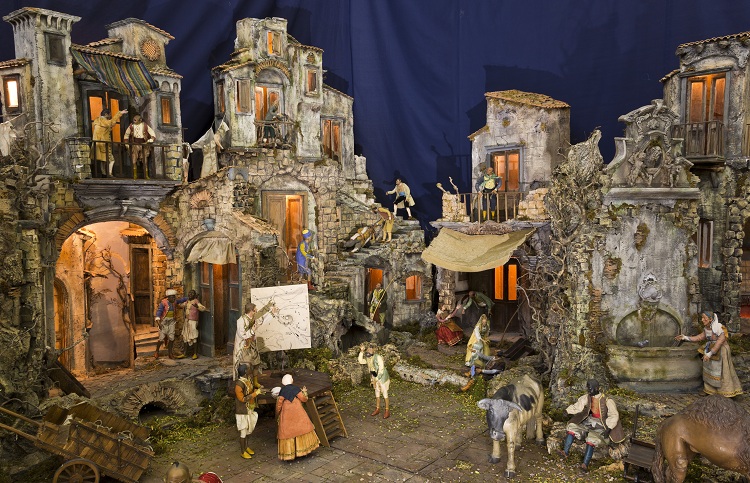
The Nativity scene: a Neapolitan custom that came with Charles III

Nativity scene of the Royal Palace / Photo: National Heritage

Share on FacebookShare on Twitter
Eduardo González


Christmas tradition of representing the scenes of the Nativity of Jesus with figures was introduced in Spain by King Carlos III from Naples, where he had reigned for 25 years. However, the real author was Queen Maria Amalia, very fond of cribs and whose premature death has been remembered since then with the nativity scene of the Royal Palace.


The tradition of Nativity scenes emerged in Italy in a way, at least, curious. Around the tenth century began to spread through this country and other parts of Europe the habit of representing with real actors the episode of the Birth of Jesus, whose maximum exponent were the Autos de los Reyes Magos.


The problem arose when those stagings, which were held in the temples, began to become authentic revelry in which alcohol ran and religious histories were treated very irreverently.


Consequently, Pope Innocent III prohibited in 1207 these theatrical performances, and to alleviate it, it was decided to replace the actors of flesh and bones by figures. The tradition tells that Francisco de Asís represented in 1223 in Tuscany the first Nativity scene in history. True or not, what is certain is that it was in Italy where, thanks to the Franciscans and the Poor Clares, the custom began to be extended by convents and homes.


The privilege of having the oldest present Nativity scene in the world is disputed by the Bavarian monastery of Flussen (with a manger from the mid-13th century) and the cathedral of Florence (from the end of the same century), but it was not until the 15th century when they began to make cribs like the current ones, with loose pieces.


The first known nativity scenes in Spain appeared, by Italian influence, in the territories of the Crown of Aragon. However, it was not until the 18th century that the custom took root.


When Carlos de Borbón was crowned King of Naples in 1734 as Carlos VII, the tradition was well known in his new kingdoms for at least 400 years, but the true golden age of the Neapolitan Nativity scene came in the seventeenth century, when they began to make those spectacular pesepri whose scenes, of great quality and with all the luxury of traditional details, were modified each year with a different set-up.


Encouraged by the Neapolitan cribs, Carlos and his no less enthusiastic wife, Queen María Amalia de Sajonia, moved the nativity scene to Madrid when the monarch was crowned king of Spain in 1759 as Carlos III.


María Amalia had the 7,000 figures that formed her nativity scene in Naples transferred to the Royal Palace of Buen Retiro and, as was often the case in those cases, the noble houses soon took over the new royal custom and mounted their own mangers in their palaces.


The queen died the following year of tuberculosis with only 35 years, and Carlos III, in tribute to his wife, decided to build a manger every year in the Royal Palace so that the town could visit, which helped to extend the custom in the humblest homes.


To that end, the king commissioned the Royal Workshops to manufacture the so-called Belén del Príncipe(Prince’s Nativity scene) for his son, the future Charles IV. Many of its pieces did not survive the War of Independence or other conflicts, but the Belén del Príncipe, formed by Neapolitan, Genoese and Spanish figures, remains one of the most important belenistic groups of the eighteenth century. Faithful to the Neapolitan custom, every year the layout of the pieces is modified and new figures from the Italian workshops are introduced every so often.



ADVERTISEMENT
Previous Post

Spanish contingent informs Robles about “tense and unpredictable situation” in Lebanon

Next Post

Digitalization, regional integration and Ibero-American science, main milestones of the OEI in 2023

Redacción

Redacción

Next Post
Digitalization, regional integration and Ibero-American science, main milestones of the OEI in 2023

Digitalization, regional integration and Ibero-American science, main milestones of the OEI in 2023

Recommended

Spain and Greece agree on the need for a joint deterrence mechanism in the EU

Spain and Greece agree on the need for a joint deterrence mechanism in the EU

14 hours ago

Newsletter

"Stay informed through our pages and always stay one step ahead. With in-depth analysis, exclusive reports and comprehensive coverage of the events that are shaping our present, our newspaper is more than just news, it is a window to the future."

Newspaper archive

December 2023
M T W T F S S
 123
45678910
11121314151617
18192021222324
25262728293031
« Nov   Jan »

About Us

The Diplomat in Spain is the reference digital newspaper for diplomats and companies that want to be well informed.

© 2024 The Diplomat in Spain.

Welcome Back!

Login to your account below

Forgotten Password?

Retrieve your password

Please enter your username or email address to reset your password.

Log In
Gestionar consentimiento
Para ofrecer las mejores experiencias, utilizamos tecnologías como las cookies para almacenar y/o acceder a la información del dispositivo. El consentimiento de estas tecnologías nos permitirá procesar datos como el comportamiento de navegación o las identificaciones únicas en este sitio. No consentir o retirar el consentimiento, puede afectar negativamente a ciertas características y funciones.
Funcional Always active
El almacenamiento o acceso técnico es estrictamente necesario para el propósito legítimo de permitir el uso de un servicio específico explícitamente solicitado por el abonado o usuario, o con el único propósito de llevar a cabo la transmisión de una comunicación a través de una red de comunicaciones electrónicas.
Preferencias
El almacenamiento o acceso técnico es necesario para la finalidad legítima de almacenar preferencias no solicitadas por el abonado o usuario.
Estadísticas
El almacenamiento o acceso técnico que es utilizado exclusivamente con fines estadísticos. El almacenamiento o acceso técnico que se utiliza exclusivamente con fines estadísticos anónimos. Sin un requerimiento, el cumplimiento voluntario por parte de tu proveedor de servicios de Internet, o los registros adicionales de un tercero, la información almacenada o recuperada sólo para este propósito no se puede utilizar para identificarte.
Marketing
El almacenamiento o acceso técnico es necesario para crear perfiles de usuario para enviar publicidad, o para rastrear al usuario en una web o en varias web con fines de marketing similares.
Manage options Manage services Manage {vendor_count} vendors Read more about these purposes
Ver preferencias
{title} {title} {title}
Gestionar consentimiento
Para ofrecer las mejores experiencias, utilizamos tecnologías como las cookies para almacenar y/o acceder a la información del dispositivo. El consentimiento de estas tecnologías nos permitirá procesar datos como el comportamiento de navegación o las identificaciones únicas en este sitio. No consentir o retirar el consentimiento, puede afectar negativamente a ciertas características y funciones.
Funcional Always active
El almacenamiento o acceso técnico es estrictamente necesario para el propósito legítimo de permitir el uso de un servicio específico explícitamente solicitado por el abonado o usuario, o con el único propósito de llevar a cabo la transmisión de una comunicación a través de una red de comunicaciones electrónicas.
Preferencias
El almacenamiento o acceso técnico es necesario para la finalidad legítima de almacenar preferencias no solicitadas por el abonado o usuario.
Estadísticas
El almacenamiento o acceso técnico que es utilizado exclusivamente con fines estadísticos. El almacenamiento o acceso técnico que se utiliza exclusivamente con fines estadísticos anónimos. Sin un requerimiento, el cumplimiento voluntario por parte de tu proveedor de servicios de Internet, o los registros adicionales de un tercero, la información almacenada o recuperada sólo para este propósito no se puede utilizar para identificarte.
Marketing
El almacenamiento o acceso técnico es necesario para crear perfiles de usuario para enviar publicidad, o para rastrear al usuario en una web o en varias web con fines de marketing similares.
Manage options Manage services Manage {vendor_count} vendors Read more about these purposes
Ver preferencias
{title} {title} {title}
  • Login
No Result
View All Result
  • Frontpage
  • News
    • Spain
    • World
    • The world in Spain
    • Diplomatic Breakfast
    • Diplomacy with a history
    • The bag
    • Social life
  • Analysis
    • Tribune
    • Trends
  • Embassies
    • Embassies Directory
    • Protocol
    • International legislation
  • Security and Defense
  • UNWTO News
  • Leisure
    • Libros
    • Culture & Art
    • Música
    • Movies
    • Niños
    • Espectáculos
    • Teatro
  • Diplomatic club
  • Vip Club

© 2024 The Diplomat in Spain.

Go to mobile version
  • English