
The Diplomat
A mission from COMINT (the Italian Space Agency) was held in Madrid, led by the head of the Space Unit of the Office of the Military Advisor to the President of the Council, General Luigi Riggio; the Director of Space and Science at the Ministry of Foreign Affairs, International Cooperation and Cooperation (MAECI), Minister Lamberto Moruzzi; and Lieutenant Colonel Nicola Donati Guerrieri, of the Joint Forces Cyber Intelligence Command of the Ministry of Defense. The mission, in conjunction with the Embassy, aimed to facilitate contacts between Italian and Spanish companies in the space sector.
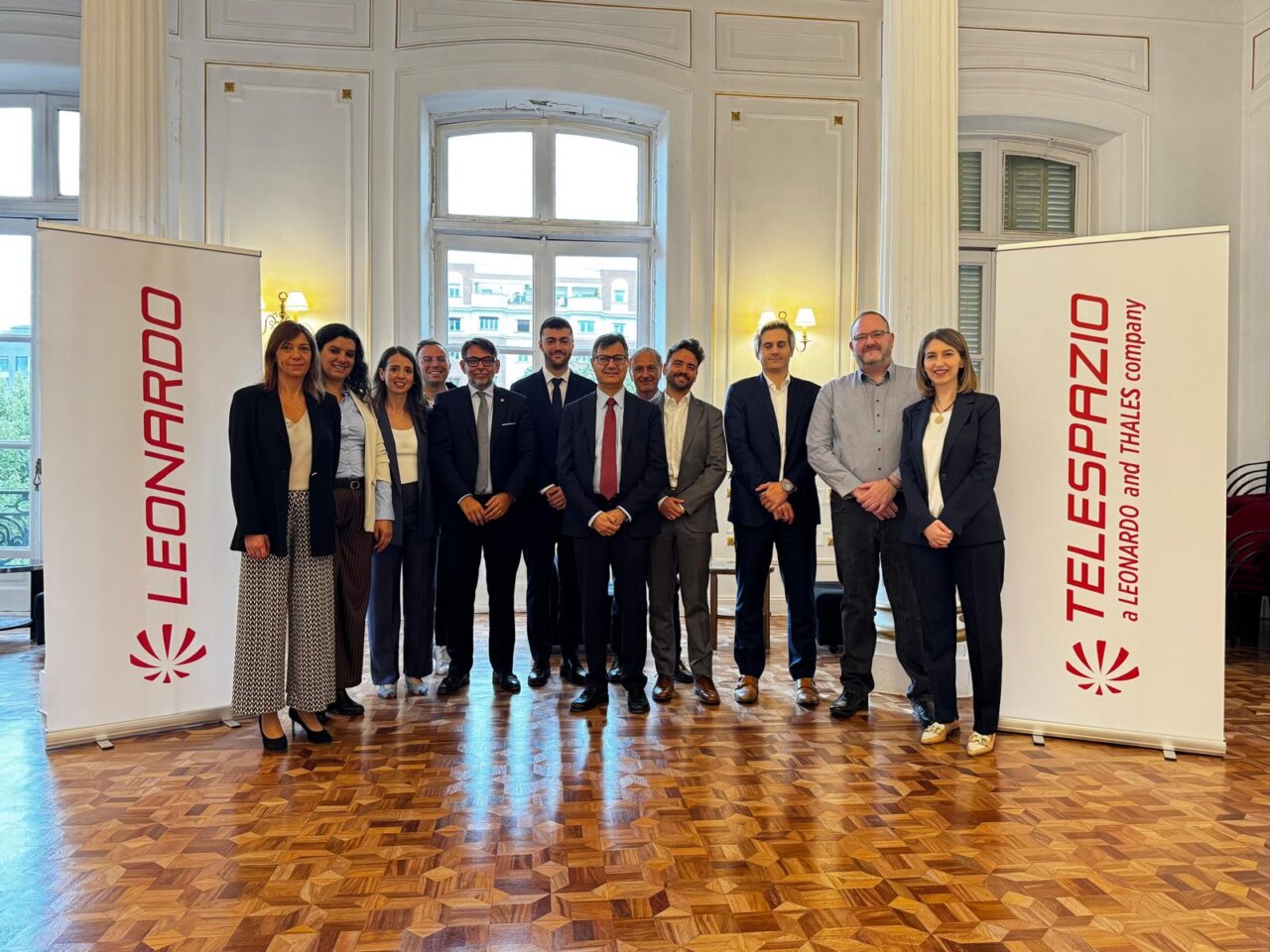
In this context, on April 28, Ambassador Giuseppe Buccino Grimaldi organized a dialogue event between Italy and Spain in the space sector at the Italian Embassy. A high-level delegation from Leonardo, including the Managing Director of the company’s space division, Massimo Comparini, and the CEO of Telespazio and Head of Marketing, Sales, and Business Development, Gabriele Pieralli, met with the CEO of GMV, Jesús Serrano; the Managing Director of Indra Espacio, Miguel Ángel Panduro; the CEO of Satlantis, Juan Tomás Hernani; and the CEO of Telespazio Ibérica, Carlos Fernández de la Peña, along with representatives from more than 20 leading Spanish companies in the sector. This is indeed a strategic sector with significant repercussions both in terms of Spanish investment in Italy and skilled employment.
Spanish participation in the event was also of a very high level, beginning with the director of the Spanish Space Agency, Juan Carlos Cortés, with whom the Italian institutional delegation held a bilateral meeting.
At the start of the day, Ambassador Buccino highlighted the crucial moment the European space sector is experiencing, aspiring to technological sovereignty, security, and to move beyond the current model, which has significant strengths but remains too fragmented.
Alluding to the potential and challenges of European projects such as IRIS2, as well as the need to achieve a balance between European synergies and balanced industrial benefits for each country—starting from the design and construction phases—the ambassador emphasized the importance of creating a representative European group that brings together all stakeholders and is active in all sectors of the field, from Earth observation to space exploration and access.
In this regard, after highlighting the potential strategic impact of a policy of sharing data collected in national projects at a supranational level, the ambassador focused on the numerous opportunities for collaboration between Italy and Spain.
These include: excellent training systems; the numerous Italian professors and researchers at Spanish universities and research centers; and highly skilled technical personnel in industry and European agencies such as the EU Satellite Centre (SATCEN) and the EU Space Agency (EUSPA) in Spain. Added to this are clear affinities and complementarities, especially in areas such as research on the security of next-generation satellite communications, including those to be developed within the framework of IRIS2.
All of this is in addition to the existing collaboration between the two countries, beginning with the two Memoranda of Understanding from 2024: one between the national space agencies for cooperation in peaceful space activities and another on bilateral collaboration in basic research.
Equally significant were the events of the following day: General Riggio and Engineer Comparini, accompanied by the ambassador, held high-level meetings. The Italian delegation also visited the headquarters of EUSPA in Torrejón de Ardoz, which provides institutional users with services related to the GALILEO, EGNOS, Copernicus, and GOVSATCOM programs and ensures their security. They then visited the headquarters of SATCEN, where they met with the qualified Italian community of SATCEN staff, comprised of approximately twenty people, representing about 10% of the workforce.
The Embassy also organized a B2B session at the Italian Consulate General in Madrid, which facilitated numerous meetings with Spanish small and medium-sized enterprises (SMEs), all of them recently established. On this occasion, Leonardo and its subsidiary Telespazio Ibérica confirmed their full willingness and openness to exploring collaboration opportunities, as well as expanding and strengthening their value chain through the participation, in Spain, of companies characterized by a modern approach and strong dynamism.
In fact, Leonardo’s mission to Madrid has highlighted the strong business collaboration already existing between Italy and Spain, but above all, the numerous new opportunities opening up in the bilateral and multilateral space sector, particularly in the areas of Earth observation and geoinformation.
Leonardo can count on the presence of Telespazio Ibérica, which, with 40 years of experience, has consolidated its role within the Spanish space ecosystem by developing a comprehensive portfolio of services aimed at improving citizens’ lives.
Furthermore, there are Spanish companies that employ highly prestigious Italian scientists, which naturally fosters joint projects with Italian companies and research centers. An example of this is the Spanish company GMV, visited by the Italian delegation, which has some 40 employees of Italian origin and collaborates on various projects with Italian companies.