Ane Barcos
The European Commission has expressed its “full solidarity” with Spain following criticism from Elon Musk, owner of X, in response to announcements made by President Pedro Sánchez in Dubai regarding new regulatory measures for digital platforms.
Musk called Sánchez a “tyrant and traitor,” while Pavel Durov, owner of Telegram, accused the Spanish government of pushing for “dangerous regulations” that could lead to a “surveillance state” in Spain.
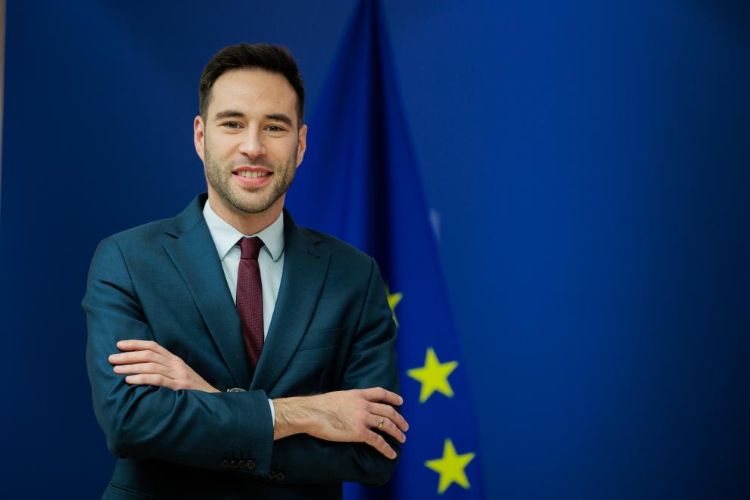
In this context, the European Commission backed the Spanish government’s position on the regulation of digital platforms. The Commission’s spokesperson for technological sovereignty, Thomas Regnier, stated on Friday that the Commission stands in “solidarity with our member states that are trying to hold online platforms accountable.”
He emphasized that one of the Commission’s top priorities is addressing the risks posed by addictive designs, harmful content, and risks to the protection of minors, consumers, democracy, and the integrity of elections.
Regnier added that the Digital Services Act (DSA) is a key tool for protecting citizens and ensuring that platforms operate transparently and in accordance with European regulations.
Spain has joined a coalition of five European countries (Germany, France, Belgium, Spain, and Portugal) seeking to implement stricter and more effective regulations at the European level and facilitate cross-border digital payments through a pan-European payment solution.
Musk and Durov’s comments came after Spanish Prime Minister Pedro Sánchez announced new measures on February 3 at the World Government Summit in Dubai that the Spanish government plans to implement to protect minors and strengthen control over social media regarding disinformation, hate speech, and the protection of personal data.
Sánchez proposed banning access to social media for those under 16, demanding that platforms implement effective age verification systems. He also announced the creation of a system to track and quantify hate speech on digital platforms, aiming to highlight their permissiveness regarding polarizing content. Furthermore, the Spanish government will discuss potential violations by platforms such as Grok, TikTok, and Instagram with the public prosecutor’s office.
Brussels had already commented on Wednesday regarding Spain’s efforts to strengthen the regulation of digital platforms. During the European Commission’s daily press briefing, Regnier emphasized that, while the Commission values the efforts of member states to take additional measures, national initiatives must respect existing European regulations, particularly the Digital Services Act (DSA).
Regnier stressed the importance of maintaining consistency within the European single market. “It is true that member states want to go a step further, such as restricting access to social media for minors. We value this and are monitoring it.” But imposing additional obligations on platforms is not possible, as this is regulated by the DSA, which has a harmonizing effect to protect 450 million citizens,” he noted.
Sánchez also proposed a legal reform that would hold platform executives accountable for failing to remove illegal or hateful content and would criminalize algorithm manipulation. However, the EU spokesperson clarified that the DSA does not focus on the individual responsibility of executives, but rather on that of the platforms themselves. “If a CEO algorithmically promotes a political party and reduces the visibility of others, the responsibility does not fall on them personally. The platform is the one that assumes responsibility,” Regnier concluded.