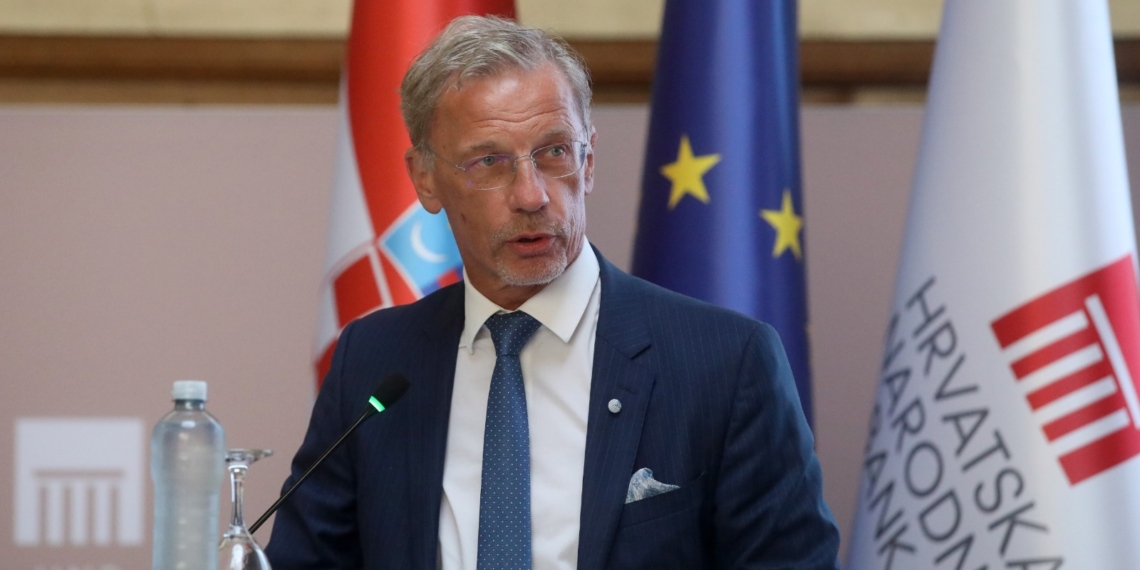
<h6><strong>Ane Barcos/Eduardo González</strong></h6> <h4><strong>The Eurogroup elected Boris Vujčić, Governor of the National Bank of Croatia, as Vice President of the European Central Bank (ECB) on Monday during its first meeting of the year. Vujčić will replace Spaniard Luis de Guindos, whose term ends at the end of May 2026. </strong></h4> By the deadline for submitting nominations, January 9, Eurogroup President Kyriakos Pierrakakis announced that six proposals had been received: Mário Centeno (Portugal), Mārtiņš Kazāks (Latvia), Madis Müller (Estonia), Olli Rehn (Finland), Rimantas Šadžius (Lithuania), and Boris Vujčić (Croatia). Following the meeting in Brussels on Monday, Pierrakakis expressed his satisfaction with the election and the unanimous decision, emphasizing that, unlike previous occasions where reaching a consensus took longer, this time an agreement was reached quickly. The formal recommendation process will continue according to the procedure established by the Economic and Financial Council (Ecofin), and the final decision will be made by the European Council after consulting with the ECB and the European Parliament. Vujčić is expected to officially assume the position of Vice-President of the ECB on June 1, 2026. Boris Vujčić holds a PhD in Economics from the University of Zagreb and has had a distinguished career in the economic and financial fields. He joined the National Bank of Croatia in 1997, where he held various positions, including Governor since 2012. He has also been a member of the ECB General Committee since 2013 and Chair of the Steering Committee of the Vienna Initiative since 2016. <h5><strong>De Guindos and Hernández de Cos</strong></h5> Luis de Guindos, former Spanish Minister of Economy, Industry and Competitiveness under the government of Mariano Rajoy (PP), has served as Vice-President of the ECB since June 1, 2018, after the withdrawal of his only rival, the Irishman Philip Lane, allowed him to avenge his failed attempt to secure the presidency of the Eurogroup in July 2015, when he was defeated by the Dutchman Jeroen Dijsselbloem. It remains to be decided who will succeed Christine Lagarde as President of the ECB in 2027. Pablo Hernández de Cos, governor of the Bank of Spain from 2018 to 2024 and current general manager of the Bank for International Settlements (BIS), is considered the frontrunner, but he will have to overcome Klaas Knot, former governor of the Dutch Central Bank and his main rival, according to the polls. The other leading candidates are the president of the Bundesbank, Joachim Nagel, and Isabel Schnabel, a member of the ECB Governing Council. The election of the ECB president is the responsibility of the European Council, after consulting the European Parliament and the ECB Governing Council. On January 7, the Minister of Economy, Trade and Business, Carlos Cuerpo, did not clarify whether the Spanish government would support Hernández de Cos's candidacy and simply described him as an "excellent professional with a more than proven international career." “Spain will push to maintain significant representation, as is our right, both in terms of shareholding and the importance of the Spanish economy in the Eurozone, and, in due course, we will make a decision regarding both the position and the candidates,” Cuerpo declared at the press conference following the first Council of Ministers meeting of 2026. Spain “will not lack excellent candidates” to lead or participate in the leadership of multilateral organizations because “it is a superb source of talent for international economic positions,” Cuerpo continued, noting that the process is “in its initial stages” and that Spain will make a decision when several positions at the ECB are up for renewal, including the posts of president, vice president, and chief economist. The minister also reiterated the tendency within the ECB Governing Council to “maintain a balance” between nationalities, political affiliations, and genders, adding that Spain’s support for one candidate or another will be decided “generally” and with the aim of maintaining “significant representation.”