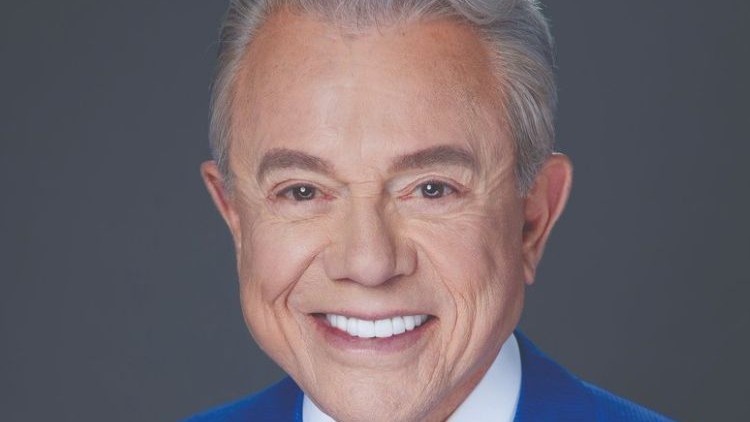
<h6><strong>Eduardo González</strong></h6> <h4><strong>The United States Senate has confirmed the appointment of Benjamin Leon Jr. as the new US ambassador to Spain, almost a year after he was nominated for the position by President Donald Trump.</strong></h4> “Congratulations to Benjamin Leon Jr., who has been confirmed by the United States Senate as the next US ambassador to the Kingdom of Spain and the Principality of Andorra, following his nomination by President Trump,” the US Embassy in Madrid wrote on social media this Friday, December 19. “We look forward to welcoming him to Madrid, where he will present his credentials to His Majesty King Felipe VI and work to promote US interests and further strengthen the relationship between our countries,” it added. The U.S. Embassy in Madrid has been vacant since July 2024, when Julissa Reynoso, ambassador since January 2022, left the post to return to the law firm Winston & Strawn and join the Democratic campaign in the U.S. presidential elections. Since then, the highest U.S. representation in Spain had been held by Minister Counselor Rian Harris, in her capacity as Chargé d'Affaires of the Embassy. Benjamín León Jr., born in 1944 in Oriente, Cuba, a resident of Miami since 1961 and a donor to the Republican Party, will assume the position at a time of difficulties in bilateral relations. Last October, Donald Trump proposed Spain's expulsion from NATO for its refusal to increase defense spending to five percent, a path not provided for in the Alliance Treaty itself, which establishes voluntary withdrawal as the only procedure for such a move. The government of Pedro Sánchez reacted by reiterating that “Spain is a full and committed member of NATO” and calling for “utmost calm.” This was not the first time Trump had attacked the government of Pedro Sánchez for its refusal to increase military spending during the NATO Summit in The Hague last June. On that occasion, the US president even threatened Spain with making it pay “double” in tariffs, but Sánchez himself pointed out in his response that trade negotiations between Spain and third countries fall under the purview of the EU as a whole, given its status as a single market, and therefore, the United States cannot impose differentiated tariffs on one of its member states. Indeed, last October, during his appearance before the Senate hearing to consider his nomination for Ambassador to Madrid, Benjamin León Jr. stated that he would work “diligently with the Spanish government to make them understand that it is a grave mistake” not to raise defense spending to five percent. “Spain has always been a great partner of the United States and a great host” for the U.S. armed forces, he continued. For this reason, he assured, he would work to ensure that the Spanish government “reverses this policy and fulfills the commitment” to five percent of GDP and “to strengthen our defense partnership, including increasing Spanish spending and investment in defense and continuing participation in military exercises.” For his part, the chairman of the Foreign Affairs Committee, Republican Senator Jim Risch of Idaho, reminded León that “Spain has been an important partner of the United States,” but “it is the only NATO ally that refused to commit 5% of its GDP to defense spending” and was “one of the first countries to make the grave mistake of recognizing a Palestinian state and has called for an arms embargo against Israel, which only rewards the terrorists who plague the Middle East.” This Thursday, the Spanish government issued a statement in which it "deplores" the sanctions adopted by the United States Secretary of State, Marco Rubio, against two judges of the International Criminal Court (ICC) who voted against Israel's appeal against the court.