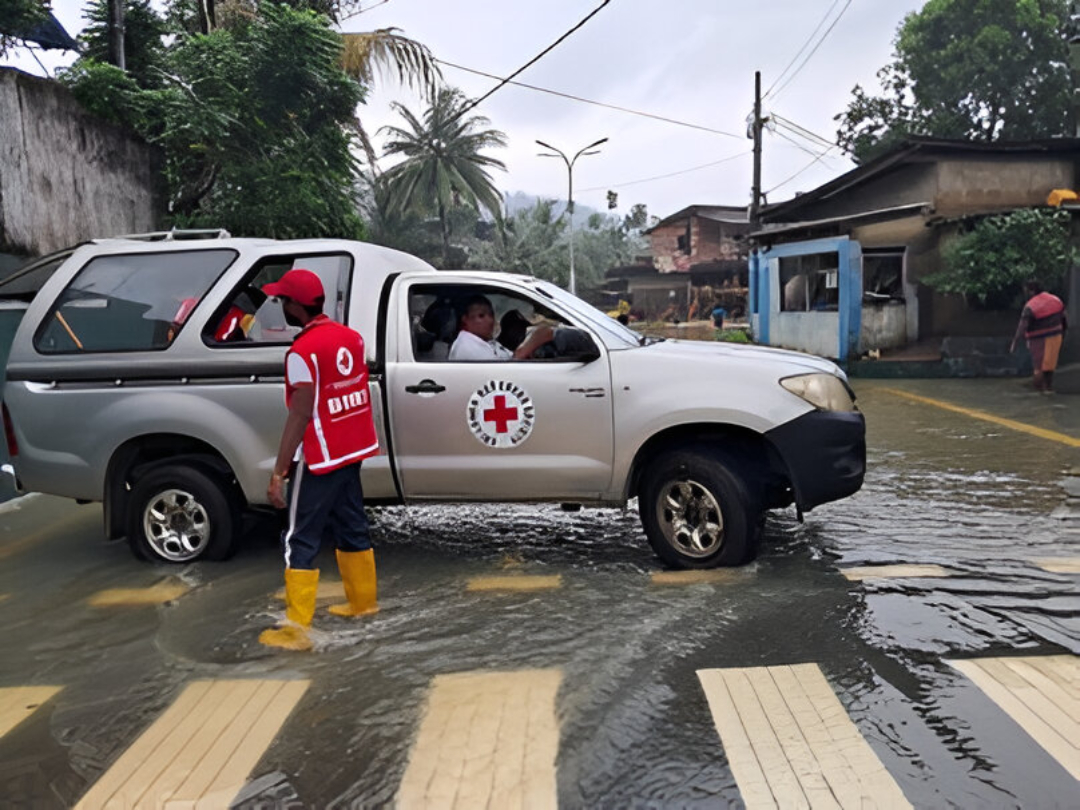
<h6><strong>The Diplomat</strong></h6> <h4><strong>The Spanish Agency for International Development Cooperation (AECID), under the Ministry of Foreign Affairs, has activated an emergency response to the floods in Sri Lanka, Vietnam, and Indonesia by donating €500,000 to the International Federation of Red Cross and Red Crescent Societies (IFRC).</strong></h4> On November 28, Cyclone Ditwah struck Sri Lanka, causing the country's worst flooding in more than two decades. According to the Disaster Management Centre's report of November 29, the cyclone affected all 25 districts of the country. As of December 5, 486 people had died and another 341 remained missing, according to the UN Coordination Office in Sri Lanka. The cyclone also damaged and destroyed approximately 55,000 homes. According to OCHA, at least 172,000 people remain in 1,231 government-run shelters. The actual number of displaced persons remains uncertain due to the lack of official records. The AECID, through its Humanitarian Action Directorate, has responded to the IFRC's emergency appeal in Sri Lanka by activating €150,000 to assist approximately 500,000 affected people. The appeal will focus on integrated assistance (shelter, livelihoods, and cash), health response (including WASH), protection, and prevention. This operation will focus on the most affected districts, particularly Badulla, Ampara, Kandy, and Kurunegala. Separately, Vietnam has been experiencing successive typhoons and monsoon rains since August, causing widespread flooding and landslides. The most severe events occurred in mid-November, triggering a humanitarian emergency in the central regions and the Highlands. According to the Disaster Management Authority, 1.3 million people have been affected and more than 203,000 have been evacuated. The disaster has left 98 dead and 10 missing, in addition to massive damage to homes, crops, and livestock. An estimated 2,400 houses and 90,000 hectares of crops have collapsed. Furthermore, Indonesia, highly vulnerable to climate change, has experienced severe flooding in Jakarta and landslides in several regions since March, affecting thousands of people. In recent weeks, heavy rains and strong winds battered the island of Sumatra in northwestern Indonesia, triggering floods and landslides with casualties and damage. The situation was exacerbated by Tropical Storm Seynar, which passed through between November 24 and 27. As of December 2, the IFRC reports 593 deaths, 468 missing persons, and 2,600 injured in the provinces of West Sumatra, North Sumatra, and Aceh. Furthermore, according to ECHO, 1.5 million people have been affected and nearly 600,000 displaced. In response to these disasters, AECID has made a further contribution of €350,000 to the Disaster Response Emergency Fund (DREF) of the International Federation of Red Cross and Red Crescent Societies (IFRC), which has already been activated to strengthen the response capacity of Red Cross and Red Crescent organizations working on the ground. “With these actions, Spain reaffirms its commitment to being present during the most critical moments of climate emergencies, when humanitarian aid is most needed,” AECID stated in a press release.