
Eduardo González
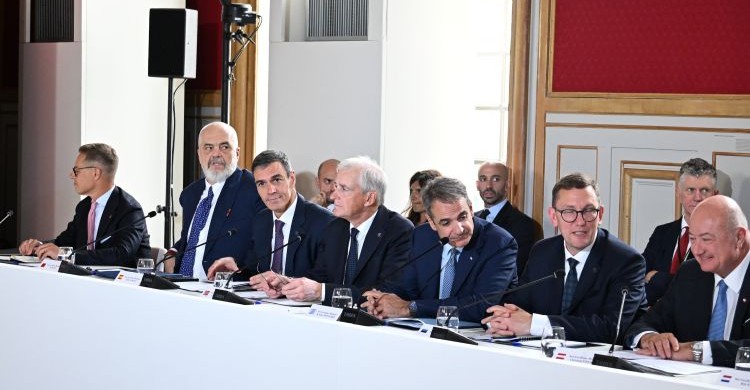
The President of the Government, Pedro Sánchez, and the other leaders participating in the meeting of the Coalition of Volunteers supported on Monday in Paris “the proposal for direct dialogue between Ukraine and Russia, with the active participation of the United States and Europe, to establish a ceasefire” and called for “a lasting peace agreement backed by binding security guarantees.”
The Coalition of Volunteers is an initiative launched in March 2025 by France and the United Kingdom, which has been joined by 35 countries (mostly European, as well as Canada, Australia, and Japan), including some 20 heads of government, to review progress on security guarantees for Ukraine and analyze the collective strategy toward Russia.
According to a press release from Moncloa, Sánchez defended unity and determination in supporting Ukraine “at a decisive moment due to the changing dynamics of the conflict” and stressed the need to demonstrate this determination on all fronts “to open a credible path toward a ceasefire and exert pressure on Russia.”
He also addressed “three strategic areas,” such as the need to guarantee military support for Ukraine, increasing pressure on Russia “by moving quickly with the adoption of the twenty-first sanctions package,” and, with regard to negotiations, the importance of offering security guarantees when the necessary conditions are met. Pedro Sánchez also insisted that Europe’s presence in any negotiation process is “a necessary condition that requires a common position, coordination, and commitment to guarantee the security of both Europe and Ukraine.”
Declaration of the Coalition of Volunteers
At the close of the meeting, the participants adopted a Declaration of the Co-Chairs of the Coalition of Volunteers in which the leaders commit to “achieving a just and lasting peace in Ukraine, in accordance with the principles of international law, including the UN Charter,” and reiterate their call for “a complete and immediate ceasefire in Ukraine and the resumption of direct negotiations.”
They also support “the proposal for direct dialogue between Ukraine and Russia, with the active participation of the United States and Europe, to establish a ceasefire from the line of contact,” as well as “the continuation of constructive negotiations,” based on three parameters: that “any peace agreement must be negotiated with the full and continued participation of Ukraine,” that “no agreement on European interests and security can be negotiated without the Europeans,” and that “Russian assets will remain frozen until Russia ends its war of aggression and compensates Ukraine for the damage caused by the war.”
The participating countries pledge to continue “supporting Ukraine as long as necessary, including military, financial, and civilian assistance” and to “increase the delivery of air defense systems, interceptors, and long-range assets.”
“Aware of the growing threat posed by the use of ballistic missiles and the increasing importance of defensive capabilities for the security of the European continent, we welcome the announcement of the creation of the Ballistic Missile Coalition and express our readiness to work tirelessly to develop additional anti-ballistic missile capabilities,” the statement continues. “We also welcome the decisions to grant Ukraine licenses for the production of interceptors.”
Furthermore, the leaders pledge to “intensify economic pressure on Russia as long as it continues to attack Ukraine” and to continue strengthening sanctions and coordinating efforts to prevent their circumvention. In this regard, they affirm that they will continue “taking measures to destabilize the Russian ghost fleet,” including boarding and monitoring operations.
Regarding security guarantees for Ukraine, the Coalition leaders welcome the “strong declaration” of support by US President Donald Trump for security guarantees at the NATO Summit in Ankara and reiterate that “a lasting peace agreement must be underpinned by politically and legally binding security guarantees that will be implemented once a ceasefire takes effect.”
“These guarantees will be defensive in nature” because “their aim is to prevent the resumption of Russian aggression against Ukraine and to ensure stability and security in Europe,” and they will be “accompanied by long-term military assistance to the Ukrainian Armed Forces,” the Declaration continues.
“We welcome the readiness of the Multinational Force for Ukraine (MNF-U) to act and regenerate Ukrainian forces and provide Ukraine with stability within its territory, on land, in the air, and at sea, at Ukraine’s request, once a credible ceasefire is established. Exercises will be held in the coming months to demonstrate the MNF-U’s ability to intervene once hostilities have ceased,” the text concludes.
Last Wednesday, French President Emmanuel Macron announced—at the close of the NATO Summit in Ankara—the possibility of future joint and unprecedented military exercises by the Coalition countries to “give credibility to and consolidate all the work we are doing together against the phantom fleet,” referring to the ships that help Russia evade international sanctions, and to guarantee “Ukrainian security the day after” the end of the war.