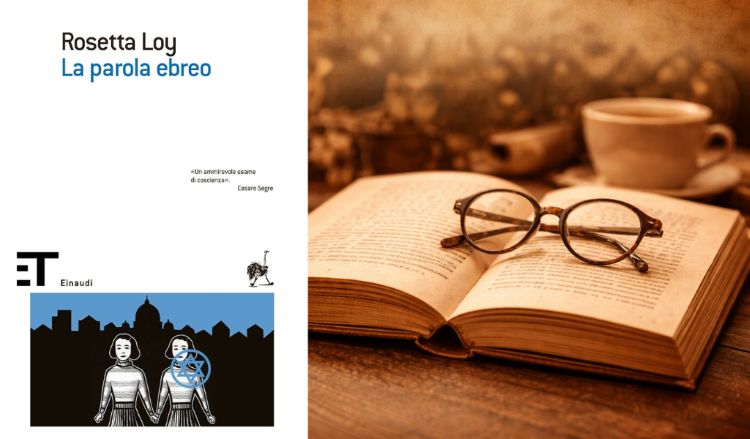
On July 15, from 6:30 to 7:30 p.m., the Italian Cultural Institute of Madrid (Calle Mayor, 86) will host the fifth installment of its series of talks exploring the Jewish influence on 20th-century Italian literature. Led by Rabbi Pierpaolo Pinhas Punturello, this session will focus on the book “La parola ebreo” by Rosetta Loy.
“La parola ebreo” (1997)
“It burns to say it, but a dark edge marks our innocent days, without memory and without history”: It was 1938 when Mussolini launched his anti-Semitic campaign, the first phase of a tragedy that would affect millions. Rosetta Loy’s “The Hebrew Word” transports us to the atmosphere of the years when her Catholic family, along with a certain segment of the Italian bourgeoisie—though not openly aligned with fascism—accepted the racial laws without being aware of the tragedy being committed. The beautiful Roman house, the mountain holidays, the sweet memories of an innocent childhood mingle with more unsettling ones, which gradually become visible in the faces and figures of people suddenly transformed into “others” by decree, and therefore persecuted.
Rosetta Loy (Rome 1931–2022) was an Italian writer. She wrote her first story at the age of nine, but her firm determination to become a writer manifested itself around the age of twenty-five. She debuted with the novel “La bicicletta” (1974), winner of the Viareggio Prize. In her later works, Le strade di polvere (1987, Campiello Prize, Viareggio Prize), Sogni d’inverno (1992), Cioccolata da Hanselmann (1995), Nero è l’albero dei ricordi, azzurra l’aria (2004), and La prima mano (2009), her clear, essential, and concrete writing allows her to rediscover, time and again, the themes dear to her: love, death, war, and children. In La parola ebreo (1997), set during the era of racial laws, individual and collective memory overlap, underscoring the weight of historical and moral responsibility. In 2017, the writer was awarded the Campiello Prize for lifetime achievement.
Advance booking is required by writing to biblioteca.iicmadrid@esteri.it, indicating the name, surname, and telephone number of all participants and specifying “Readers’ Circle 15/07” in the subject line.
Registered participants will receive a few pages of the text before the meeting.