
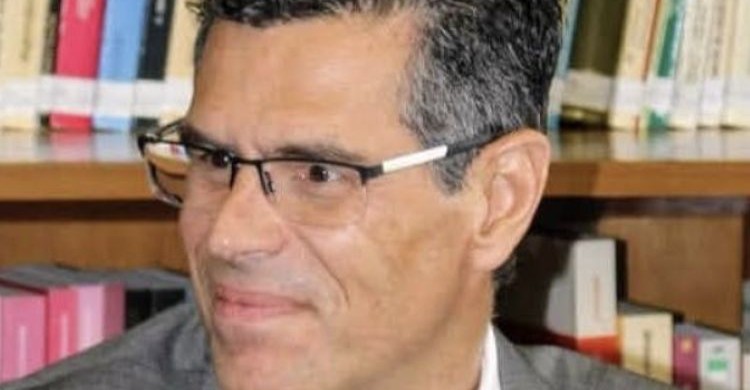
Eduardo González
The president of the Spanish Association of Diplomats (ADE), Alberto Virella, has asked the Ministries of Foreign Affairs and Justice to take the initiative to explain to citizens the existing regulations for registering as residents in Spain for those who acquire Spanish nationality, following the controversy sparked by complaints from the People’s Party (PP) and Vox regarding the alleged “electoral” use of the Democratic Memory Law, better known as the “Grandchildren Law.”
The president of the People’s Party, Alberto Núñez Feijóo, has denounced this week that the “Grandchildren Law” is an “electoral ploy” implemented by the Prime Minister, Pedro Sánchez, to grant voting rights to 2.5 million people in a very short period. He also asserted that “there is a great deal of arbitrariness” in the procedure for registering new Spanish citizens on the electoral roll, which could lead to the assignment of provinces to these new citizens based on the electoral needs of the Socialist Party (PSOE).
For her part, the president of the Community of Madrid, Isabel Díaz Ayuso, warned on Monday that “every consul and every official who grants citizenship to someone who does not deserve it must know that they too would be acting illegally, and that serves as our warning.” Likewise, the Secretary General of Vox in Congress, José María Figaredo, declared this week that this law constitutes a “slow-motion coup” and demanded that Spaniards residing abroad be denied the right to vote by mail.
In statements to The Diplomat, Alberto Virella warned this Friday that naturalized citizens are assigned provinces based on three criteria: their last place of residence in Spain, if any, or, in the case of foreigners, their last residence in Spain; the family’s place of origin of the ancestor who had to leave Spain, in the case of descendants born abroad; and a Spanish town with which the applicant can document some kind of connection or personal link. “It is not contemplated that, due to a default or lack of a specific province, the consul general should decide” in this regard, he asserted.
In Virella’s opinion, these kinds of controversies are largely due to the “indifference and neglect” of public authorities. “Why isn’t the Ministry of Foreign Affairs explaining the procedures for registering new Spanish citizens, or even those who aren’t so new? Because the same rules apply to the many Spaniards who left after the 2008 financial crisis,” he asked. “This is a clear case that the Ministry of Foreign Affairs, or the Ministry of Justice, should explain. Why aren’t they?”
In response to Virella’s statements, the Ministry of Foreign Affairs affirmed this Friday that, “in recent days,” it has sent information regarding the Democratic Memory Law to “a large number of media outlets,” including The Diplomat in Spain, and assured that it “remains open to providing information to all media outlets that request it.” “Furthermore, the Ministry’s website features a section on the Democratic Memory Law in Foreign Affairs, available to everyone,” it added.
“The ‘vacatio legis’ of 2007
In any case, the president of the ADE admitted that there is a “positive aspect” to this controversy, and that is that, “finally,” it will help “citizens realize that the public administration has an international presence, that the General State Administration also exists beyond our borders.”
According to Virella, the major underlying problem when addressing the “Grandchildren Law” is the “enormous workload of the foreign service.” “In 2000 there were one million Spaniards abroad; currently there are 3.2 million, to which we can add those covered by the Grandchildren Law,” but the human resources currently “are the same as they were 26 years ago.” “In 2007, the Consulate General in Argentina handled 60,000 nationality applications and took thirteen years to process them; “In 2022, it has served 640,000 people. How long will it take with the same resources?” he continued.
All of this demonstrates, he warned, the “lack of foresight in the Democratic Memory Law.” “The 2007 Historical Memory Law stipulated, in its additional provision on granting nationality, a one-year ‘vacatio legis,’ a one-year postponement before its entry into force so that the public administration and the external network could prepare,” but “the 2022 law has no ‘vacatio legis’; it came into force the very day after its publication and, moreover, greatly expands the potential number of people who can benefit from it: any grandchild of a Spanish citizen who had to leave Spain even before the Civil War,” explained Alberto Virella.
Regarding the accusations made by Díaz Ayuso against consulate officials, the president of the ADE warned that these workers “dedicate all their time” to They are doing their job and are “on the front lines of pressure from citizens who complain” about problems in the Foreign Service. “The Ministry of Foreign Affairs is responsible, not them, because it hasn’t allocated resources to the consular network adapted to its needs,” he added.
Following the PP’s complaints, Foreign Minister José Manuel Albares stated this Wednesday on the TVE program ‘Mañaneros 360’ that “what the Popular Party and Mr. Feijóo are doing is a betrayal of the Spanish people.” “What the Popular Party wants is for three and a half million Spaniards to be unable to vote,” insisted the minister, who asserted that “the vast majority of those Spaniards currently residing abroad are Spanish citizens by birth.”
He also denounced the “enormous hypocrisy” of Feijóo and the PP because “this law was precisely what they included in their 2023 electoral program.” Specifically, the electoral program for the May 23 elections In July 2023, a proposal was made to guarantee the right to Spanish nationality for descendants of Spaniards through a “reformed Law on Access to Nationality for Grandchildren” and by “strengthening the Consulates responsible for processing nationality applications.”
The Law of Democratic Memory, which replaces the Historical Memory Law of 2007, has been in force since October 2022 after being approved by the Congress of Deputies and the Senate at the proposal of the government of Pedro Sánchez, with votes against it from, among others, the People’s Party and Vox. The law grants Spanish nationality to “those born outside of Spain to a father or mother, grandfather or grandmother, who were originally Spanish, and who, as a consequence of having suffered exile for political, ideological, or religious reasons, or due to their sexual orientation and identity, have lost or renounced their Spanish nationality.”
As of April 30, 2026, the number of naturalization applications totaled 2,622,450 applications were submitted, and the number of approved applications totaled 557,709, according to a parliamentary response from the Ministry of the Presidency and Justice to the People’s Party (PP). The granting of citizenship is stipulated in the eighth additional provision of the “Grandchildren Law.” Despite this, the more than 70 amendments submitted by the PP to the law at the time made no mention of this provision.