
Eduardo González
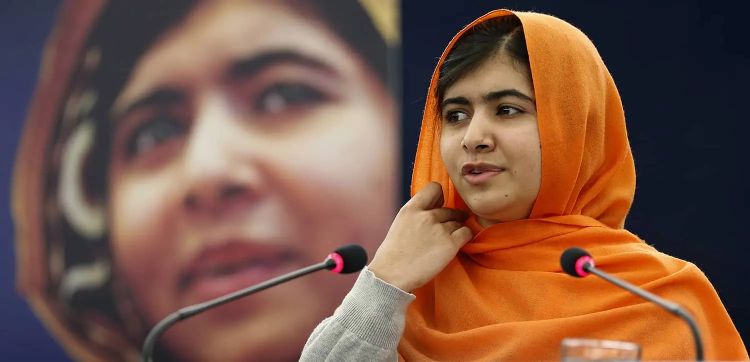
The Ministry of Foreign Affairs has awarded the Isabel Oyarzábal Prize to Pakistani activist Malala Yousafzai in recognition of her “outstanding career in the defense of human rights and, in particular, the right to education for girls and women worldwide.”
The prize was announced this Thursday by the Minister of Foreign Affairs, José Manuel Albares, on the occasion of International Women in Diplomacy Day. The award, established in 2025, is named after Isabel Oyarzábal (1878–1974), a pioneer of Spanish feminism, the first woman to represent Spain at the League of Nations, and the first female Spanish ambassador. The award ceremony will be held soon at the Ministry headquarters, presided over by the Minister.
According to the Ministry’s press release, Malala Yousafzai is “a renowned human rights activist and advocate for the right to education for women and girls.” Her career highlights include the founding, in 2013, of the Malala Fund, created to guarantee twelve years of free, safe, and quality education for all girls.
When she was eleven years old, Malala Yousafzai witnessed the Taliban order the closure of the girls’ school in Mingora (the main city in her region, the Swat Valley), run by her father, Ziauddin Yousafzai. In 2009, when the Pakistani government was able to expel the Taliban from Swat, Malala Yousafzai stepped out of anonymity and began campaigning publicly for girls’ education throughout the country alongside her father.
In October 2012, at just fifteen years old, Malala Yousafzai survived an assassination attempt by the Taliban while traveling on a school bus in Swat, in retaliation for her activism in support of girls’ education. The two Taliban militants justified the attack by arguing that “she was young, but she was promoting Western culture.” Rushed to the United Kingdom, doctors managed to save her life after multiple operations.
That attack generated strong international support for her. When she awoke in a Birmingham hospital ten days later, Malala Yousafzai had become a global symbol of human rights and women’s rights. Furthermore, in 2013, 2014, and 2015, Time magazine included her as one of the 100 most influential people in the world.
In 2013, she received the Sakharov Prize for Freedom of Thought, awarded by the European Parliament, and in 2014, at just 17 years old, Malala Yousafzai became the youngest person in history to receive the Nobel Peace Prize, which she shared with Indian activist Kailash Satyarthi for their fight against child oppression and in defense of the universal right to education. In her acceptance speech, she thanked her parents for “not clipping my wings, for letting me fly” and stated that the prize was not only for her, but “for those forgotten children who want education, for those frightened boys and girls who want peace.”
In 2013, the activist and her father created the Malala Fund, to which she donated her Nobel Prize money, worth more than €800,000. In the time since receiving the Nobel Prize, Malala Yousafzai has earned degrees in Philosophy, Politics, and Economics from the prestigious University of Oxford and has even gotten married.
According to the Spanish Ministry of Foreign Affairs, “Malala Yousafzai’s leadership and commitment have established her as one of the leading global voices for equality and social justice.” Currently, her campaign for the criminalization of gender-based violence, or gender apartheid, stands out, “which aligns with Spain’s firm commitment to promoting accountability for human rights violations, with particular attention to the situation of women and girls in Afghanistan.”
In November 2024, Spain, along with Chile, France, Costa Rica, Mexico, and Luxembourg, submitted a complaint to the Office of the Prosecutor of the International Criminal Court regarding the situation in Afghanistan, urging it to consider investigating the crimes committed by the Taliban against women and girls. Also, in October 2025, Spain supported the establishment in the United Nations Human Rights Council of an independent mechanism to investigate human rights violations committed by the Taliban regime.