
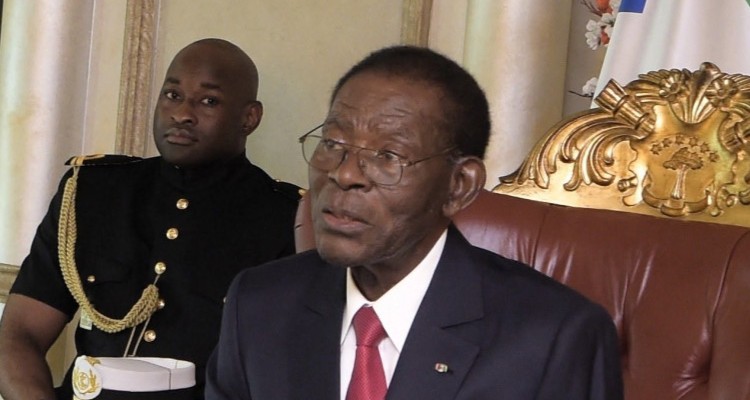
Eduardo González
The president of Equatorial Guinea, Teodoro Obiang Nguema, has forced the mass resignation of his government due, among other reasons, to the “misuse of state resources for personal gain, fueled by corruption for illicit enrichment, to the detriment of the population’s interests.” The opposition in exile in Spain has asked the head of state, given his “inability to combat corruption,” to “step aside, along with his entire family,” and submit his “resignation.”
On June 16, an extraordinary meeting of the Council of Ministers was held in Malabo with a single item on the agenda: the request for the collective resignation of the Government of the Republic of Equatorial Guinea, submitted by Prime Minister Manuel Osa Nsue Nsuga, who, on behalf of all members of the Executive, placed his responsibilities at the disposal of the Head of State to facilitate any decisions he deems appropriate in the best interests of the Nation and the strengthening of government action, according to the Government website.
“We are aware that, despite the efforts made, the complex challenges posed by the current economic situation require redoubled efforts and the adoption of new responses that will allow us to more effectively address the legitimate aspirations of our people.” “In this regard, we understand that the country’s current needs demand a constant renewal of energy, capabilities, and approaches to continue driving national development,” the government spokesperson stated.
According to the statement, these resignations are due to “weaknesses observed” by Obiang himself “during the outgoing government team’s tenure,” including “a lack of dynamism” in economic management and “the misuse of state resources for personal gain, fueled by corruption for illicit enrichment, to the detriment of the population’s interests, who will demand accountability from the ruling party that once entrusted them with their confidence.”
Other reasons cited include “stagnation” in the implementation of development projects, a lack of dynamism in implementing economic diversification policies, “especially in the agricultural sector, which could reduce dependence on imported products that can be produced domestically,” and a lack of transparency.
The opposition in Spain
In response to this information, the Progress Party of Equatorial Guinea (PPGE), an outlawed opposition party whose leadership is in Spain, warned this Thursday, June 18, in a statement that the mass resignation of the Government demonstrates that “it is not only the ministers who have failed; “The very system of power that sustains a dictatorship prolonged for decades has also failed.”
“President Obiang has stated that leadership must be reflected in concrete results and efficient management of public responsibilities,” the statement continues. “We, the Progress Party of Equatorial Guinea, apply this same criterion to the highest-ranking official in the Head of State,” it adds.
“If you have reached this conclusion after a sincere exercise in self-criticism regarding a dictatorship that has already lasted 47 years, you must also recognize that none of your governments have truly worked to respond to the social demands of the Guinean people,” the PPGE warns, addressing Obiang. “We agree with you that your government has been incapable of combating corruption,” because “while numerous ministers have amassed great fortunes, a large part of the population continues to live in poverty and precarious conditions,” denounces the party led by Armengol Engonga Ondo.
Therefore, the PPGE warns Obiang that “he must step aside, along with his entire cabinet.” family and submit his resignation,” urges him to “enact a law that facilitates a genuine political transition” and asks him to summon “the ambassadors of Spain, France, and the United States to officially inform them of his decision.”
It also urges Obiang to “facilitate a real political transition in which other political actors participate” and warns him that “if this forced resignation is part of a plan to install his son (the Vice President in charge of Defense and State Security, Teodoro Nguema Obiang Mangue, popularly known as ‘Teodorín’) as his political successor, rest assured that we will do everything possible to prevent it through political and democratic means.”