
Eduardo González
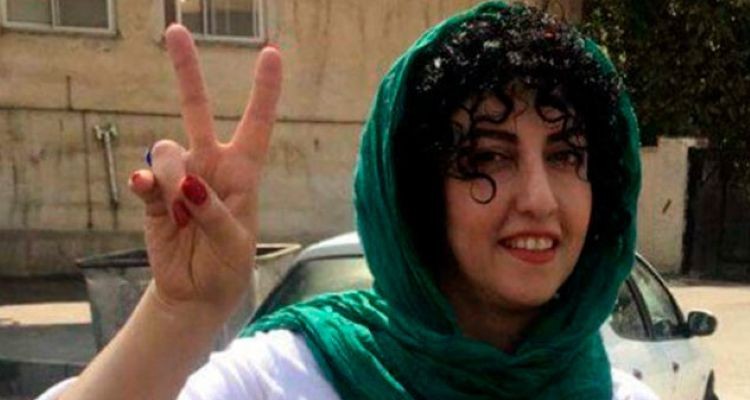
The Foreign Affairs Committee of the Congress of Deputies on Wednesday urged the Government to “firmly, clearly, and publicly condemn the systematic repression carried out by the Islamic Republic of Iran against its own population” and to demand the “immediate and unconditional release” of Iranian activist and Nobel Peace Prize laureate Narges Mohammadi.
The Lower House approved a non-binding resolution from the People’s Parliamentary Group urging the Government, among other measures, to “firmly, clearly, and publicly condemn the systematic repression carried out by the Islamic Republic of Iran against its own population, including executions, the persecution of political opponents, the repression of women, arbitrary detentions, torture, and the continued violations of fundamental freedoms.”
The resolution also urges the government to “demand that Iranian authorities immediately cease executions and the use of the death penalty as an instrument of political intimidation and social control, especially against protesters, activists, journalists, women, and members of ethnic and religious minorities,” and to “demand the immediate and unconditional release of Narges Mohammadi.”
During the debate, Cayetana Álvarez de Toledo, of the People’s Party (PP), denounced that “Narges Mohammadi has been persecuted and intermittently imprisoned by the Iranian regime for two decades,” and although “she is currently at home, recovering,” she still “has 18 years of her sentence remaining.”
Furthermore, the congresswoman conflated the Mohammadi case with other human rights situations around the world, such as those in Venezuela and Cuba, and even with accusations against former president José Luis Zapatero. She criticized the government for invoking international law to condemn Washington’s war against Tehran “while Iran executed more than 1,600 people last year.”
“My party called for a ban on the burka in Spain, and the PSOE voted against it in the name of cultural relativism, but the veil is not a garment; it is the symbol of an ideology that denies women freedom and even life,” she continued. “There isn’t one feminism for the West and another for the East,” she warned. “Calling for the release of Narges Mohammadi while defending in Spain the symbol of the ideology that imprisons her is a pure contradiction, as is defending Narges while despising, for example, María Corina Machado,” she added.
“To call for the release of Narges Mohammadi and defend in Spain the symbol of the ideology that imprisons her is a pure contradiction, as is defending Narges while despising, for example, María Corina Machado,” she concluded.
On behalf of the PSOE, Cristina Narbona stated that her party agrees with the PP’s proposal and even confessed that she was pleased that, “for once, there can be agreement, because it is also an opportunity to make it abundantly clear in this Committee that the Government of Spain has not had the slightest collusion with the Iranian regime, and that is not how the Popular Parliamentary Group has interpreted it on many occasions.”
“Ms. Álvarez de Toledo has spent most of her time talking about other countries and other circumstances, but, precisely because we believe in something she herself has said, that human rights must be universal, in our amendment to her initiative all we do is avoid making the death penalty objectionable only in certain circumstances,” she continued.
“Ms. Álvarez de Toledo, who has spoken about many countries and circumstances undoubtedly subject to a very negative assessment in terms of foreign policy, has not mentioned at all that, in a country like Israel, Parliament recently passed a law that effectively means the death penalty for Palestinians. And if we are against the death penalty, which we are, we should be against it in every country in the world,” she warned.
According to Narbona, the Minister of Foreign Affairs, José Manuel Albares, “has already demanded on several occasions that the Iranian regime release Narges Mohammadi, because it is part of the principles of our foreign policy (…): a staunch defense of women and girls within the context of feminist foreign policy.”
For her part, Viviane Ogou, from Sumar, insisted that, “regardless of the situation in the Middle East, we believe we must continue working to ensure that Iran respects human rights, that these persecutions cease, and that the lives of so many people, including women, are not affected in this way.”
According to Ogou, Narges Mohamedi is a “symbol of democratic resistance, a human rights journalist and Nobel Peace Prize laureate in 2023, who has dedicated her life to denouncing discrimination against women” and who “has been arrested numerous times, spent years in prison, and suffered serious health problems without receiving adequate medical care, even after receiving the Nobel Peace Prize.”
“Therefore, we must maintain a firm and consistent position, continue denouncing human rights violations, continue working with Iranian civil society, and continue working to guarantee protection for human rights defenders, because human rights cannot depend on geopolitics, but must be guaranteed worldwide,” he added.
Summons to the ambassador
On May 7, José Manuel Albares announced before the full session of Congress that the Ministry of Foreign Affairs had summoned the Iranian ambassador in Madrid, Reza Zabib, to convey its concern about the situation of Narges Mohammadi, “who is in critical health condition after her condition worsened in prison.” Four days later, the minister welcomed the Iranian activist’s hospitalization and demanded the “complete overturning” of her sentence and her “immediate” release.
Narges Mohammadi, 54, vice president of the Center for Human Rights Defenders, was awarded the Nobel Peace Prize in 2023 while serving a ten-year prison sentence in Tehran, “for her struggle against the oppression of women in Iran and her fight to promote human rights and freedom for all.”
According to her family, she was brutally beaten by prison authorities and, after a three-month hunger strike, suffered what may have been a heart attack. Mohammadi was admitted to a Tehran hospital on May 10 for treatment of her “multiple illnesses” at the request of her family and doctors, after Iranian authorities agreed to suspend her sentence “for medical reasons” in exchange for bail. “That suspension of his sentence must become a complete lifting of that sentence,” and Mohammadi “must be freed immediately,” Albares declared the following day in Brussels, upon arriving at the EU Foreign Affairs Council meeting.
Meanwhile, the Sumar Plurinational Parliamentary Group (a minority party in Pedro Sánchez’s coalition government) in Congress accused the regime of the Islamic Republic of Iran last April of having used the context of war as “cover to drastically intensify internal repression,” including arbitrary arrests and the use of the death penalty at “unprecedented levels.”