
Eduardo González
The Foreign Affairs Committee of the Congress will address this Wednesday, June 10, the opinion on the Treaty of Friendship and Cooperation between the Kingdom of Spain and the French Republic, after both parties accepted the “interpretation” of the controversial article that allowed members of the government of one party to participate in the Council of Ministers of the other. This interpretation was rejected by the People’s Party and led to the Treaty’s rejection in the Congress in May 2025.
The Council of Ministers approved the submission of the Treaty to the Cortes Generales (Spanish Parliament) on April 21, using the urgent procedure, and authorized Spain’s expression of consent to be bound by the Treaty. A week later, the Bureau of the Congress of Deputies entrusted the Foreign Affairs Committee with an urgent report and established a deadline for submitting proposals, which would be considered amendments to the entire text or to specific articles, for a period of eight working days that ended on May 13.
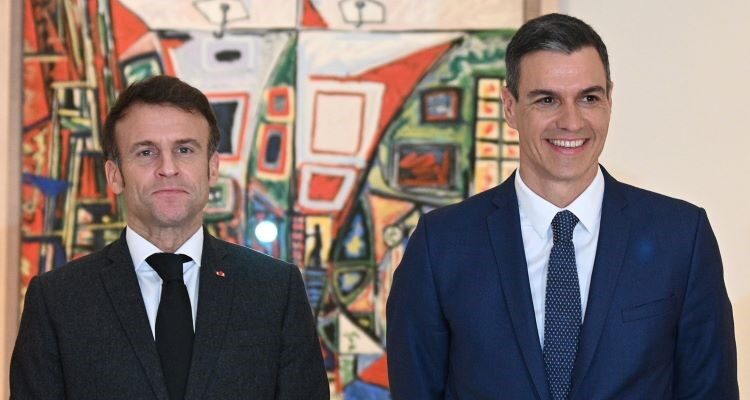
The Treaty of Friendship and Cooperation between the Kingdom of Spain and the French Republic was authorized by the Council of Ministers on January 17, 2023, and was signed on January 19, 2023, in the Catalan capital (hence its alternative name, the “Treaty of Barcelona”) by the Prime Minister, Pedro Sánchez, and the President of France, Emmanuel Macron, within the framework of the XXVII Spanish-French Bilateral Summit.
This is the first agreement of its kind between the two countries and elevates bilateral relations to the highest possible level, comparable to the relationship Spain has had with Portugal since the Trujillo Summit of October 2021. France has already ratified the text, but Spain has not yet been able to take that step due to doubts about its constitutionality.
At the end of January 2025, the Council of Ministers agreed to the first submission of the text to the Spanish Parliament (Cortes Generales) on an urgent basis and also authorized Spain’s expression of consent to be bound by the aforementioned treaty.
However, just one week later, the People’s Party (PP) filed a constitutional challenge against the Treaty, arguing that one of its articles, the one stipulating that “a member of the Government of one of the Parties shall be invited to the Council of Ministers of the other Party, at least once every three months and on a rotating basis,” is incompatible with the Constitution.
On February 12 of the same year, the Senate plenary session approved the appeal of unconstitutionality against the Treaty, with votes in favor from the PP (which holds an absolute majority in the Upper House), UPN, and Vox, and votes against from the PSOE and its other usual parliamentary partners. A month later, the Constitutional Court accepted the request made by the Lower House.
The Socialist Group had asserted, contrary to the PP’s arguments, that the Constitution does not expressly prohibit the presence of non-government members in Council of Ministers meetings and pointed out that the presence of foreign representatives at government meetings in other European countries is not uncommon, and even that Pedro Sánchez himself has attended meetings of the German government.
Finally, the Treaty was rejected on May 15, 2025, by the plenary session of the Congress due to the votes against it by the People’s Party (PP), which insisted on the need for the Constitutional Court to rule on the text before any approval, and the abstentions of Junts and Podemos.
Last December, the Constitutional Court opted not to rule on the appeal previously filed by the Senate at the initiative of the PP, considering that the parliamentary “no” vote prevented the validation of the text. The Treaty can only be ratified when it has the support of both Houses, but, whatever happens in the Cortes Generales (Spanish Parliament), the future of this text depends on the decision of the Constitutional Court.
In an attempt to save the Treaty, the foreign ministers of both countries agreed, through letters exchanged on April 6 and 10, 2026, on “the interpretation of Article 2.4 of the Treaty.” Once that interpretative agreement was reached, the Council of Ministers resubmitted the agreement to Parliament.” It has not been specified exactly what the “interpretation” of the aforementioned article consists of.