Text and photos: Juan David Latorre
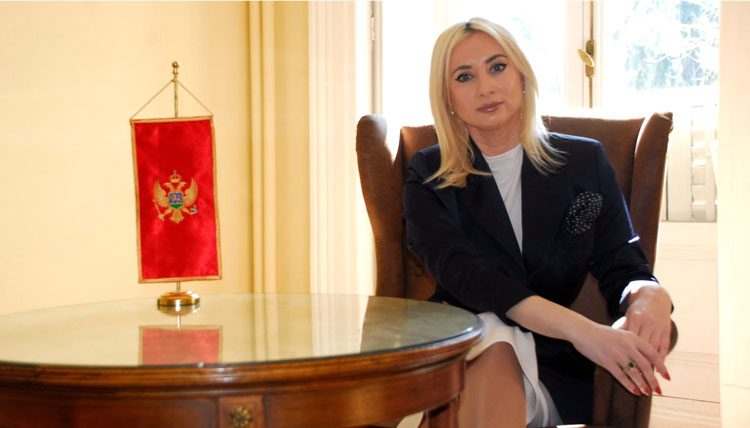
The accession of the Western Balkan countries to the European Union is an ongoing process involving six partners at different stages of progress. There is no single date for their entry, although timeframes such as 2028-2030 are being considered for the most advanced candidates. And Montenegro is the most advanced country. We spoke with the Montenegrin Minister of Foreign Affairs, Maida Gorcevic, about this issue and other current affairs.
– Danish Minister for European Affairs Marie Bjerre, upon assuming her country’s six-month Presidency of the Council of the EU, stated that “if we don’t move forward, we risk losing them,” referring to the Western Balkans’ accession to the EU, given that “we see the United States has withdrawn and Russian influence is very present.” When will EU accession be posible, in 2030 or in 2028, as Prime Minister Milojko Spajić suggested?
I agree with my Danish counterpart, Ms. Bjerre, on the importance of the EU maintaining a consistent presence in the foreign policy priorities of the Western Balkan candidate countries. Similarly, I agree that these candidate countries must remain consistently aligned with the EU, as they are highly vulnerable to malicious foreign influence while they remain in the pre-accession phase. Montenegro remains firmly committed to the goal this Government set upon taking office: EU accession by 2028. Whether in the difficult circumstances surrounding our integration process at that time, or today, when we are undoubtedly the most advanced candidate country and the only one in the final stage of accession negotiations, that commitment has never wavered. There is no room for modesty when it comes to the results Montenegro has achieved in the last two and a half years. We have closed a significantly greater number of chapters than in the first twelve years (2012-2023) of negotiations together, we have obtained the IBAR, we have joined the SEPA payments area, and we have received confirmation that the drafting of the Accession Treaty is both certain and imminent. These achievements demonstrate that Montenegro can carry out processes that truly transform society and has earned its place in the European Union.
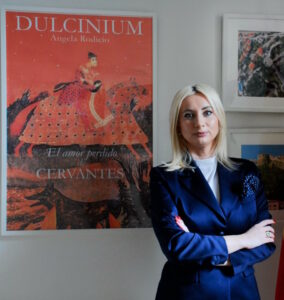
– How are Montenegro’s obligations to the EU for its accession currently progressing? Do you think it’s possible to finalize the 20 remaining chapters to be negotiated with the EU by the end of this year or the beginning of 2027?
Our plan for broad social, economic, and political reforms wasn’t particularly convincing to many at the start of this government’s term. However, our track record has shown that when ambition is combined with commitment and hard work, surprisingly significant results are achieved. Many of the remaining 20 chapters are already sufficiently prepared internally, which means we consider them ready for finalization and are awaiting confirmation from the EU. The chapter finalization process is progressing according to schedule, and I don’t foresee any delays. Never before have so many people and institutions been committed to the European path in Montenegro, which, besides impressing me, gives me genuine confidence that we will reach 2027 with the negotiations concluded.
– The chapters related to the Green Agenda and Fundamental Rights are the least advanced. Which chapters, specifically, are proving most challenging?
The chapters included in the “Fundamentals” thematic group have always been the most demanding for any country and society undergoing the accession process. Precisely for this reason, at the initiative of French President Macron, a new methodology was introduced several years ago that groups the chapters into thematic blocks and ensures that this block is completed last. This represents a deliberate recognition of the paramount importance of the rule of law, judicial independence, and civil and media freedoms. Having said that, I would like to recall that the most recent European Commission report indicated progress in these areas over the past year. Furthermore, Montenegro remains the only candidate country in the entire history of the accession process to have received an Interim Baseline Assessment Report (IBAR) for chapters 23 and 24, which deal primarily with the rule of law and the fight against corruption and organized crime. As for the environmental chapters, in their original form, these have historically required candidates -for example, those of the Former Eastern Bloc countries- significantly larger financial commitments than could realistically be sustained without placing serious strain on public finances. For this reason, transitional arrangements are a standard and well-established feature of the accession process, and we expect this to apply equally to Montenegro. These are always challenges for candidates, but our progress on all of them is unequivocal.
– According to polls, the majority of the Montenegrin population is in favor of joining the EU, but there is still a significant segment that is anti-European and pro-Russian. Could Montenegro at some point become a new Hungary within the EU?
Montenegro is one of the few European countries, both among candidate and member states, that has no Eurosceptic political force in its Parliament. The consensus we have achieved in parliamentary votes, both among the opposition and the governing majority, is mainly focused on the legislation needed to finalize the negotiation chapters with the EU. This demonstrates that European integration is a goal that truly encompasses all of society, and not just a government or party agenda.
I do not believe that comparisons between Montenegro and Hungary are well-founded, given the considerably different cultural influences, distinct historical trajectories, and incomparable geostrategic characteristics of both countries. Furthermore, the limited skepticism that exists in Montenegro regarding EU accession, which is not significant, is best understood as a reflection of a particular relationship with certain periods in history when Montenegro stood apart from the Western value system; I do not believe it should be interpreted as pro-Russian sentiment or as a permanent category.
– Is the Government of Montenegro in favor of the individual or group accession of the Western Balkan countries to the EU?
The Government of Montenegro is a firm supporter of the merit principle, as it believes that economic and values convergence with the EU average, as well as the genuine assimilation of European standards, is the only path that truly benefits the societies of candidate countries and the internal stability of the Union itself. We believe in the “race” principle, according to which each country, once it meets the required criteria, should become a member of the EU. These criteria must be assessed meritocratically, not through a political lens or based on bilateral relations. We want to see all of the Western Balkans in the EU, as this is good for us, for the region, and for the Union, but this should happen when the economic and political criteria are met—something Montenegro is working diligently toward.
– Do you see any possibility of Kosovo ever joining the EU?
Montenegro supports the dialogue between Belgrade and Pristina, hoping that it will lead to regional stability and a European perspective for both countries. I believe that Kosovo, like all the Balkan countries, can one day become a member of the EU, provided that its societies and political leaders recognize the importance of the European integration process and commit to implementing reforms and advancing democratization.
– Iran, Gaza, Venezuela, Sudan… what is your opinion on all the conflicts that are currently worrying the world?
The world has gone through numerous crises in recent years with dramatic consequences, from the COVID-19 pandemic to Russia’s aggression against Ukraine, to the new conflicts in the Middle East. I am deeply concerned that awareness of the importance of peace -or at least of stability based on compromiso- seems to be fading globally. This carries risks of various kinds and makes the future extremely unpredictable. The deterioration of global security is diverting attention from the goals of democratization, the consolidation of human rights, freedoms, free trade, and cooperation toward issues of armament and self-sufficiency. I do not believe this is a positive trajectory. Regarding the recent conflicts, Montenegro aligns its efforts with those of our NATO partners, which are focused on de-escalation, dialogue, and long-term stability.