Ane Barcos
European Commission President Ursula von der Leyen announced this Friday that the provisional implementation of the agreement between the European Union and Mercosur will proceed. This announcement comes after the European Parliament approved a resolution on January 27 requesting that the Court of Justice of the European Union rule on the legality of the Mercosur agreement.
In its January plenary session, Parliament adopted a resolution with 334 votes in favor, 324 against, and 11 abstentions, requesting a legal opinion from the Court of Justice of the European Union (CJEU) on the EU-Mercosur Association Agreement (APEM) and the Interim Trade Agreement (ATI).
The European Parliament will not be able to vote on the agreement until the CJEU has issued its opinion on its legality, which, it was warned, could take more than a year.
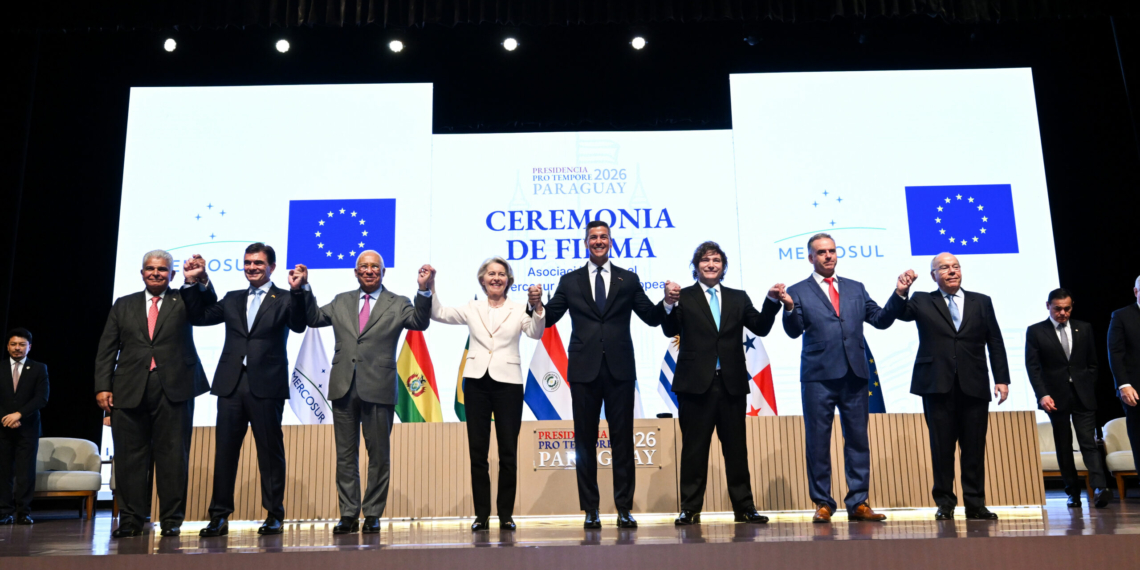
However, the European Commission confirmed this Friday that it will apply the agreement provisionally. This measure was announced by the President of the European Commission, Ursula von der Leyen, one day after Uruguay and Argentina ratified the agreement, and with the expectation that Brazil and Paraguay will follow suit in the near future.
The head of the EU executive emphasized that the ratification by these two countries “shows the confidence and interest of our partners in advancing our relationship.” She added that the agreement “creates a market of 720 million people and opens up opportunities for small and medium-sized enterprises,” while also “reducing tariffs by billions.”
The President stressed that the provisional application of the agreement is aligned with the Treaties of the European Union, and that final ratification will only take place once the European Parliament has given its consent.
Von der Leyen reiterated that “the Commission will work closely with EU institutions, Member States, and other stakeholders to ensure a transparent process.” The president emphasized that the agreement with Mercosur is “one of the most important in the first half of this century” and that it represents an opportunity to strengthen Europe’s strategic position in the world.