
The Diplomat
Foreign Minister José Manuel Albares and his counterparts from some thirty countries have signed a joint ministerial declaration denouncing “the continued illegal and deadly attacks against civilians, civilian infrastructure, and humanitarian operations” in Sudan.
“We express our deep concern about the continued illegal and deadly attacks against civilians, civilian infrastructure, and humanitarian operations, as intense fighting continues in the states of Kordofan and Darfur,” begins the declaration, released this Thursday, February 19, and signed by the foreign ministers of 24 EU countries (Lithuania, Croatia, and Greece are absent), the foreign ministers of the United Kingdom, Canada, New Zealand, Iceland, Norway, and Switzerland, and Hadja Lahbib, European Commissioner for Equality, Preparedness, and Crisis Management.
“The recent and serious escalation of airstrikes and drone attacks, including those targeting displaced civilians, health facilities, food convoys, and areas near humanitarian complexes, has resulted in a significant number of civilian deaths and injuries and is further disrupting humanitarian access and supply lines,” the statement continues.
In just the last few weeks, according to the signatories, “drone and rocket attacks against World Food Programme trucks and warehouses, as well as health facilities, have caused death and serious injury to civilians and humanitarian personnel, and the destruction of urgently needed humanitarian supplies and infrastructure.” “Intentional attacks against humanitarian personnel, vehicles, or supplies, as well as deliberately obstructing relief deliveries, are contrary to international humanitarian law and may constitute war crimes,” they warn.
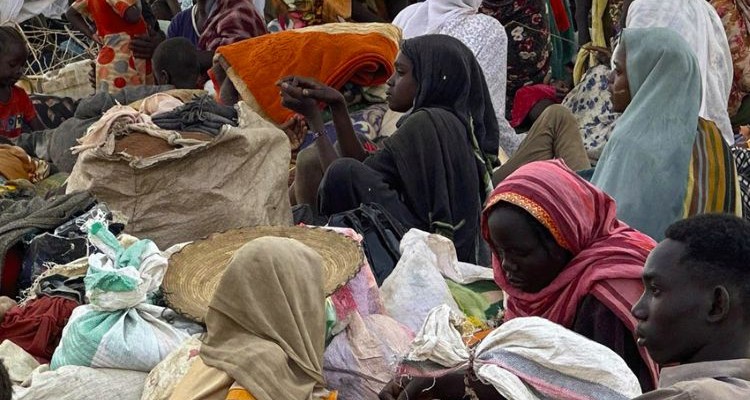
According to the ministerial declaration, “the states of Darfur and Kordofan remain the epicenter of the world’s largest humanitarian and protection crisis.” “Sexual and gender-based violence is widespread and on the rise, famine has been confirmed, and severe hunger continues to spread,” the text states. “In Kordofan states alone, up to 100,000 people have been displaced in recent months,” and, according to the United Nations High Commissioner for Human Rights, Volker Türk, “the violations and abuses committed by RSF and its allied militias in and around El Fasher last October risk being repeated in the Kordofan region,” it adds.
For all these reasons, the signatory ministers urgently reiterate their appeal to the Rapid Support Forces (RSF), the Sudanese Armed Forces (SAF), and their allied militias to immediately cease hostilities and condemn in the strongest possible terms the abhorrent violence against the civilian population, particularly women and children, as well as all serious violations of international humanitarian law.
These violations may constitute war crimes or crimes against humanity, must be investigated promptly and impartially, and those responsible for international crimes must be brought to justice, the declaration warns.
All parties must respect international humanitarian law, which includes the obligation to allow and facilitate rapid, safe, and unimpeded access to food, medicine, and other essential supplies for the civilian population in need, it continues. “Civilians, including humanitarian personnel, must be protected at all times, particularly women and girls, who remain at risk of sexual and gender-based violence. Safe passage must be guaranteed for those fleeing,” the signatories warn.
“We stand with the people of Sudan and the humanitarian organizations, both local and international, that are working tirelessly and under extremely difficult conditions to help them,” the statement concludes.
The ministerial declaration was signed by José Manuel Albares; Johann Wadephul, Minister of Foreign Affairs of Germany; Anita Anand, Minister of Foreign Affairs of Canada; Antonio Tajani, Deputy Prime Minister and Minister of Foreign Affairs and International Cooperation of Italy; Baiba Braže, Minister of Foreign Affairs of Latvia; Beate Meinl-Reisinger, Minister for European and International Affairs of Austria; Constantinos Kombos, Minister of Foreign Affairs of the Republic of Cyprus; David van Weel, Minister of Foreign Affairs of the Netherlands; Ian Borg, Deputy Prime Minister and Minister of Foreign Affairs and Tourism of Malta; and Elina Valtonen, Minister of Foreign Affairs of Finland.
Also among the signatories are Espen Barth Eide, Minister of Foreign Affairs of Norway; Hadja Lahbib, European Commissioner for Equality, Preparedness and Crisis Management; Helen McEntee, Minister for Foreign Affairs and Trade of Ireland; and Jean-Noël Barrot, Minister for Europe and Foreign Affairs of France. Juraj Blanár, Minister of Foreign and European Affairs of the Slovak Republic; Lars Løkke Rasmussen, Minister of Foreign Affairs of Denmark; Margus Tsahkna, Minister of Foreign Affairs of Estonia; Maria Malmer Stenergard, Minister of Foreign Affairs of Sweden; Maxime Prévot, Deputy Prime Minister and Minister of Foreign Affairs, European Affairs and Development Cooperation of Belgium; Oana Țoiu, Minister of Foreign Affairs of Romania; Winston Peters, Minister of Foreign Affairs of New Zealand; Yvette Cooper, Minister of Foreign, Commonwealth and Development Affairs of the United Kingdom.
Completing the list are Tanja Fajon, Deputy Prime Minister and Minister of Foreign and European Affairs of Slovenia; Þorgerður Katrín Gunnarsdóttir, Minister of Foreign Affairs of Iceland; Xavier Bettel, Deputy Prime Minister and Minister of Foreign Affairs and Foreign Trade of Luxembourg; and Ana Isabel Xavier, Secretary of State for Foreign Affairs and Cooperation of Portugal. Dominik Stillhart, Director of Swiss Humanitarian Aid, Deputy Director General of Swiss Cooperation for Development; Jiri Brodsky, First Deputy Foreign Minister of the Czech Republic; Nikolay Berievski, Deputy Foreign Minister of Bulgaria; Péter Sztáray, State Secretary for Security Policy and Energy Security at the Ministry of Foreign Affairs and Trade of Hungary; and a representative of Poland.