Text and photos: Juan David Latorre.
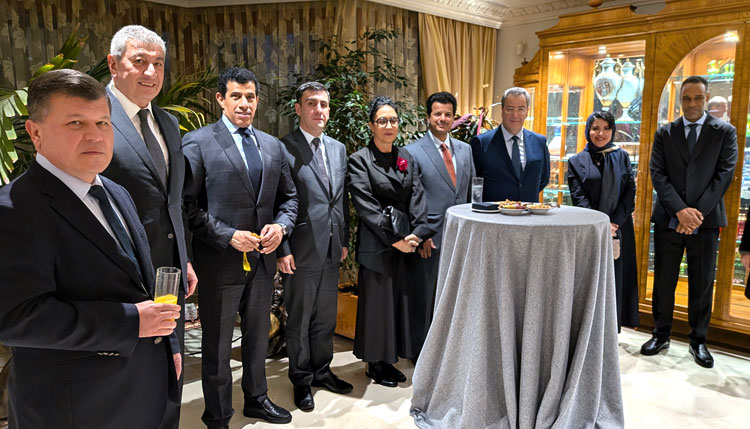
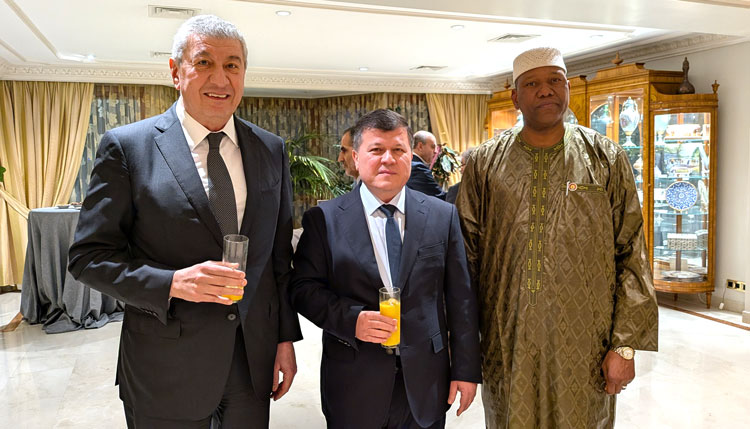
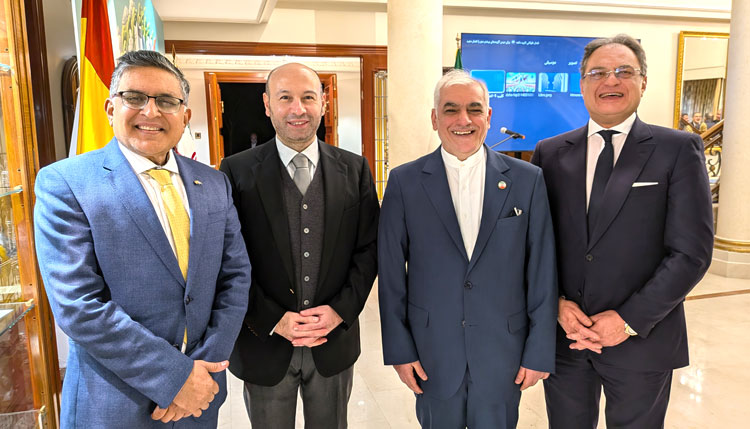
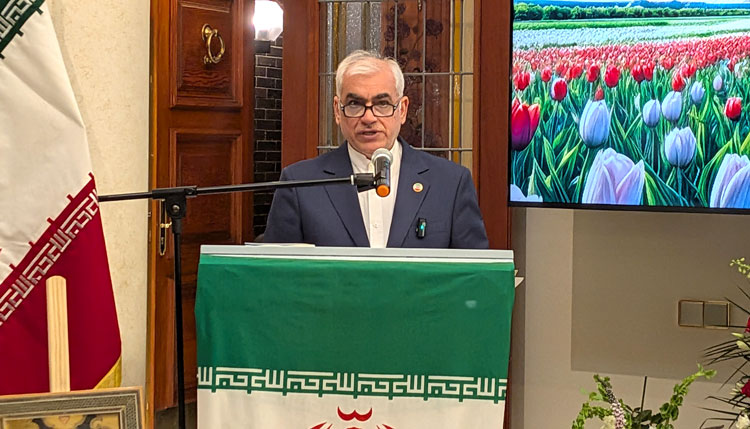
The Iranian Embassy last Tuesday celebrated the 47th anniversary of the Islamic Revolution, which, according to the Iranian ambassador, Reza Zabib, “the Iranians celebrate while their great slogan of the Revolution: independence, freedom and Islamic republic as a political system, continue to inspire our nation and its political dynamism, including foreign policy”.
Regarding Spain, the ambassador highlighted the four centuries of friendly relationship, which was enhanced by the meeting between the Iranian foreign ministers, Araghchi, and Spanish, Albares, in New York, where they agreed to continue their diplomatic exchanges. In terms of trade, I am happy to say that the export of Iranian products to Spain has grown by 30%, which is a good reflection of the trend of Iranian imports and bilateral relations”.
“A new attitude reshaped Iran’s internal and external policies, the ambassador continued. In foreign policy, Iran has become an active supporter of the principles of international law, a great contributor to peace and stability, capable of bringing down a regional threat as dangerous as ISIS, and a safe leader for millions of refugees in the region.”
Regarding the country’s domestic affairs, the ambassador indicated that “Iran is becoming a flourishing heart of science and technology, increasing its share in world production from 0.1% to almost 2%. From net importer to major exporter not only of commodities but also of high-tech products. That is why, despite decades of economic terrorism or sanctions under illegal and bilateral measures, in 2025, oil production and exports were almost at pre-sanctions levels, while non-oil exports continued to exceed oil revenues”.
On the international issue, Reza Zabib noted that “2025 was a critical and violent year for the Middle East. Seven countries were attacked by the genocidal regime, and despite the ceasefire in Lebanon and Palestine, the unprecedented genocide of the Zionist regime continues to bombard innocent people, causing starvation and obstructing humanitarian aid. Admiring Spain’s progressive positions on genocide and Zionist aggression, we reiterate that despite the sentence and arrest warrant issued by the ICC and the ICJ, the perpetrators of the genocide remain at large, and of course there would be no guarantee for peace without justice”.
“In these very uncomfortable circumstances and based on the belief of a strong region in favor of a common interest, stressed the ambassador of Iran, I am happy to say that the Iranian urban policy has created even closer relations with its neighbors, especially with its brothers of the Persian Goal, allowing us to work together for the stability of the region and the prosperity of our nations.”
Regarding the latest aggressions received on Iranian territory, Reza Zabib noted that “the miscalculations of the Zionist and US regimes led to last June’s aggression, which seriously undermined peace and stability in our region. It is true that this flagrant crime claimed the lives of 1,100 innocent people, but it became a rallying ground around our nation’s flag as the aggressors had to call for a ceasefire.”
“Despite all this illegal behavior, and the lack of respect for values, Iran has shown full commitment to diplomacy on the nuclear issue. Last week’s negotiations in Muscat, the capital of Oman, with all the circumstances surrounding them, clearly demonstrated our commitment to peace and security in the region. Efforts continue with the ongoing visit of the Secretary of the National Security Council to the Omani capital. These efforts, carried out in parallel with full defensive preparations, clearly show that Iran is ready for a reasonable and lasting compromise, but will blow up any aggression against its sovereignty and the stability of the region. I must thank all friendly countries that have tried to defuse the threats and facilitate this negotiation, especially our brothers in the Sultanate of Oman”.
Diplomatic representatives from Iran and the United States met last Friday in Oman to discuss the future of Tehran’s nuclear program and attempt to revive diplomacy, following US President Donald Trump’s decision to position a naval flotilla in the region, which has raised fears of renewed US military action. Iran’s top security official, Ali Larijani, met this Tuesday with the Sultan of Oman, Haitham bin Tariq, to discuss “the importance of returning to the negotiating table to bridge viewpoints and resolve differences peacefully.” Iran maintains that its nuclear program is peaceful, but both Western powers and Israel have accused Tehran of attempting to develop an atomic bomb. Israeli Prime Minister Benjamin Netanyahu will meet with Trump in Washington on Wednesday to ask him to take a hard line on Iran’s ballistic missile program.
Finally, Ambassador Reza Zabib presented the book The Power of Negotiation by the current Iranian Foreign Minister Seyed Abbas Araghchi, which we have already reported on our website and which is a treatise on the principles and rules of political and diplomatic negotiations.