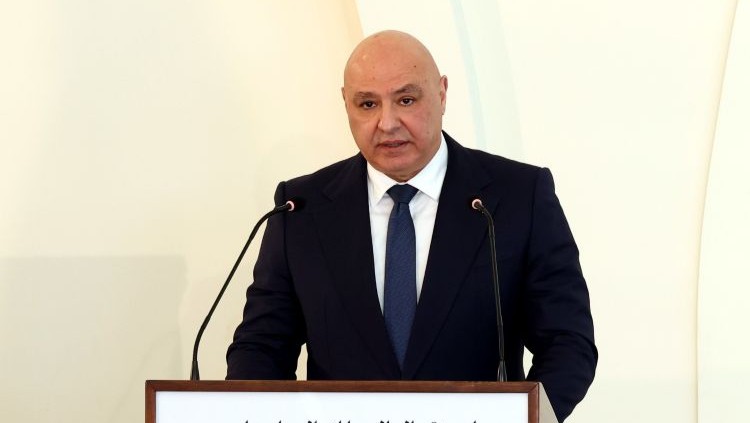
<h6><strong>Eduardo González</strong></h6> <h4><strong>Lebanese President Joseph Aoun will begin a two-day working visit to Spain on Monday to discuss the potential continued Spanish military presence in southern Lebanon after the UN mission (UNIFIL) concludes.</strong></h4> Joseph Aoun will visit Madrid at the official invitation of King Felipe VI and will be accompanied by the First Lady, Nemat Aoun, and the Ministers of the Interior, Foreign Affairs, Culture, and Agriculture, according to Lebanese official sources speaking to the country's media. The president will be received on Monday by Prime Minister Pedro Sánchez, after which several bilateral agreements will be signed, according to Moncloa Palace. Separately, Aoun will be received on Monday at the Zarzuela Palace by the King, who will host a luncheon in his honor, as reported by the Royal Household. The objective of the visit, according to official sources cited by Lebanese media, is “to discuss bilateral relations and ways to develop them, especially in the political, diplomatic, and security spheres,” as well as to exchange views on the situation in the Middle East. However, the main focus of these talks will be the future of the International Peacekeeping Force (UNIFIL), whose mandate ends in late 2026 after twenty years on the ground. The aforementioned Lebanese official sources note that “Spain has officially informed Lebanon of its desire to maintain the presence of its forces in the south, which opens the door to an in-depth debate on the legal and political framework that could allow this presence to continue after the end of UNIFIL’s mission in its current form.” It is expected that the meetings in Madrid will address various options, including extending the mission or transitioning to an alternative international format. France and Italy have also expressed their desire to remain as an international force in southern Lebanon, reflecting, according to Lebanese media, Europe's interest in "avoiding a security vacuum that could result from the end of the UNIFIL mission." One of the proposed options is the creation of a European multinational force, with French forces at its core and the support of Spain and Italy. However, the United States' interest in reducing France's role in southern Lebanon and Spain's critical stance regarding Israeli policies and the Gaza war raise serious doubts about the European proposal's chances of success. For this reason, Lebanese authorities consider Aoun's visit to Madrid to be "of particular importance," not only from the perspective of bilateral relations, but also because it comes in the context of international consultations on the future of the international presence in southern Lebanon in a highly tense regional scenario. <h5><strong>Previous visits</strong></h5> The last visit by a Lebanese head of state to Spain (and the first since 1957) took place in October 2009, with President Michel Sleiman. In 2010, King Juan Carlos made the first visit by a Spanish head of state to Lebanon. His son, King Felipe VI, traveled to Lebanon in April 2015 to visit the Spanish contingent at the Marjayoun base, where he had previously been as Prince of Asturias. Pedro Sánchez, for his part, traveled to Lebanon in December 2022. Michel Aoun was appointed president by the Lebanese Parliament exactly one year ago, ending more than two years of a vacancy in the head of state. Lebanon had been without a president since October 2022, when Michel Aoun's term expired, and since then, the various political blocs had been unable to agree on a consensus candidate in the more than ten votes held in Parliament. A month later, the new Lebanese government was formed under Prime Minister Nawaf Salam, which also put an end to the institutional vacuum in the country. <h5><strong>UNIFIL</strong></h5> In June 2025, Spain handed over command of UNIFIL to Italy, which it had held since February 2022. Spain's participation in the mission began in September 2006, as part of Operation Libre Hidalgo in southern Lebanon to contribute to the implementation of UN Resolution 1701. Since then, the Spanish Armed Forces have led the mission's Eastern Sector from the Miguel de Cervantes base. The Spanish contingent in UNIFIL is currently one of the largest, with nearly 700 military personnel assigned to various tasks. The Spanish deployment has focused on patrolling and monitoring the line of separation between Israel and Lebanon, in coordination with the Lebanese Armed Forces. Patrols are conducted both on foot and in vehicles, with the aim of preventing ceasefire violations and avoiding escalating tensions between the parties into clashes. On January 11, the Spanish government celebrated the achievement of the objectives of Phase I of restoring the state monopoly on the use of force throughout Lebanon, in line with UN Security Council Resolution 1701 and the ceasefire agreement reached with Israel in October 2024, which includes the Lebanese army's commitment to disarm the Shiite political and military organization Hezbollah. That same day, Spain condemned the latest attack by Israeli armed forces against UNIFIL and demanded compliance with the ceasefire.