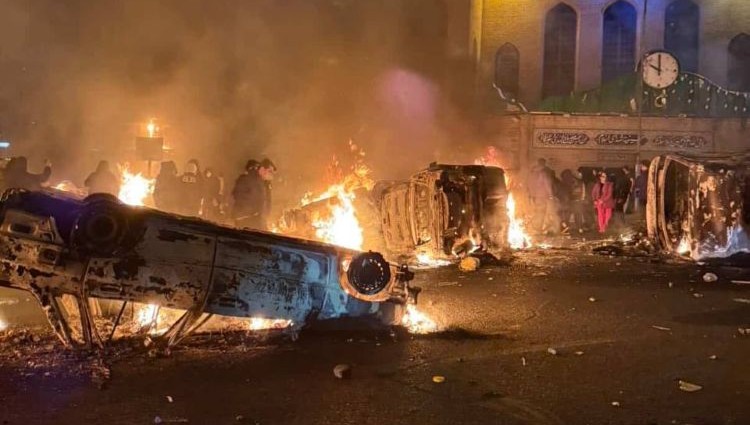
<h6><strong>Eduardo González</strong></h6> <h4><strong>The Spanish government has expressed its support for the imposition of new European Union sanctions on Iran, including those targeting the Revolutionary Guard, in retaliation for the repression of demonstrations in the country.</strong></h4> "Spain supports sanctions against Iran, including those targeting the Revolutionary Guard," sources from the Ministry of Foreign Affairs told The Diplomat on Wednesday, January 28, on the eve of the EU Foreign Affairs Council (FAC) meeting in Brussels, where the situation in Iran will be discussed. On January 13, European Commission President Ursula von der Leyen announced the introduction of new sanctions against those responsible for the repression of demonstrations in Iran and reiterated that "the European Union has already included the Islamic Revolutionary Guard Corps in its entirety under its human rights sanctions regime." She also explained that the measure was being adopted “in close collaboration” with the EU High Representative for Foreign Affairs, Kaja Kallas, and that the Commission was working to present new sanctions “quickly.” For her part, Kaja Kallas reiterated that same day that the EU “already applies extensive sanctions against Iran” for human rights violations, nuclear proliferation, and support for Russia, and specified that “the possibility of imposing additional sanctions is being analyzed.” Nine days later, the European Parliament condemned the repression and mass killings perpetrated by the Iranian regime against protesters in Iran and called for the expansion and strict application of EU sanctions, such as asset freezes and visa bans. The European Parliament also called on the European Council to move forward, without delay, with the designation of the Islamic Revolutionary Guard Corps as a terrorist organization. Although it is highly likely that the European Council will unanimously approve the Commission's proposal this Thursday to prevent Iran's access to components for the production of drones and missiles, it is still unknown whether Italy will support the European Parliament in the official declaration of the Revolutionary Guard as a terrorist organization. This past Monday, Italian Foreign Minister Antonio Tajani announced via social media his intention to propose to the European Economic Community (EEC) the inclusion of Iran's Islamic Revolutionary Guard Corps on the list of terrorist organizations. As a result, the Iranian Foreign Ministry summoned the Italian ambassador in Tehran to protest Tajani's "irresponsible" statements. International organizations and various human rights reports have denounced the deaths of tens of thousands of people since the outbreak of the protests, which began in Tehran on December 28th to demand economic and social improvements and spread throughout the country to demand human rights, dignity, freedom, and the fall of the Islamic Republic regime. On January 13th, Spanish Foreign Minister José Manuel Albares summoned the Iranian ambassador to Spain, Reza Zabib, to convey his "strong condemnation" of the protests. and condemnation” for the repression of “peaceful demonstrations” in the country. That same day, the Iranian Embassy in Madrid stated in a press release, transmitted to The Diplomat, that “the Islamic Republic of Iran recognizes the right to protest and freedom of expression” and that the episodes of violence were perpetrated by “terrorist groups” that “unduly took advantage of the civil protests.”