
Casa Árabe resumes its sessions of the cycle Aula Árabe Universitaria 7 tomorrow Tuesday at 19 hours with the conference The Atlantic Route of the Mediterranean: the African-Canary necrocorridor, by Mohammed Ouhemmou, assistant professor at the University Ibn Zohr of Agadir, Morocco, and member of the Euro-Mediterranean Migration Research Network (EuroMedMig). Free admission until the room is full. In English with simultaneous interpretation. You can also follow live on Youtube (in Spanish or English).
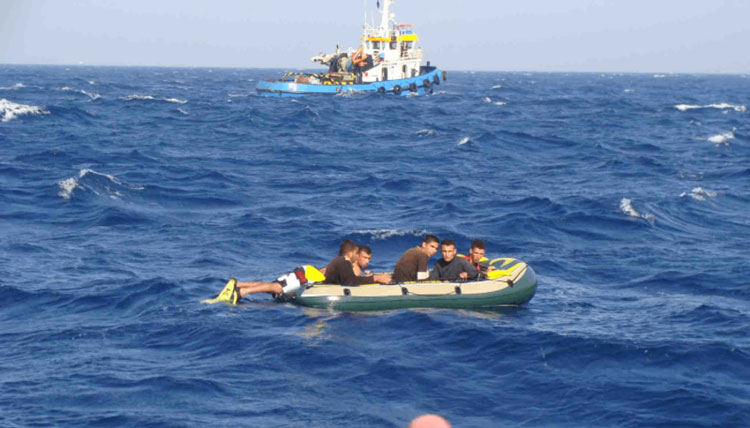
The African-Canary Atlantic route, which can reach 1,600 km and require several weeks of navigation, is one of the deadliest corridors in the Mediterranean. If migration corridors, in a broad sense, refer to the routes followed by migrants (under the influence of various factors, including geopolitical, social and environmental), the concept of «necrocorredores» refers to those routes that are particularly dangerous or lethal for migrants. This implies that not all migration corridors are necrocorredores.
In this lecture, Professor Mohammed Ouhemmou proposes a model to understand the processes of formation of necrorunners; that is, the conditions which make a migratory corridor become a specific necrorunner, and thus contribute to the already wide-ranging debate on necropolitics. By highlighting the specificity of the Canary Corridor, Ouhemmou combines necropolitics with Judith Butler’s theory of «grievability» (grievability) -which argues that in certain societies not all lives are considered equally worth mourning- to analyze how structural, political and media neglect serves to systematically prevent grief and memory. It also takes up some arguments raised in the debates on global justice.
The conference will be structured in three parts. First, a conceptual and theoretical section in which the professor will introduce the category of necropolitics and argue why the Canary Islands corridor is particularly illustrative. Secondly, the methodology, data sources and theoretical model of necrocorridor developed will be presented. Finally, in a third part of an empirical nature, he will propose a necrocorridor model based on the data and ethnographic material from his field study. His central argument is that the necrocorredor is configured as a political construction that ends up being trivialized by the very policies that generate it, along with the role played by the media and public opinion.