
Eduardo González
The European Commission expressed its “satisfaction” on Monday, January 26, with the “progress” on the rule of law in Spain and three other EU countries, while also noting, without further details, that there are areas “where more effort is needed.”
The General Affairs Council (GAC) of the European Union addressed the rule of law situation in Denmark, Spain, Estonia, and Greece on Monday in Brussels. The GAC regularly discusses the rule of law in the EU and its member states through the so-called “annual dialogue on the rule of law” and adopts country-specific recommendations on aspects such as the independence, efficiency, and quality of the judicial system.
“The General Affairs Council” addressed “very important and constructive discussions on the state of the rule of law in four Member States and on Europe’s democratic strength and resilience,” declared Henna Virkkunen, European Commission Executive Vice-President for Technological Sovereignty, Security and Democracy, at the press conference following the GAC.
“Together, democracy and the rule of law provide the fundamental safeguards for justice, fundamental rights and equality in all our Member States,” she continued. At this time of “increasing political polarization, pressure on democratic institutions, challenges to our economy and growing external threats, protecting and promoting the rule of law is more important than ever,” she warned.
According to the Vice-President, during the discussions, the Commission “presented the findings of the 2025 Rule of Law Report on these four Member States, welcoming the progress made, while highlighting the areas where further efforts are needed,” added Henna Virkkunen, without providing further details on either the progress made or the areas that need improvement.
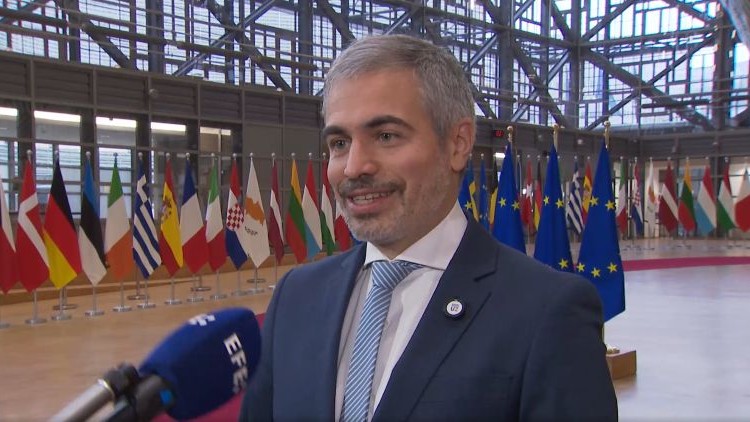
Before the meeting, the Secretary of State for the EU, Fernando Sampedro, told the press that this is “the second time Spain has participated in this dialogue, which we have strongly supported during our Presidency,” in the second half of 2023. “In fact, it is the second time this has happened, and the second time it has fallen to me to defend the situation and the responses given by Spain to the recommendations that the Commission conveys to us annually in its Rule of Law Reports,” he continued.
This dialogue, he added, is taking place “in a special year for Spain, as we celebrate 40 years in the European Union,” an accession that has contributed to a “true transformation of our country” and to the “strengthening of our democracy.”
The July 2025 report
During the debate, the Commission presented its main conclusions regarding each country’s specific chapter in its 2025 Rule of Law Report, and the delegations involved outlined their national progress and the particular aspects of their national rule of law frameworks. A round of comments and questions followed, in which other delegations shared their experiences and best practices regarding the developments mentioned.
The EU has not provided further details about this dialogue. In any case, the debate was based on the conclusions of the chapter on Spain in the Rule of Law Report issued on July 8, 2025. That document highlighted the renewal of Spain’s General Council of the Judiciary (CGPJ) as a result of the structured dialogue held in 2024 mediated by the European Commission, and the adoption of a series of measures to advance the process of adapting the appointment procedure for its members, who are chosen from among judges and magistrates.
The report also noted that the Constitutional Court “has declared the Amnesty Law compatible with the Spanish Constitution” and emphasized the adoption of “measures to promote the principles of the rule of law,” the creation of “a new body for equality,” and the presentation of “a draft Organic Law to reform the Law on Citizen Security in order to resolve the issues raised by stakeholders.”
The report warned that the government “is legally obligated to approve a comprehensive strategy to prevent and combat corruption, although the corresponding activity has not yet been implemented.” It continued, “Cooperation among the various anti-corruption authorities remains good and has improved the efficiency of the Transparency and Good Governance Council in carrying out its functions despite existing resource limitations.”
Furthermore, the document indicated that the draft bill for improving democratic governance in digital services and media was pending approval. “Despite the measures included in the new legislative proposals, journalists continue to face increasing difficulties regarding working conditions and their safety,” the report stated.