
Eduardo González
The Gibraltar Cabinet has approved the text of the Treaty between the United Kingdom and the European Union on Gibraltar’s future relationship with the European Union after Brexit, a month after the European Commission announced that negotiators from both sides had successfully completed drafting the legal text.
As reported this Monday, January 19, by the Government of Gibraltar in a press release, the Cabinet examined “a version of the text which had not yet been subjected to a legal scrub,” although “it is considered unlikely that there will be any political changes during that legal process.”
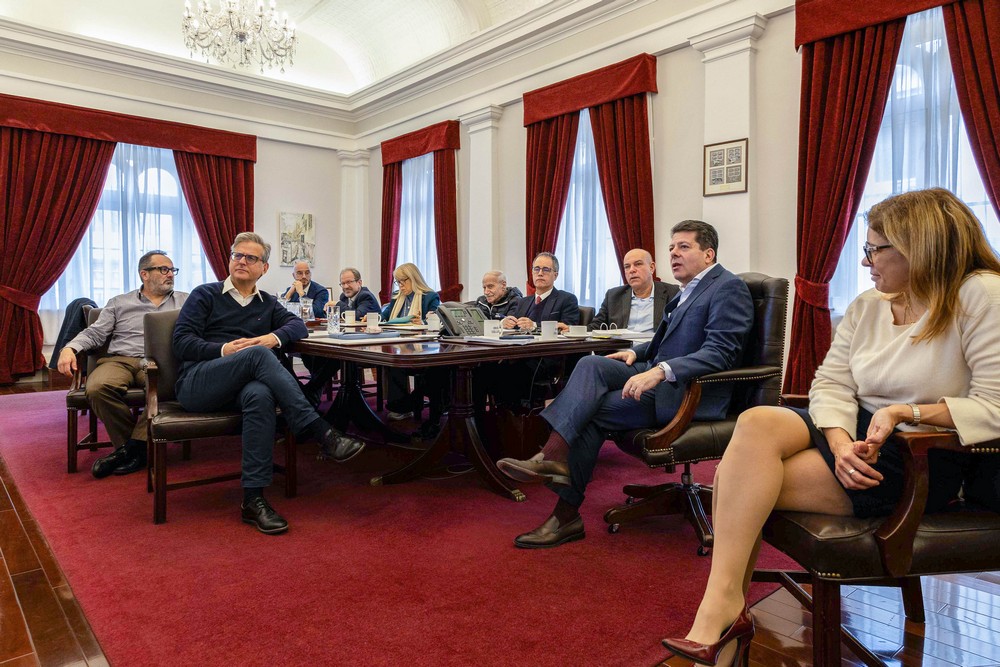
The Gibraltar Cabinet has already approved the Treaty for ratification, provided that no changes are introduced to the meaning of the approved text during the legal review. Once the final text is available, it will be submitted to the Parliament of Gibraltar by means of a motion subject to amendments for debate. Approval by the Gibraltar Parliament will signal the UK to proceed with its own ratification process for the Treaty.
Over the past two weeks, and in the course of six meetings, Gibraltar’s Attorney General, Michael Llamas, explained the details of the text to members of the Cabinet through the different sections of the Treaty and associated documents. During the negotiations, Llamas led the technical and detailed aspects of the Treaty negotiations, while the Chief Minister and Deputy Chief Minister led the political negotiations.
“I am delighted that the Cabinet has given the green light to the ratification of the Treaty,” said Chief Minister Fabian Picardo. “There will be a full debate in the Gibraltar Parliament,” he continued.
According to Picardo, “the Cabinet held six lengthy sessions, each over three hours, to comprehensively go through the letter of the text.” Therefore, he assured, “ministers were already aware of all the issues in the Treaty, as the Chief Minister and Deputy Chief Minister have been briefing and updating the Cabinet regularly on all issues.
The Agreement
On June 11, the European Union (represented by the Vice-President of the European Commission, Maroš Šefčovič, and the Minister of Foreign Affairs, José Manuel Albares) and the United Kingdom (represented by the UK Foreign Secretary, David Lammy, and the Chief Minister of Gibraltar, Fabian Picardo) reached a “definitive” political agreement in Brussels on “the fundamental aspects of the future Agreement between the European Union and the United Kingdom concerning Gibraltar.”
According to the joint statement, the text “safeguards the respective legal positions of Spain and the United Kingdom regarding sovereignty and jurisdiction,” guarantees the free movement of people by eliminating borders and controls between Gibraltar and the Campo de Gibraltar region, and establishes that the Spanish National Police will be responsible, on behalf of the European Union, for carrying out full Schengen controls at the port and airport of Gibraltar. For the agreement to take effect, it still needs to be formalized into a legally binding agreement.
Following the political agreement, the negotiating teams from the European Union and the United Kingdom began discussing the final text, the drafting of which was completed in mid-December. Once this step was taken, according to a spokesperson for the Commission for EU/UK relations speaking to the Gibraltar Chronicle, the text is now undergoing legal review by both the EU and the UK before the respective internal procedures leading to the signing and conclusion of the future Agreement can begin.
At the moment, it is unknown how long the legal review of the text will take or when it will be publicly available, but this process normally takes several weeks. Once the legal review is complete, the text will proceed to ratification by the EU, which will be carried out by the European Parliament and not by the national parliaments of each member state. However, the text will be reviewed by the European Council before any ratification.
For the United Kingdom, the ratification process will begin with a motion in the Gibraltar Parliament urging the United Kingdom to ratify the treaty, after which it must be approved by the British Parliament.
Last October, Albares explained to the Congress that the agreement “includes provisions relating to the military base,” under which “Spain will, for the first time, have access to complete information on the goods and people arriving there to ensure that the Schengen acquis and Customs Union also apply to the base.”
Furthermore, he continued, “Schengen controls upon arrival and departure through the port and airport of Gibraltar will be carried out by the Spanish Police in accordance with the rules applied at any other external Schengen border.” “Another historic aspect of the agreement, which will also contribute to improving connectivity in the Campo de Gibraltar region, is the use of the airport, which will be opened to connections with other Spanish airports and those of the rest of the European Union, and will establish a joint management system through the creation of a joint venture in which Spain holds a 50% stake,” he added.