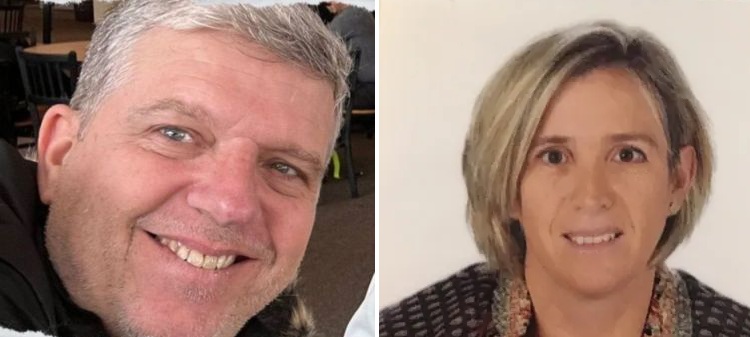
<h6><strong>Eduardo González</strong></h6> <h4><strong>Venezuelan authorities have released three more Spanish prisoners, adding to the five freed last week, Foreign Minister José Manuel Albares announced on Tuesday, January 13.</strong></h4> “I am informing you, and I want to inform all citizens, that yesterday there were three more releases, joining the group of five already in Spain,” Albares stated during an interview on the program ‘El matí’ on Catalunya Ràdio. According to the minister, the three released prisoners hold dual Spanish and Venezuelan nationality. One of them “has decided to remain in Venezuela of his own volition, another has decided to fly and will leave Venezuela for Spain today, and another is considering whether she prefers to stay in Venezuela or return to Spain, as we are offering to all those who are released,” he explained. These releases, according to Albares, are a “very positive” step. “We encourage the Venezuelan government, in this new phase for Venezuela, to continue moving forward in this direction,” he added. Last week, the president of Venezuela’s National Assembly, Jorge Rodríguez (brother of the country’s new interim president, Delcy Rodríguez), announced the release of a “significant number of people,” including five Spaniards, following mediation by former Spanish Prime Minister José Luis Rodríguez Zapatero. Among those released were José María Basoa Valdovinos and Andrés Martínez Adasme, arrested in September 2024 on charges of plotting an attack against President Nicolás Maduro and of being agents of the Spanish National Intelligence Center (CNI), an allegation the Spanish government has repeatedly denied. Also part of this group, which traveled immediately to Madrid, were Miguel Moreno Dapena and Ernesto Gorbe Cardona (detained for “suspicious” activities and held in pretrial detention) and the Spanish-Venezuelan activist Rocío San Miguel, president of an organization that monitors the armed forces in Venezuela. <h5><strong>The newly released</strong></h5> On Monday, the Venezuelan government announced the release of another 116 political prisoners, bringing the total number of those freed to 133 since the overthrow and kidnapping of President Nicolás Maduro by U.S. military forces on January 3, ordered by President Donald Trump. According to Alfredo Romero, director of the Venezuelan NGO Foro Penal, these 116 prisoners represent “only 10 percent of the political prisoners” in the country. This second group includes Alejandro González de Canales Plaza, the ex-husband of Rocío Sanmiguel, a former Chavista, retired military officer, and manager of the American oil company Chevron in Venezuela. He was arrested in February 2024 at his home and remained in “severe isolation, without access to books and with extreme restrictions on visits and legal representation,” according to his family. The other two released prisoners are Sofía Sahagún and Leticia García González. Sofía Sahagún Ortiz, 55, a friend of opposition leader and 2025 Nobel Peace Prize laureate María Corina Machado, disappeared in October 2024 while waiting for a flight to Madrid to visit her mother at Simón Bolívar International Airport in Maiquetía (La Guaira). He was imprisoned for a year and three months in the same Caracas prison, El Helicoide, by order of the Bolivarian Intelligence Service (SEBIN), on charges of “terrorism,” according to the specialized newspaper ‘Crónicas de la Emigración’ (Chronicles of Emigration). Meanwhile, Leticia García González, 68, originally from Asturias, was imprisoned for six months in the Caracas Metropolitan Area Detention Center (El Helicoide) starting in June 2025, without any apparent reason. She works for a Venezuelan mobile phone company and was the director of the Venezuelan chapter of the Association of Children and Grandchildren for Spanish Nationality, which advocated for the enactment of the Historical Memory Law in 2006, according to the same newspaper. <h5><strong>Zapatero</strong></h5> In the same interview, Albares insisted that the Spanish government is “promoting the broadest possible dialogue between the government and the opposition” in Venezuela, a country with which “we share a common language, a history, and fraternal relations.” The minister also noted that “two hundred thousand Spaniards” reside in Venezuela and that “four hundred thousand Venezuelans” reside in Spain, of whom, “incidentally, two hundred thousand arrived with a very specific status” that grants them, “immediately upon arrival, the right to residency and work.” This status, he added, has been granted to them “by this Government, the Government of Pedro Sánchez, despite the falsehoods that the People's Party is trying to spread.” Albares also praised the “discreet work” that Zapatero is carrying out in Venezuela, where “he is not acting in the name of or at the request of the Government of Spain; he has been acting since 2015 at the request of the opposition.” “I believe that, from the first political prisoner released, Leopoldo López, to San Miguel, who was the most recent, they have thanked him for his work, as did, for example, Mariano Rajoy when he was Prime Minister,” he asserted. The Prime Minister, Pedro Sánchez, stated this Monday that he has conveyed to the acting president of Venezuela, Delcy Rodríguez, the “need to continue releasing political prisoners” and praised “the work” that Zapatero is doing “precisely” in this regard. The previous day, the leader of the PP, Alberto Núñez Feijóo, accused Sánchez and Zapatero of complicity with the Venezuelan regime of the ousted Nicolás Maduro and warned that “history will not forgive them, history will judge them.”