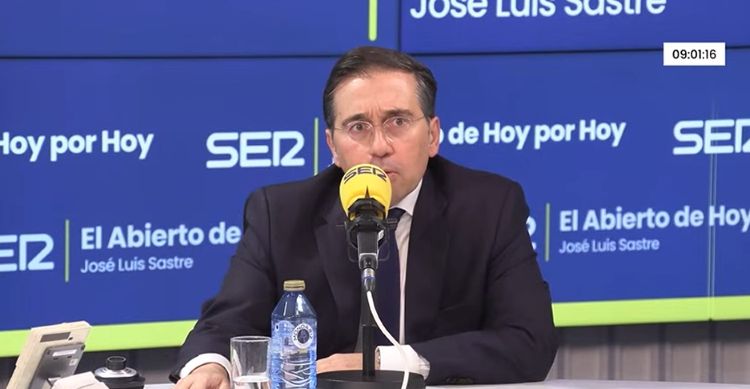
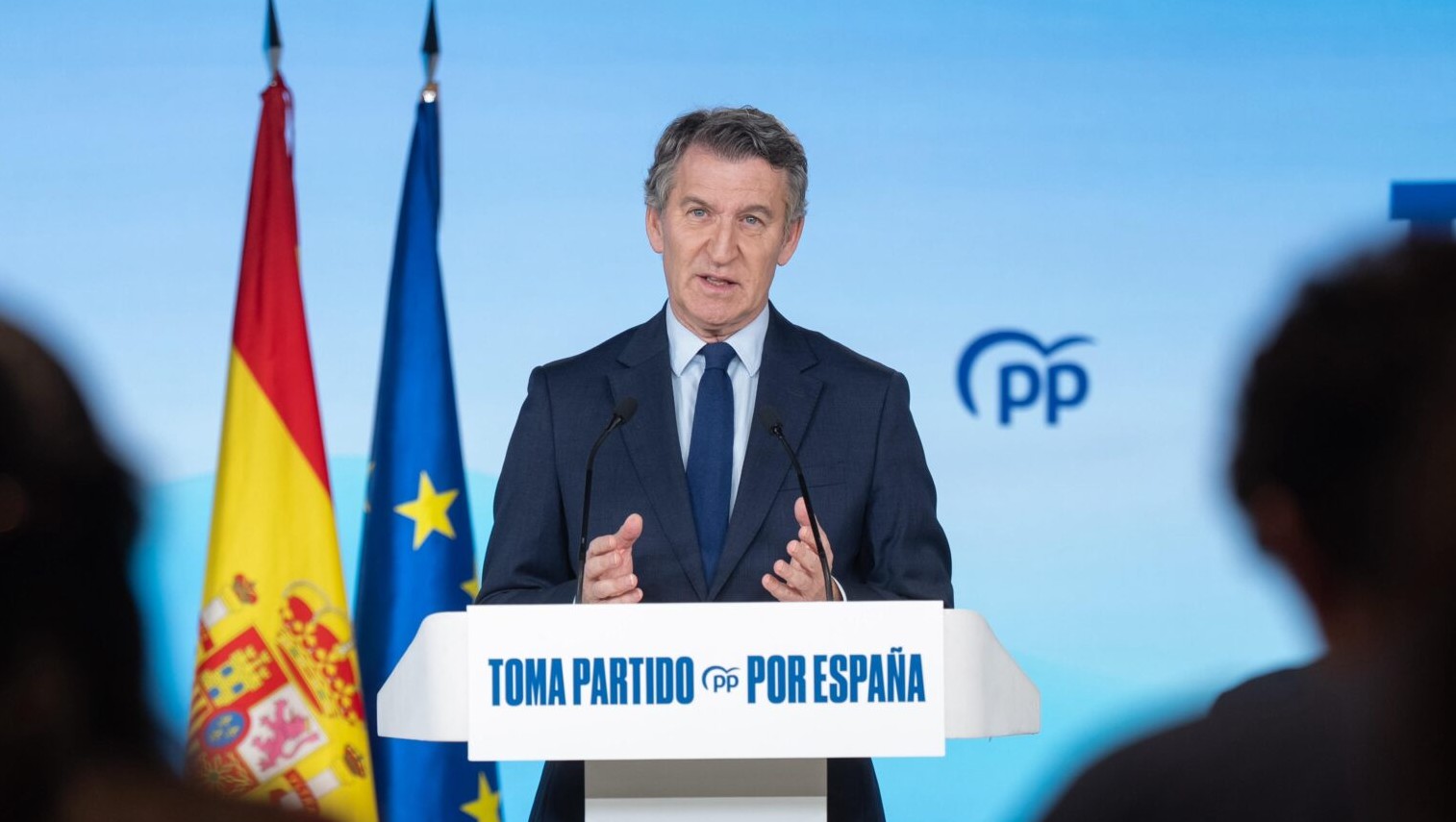
<h6><strong>Eduardo González</strong></h6> <h4><strong>Foreign Minister José Manuel Albares insisted this Monday, January 5, that the armed assault against Venezuela and the capture of President Nicolás Maduro by the US is “an action clearly contrary to international law” and acknowledged that he would have liked “a stronger statement from the European Union” on this matter.</strong></h4> “An action has been taken that is clearly contrary to international law,” Albares declared on the Cadena SER radio program Hoy por Hoy. “Peace and democracy are always based on respect for sovereignty,” he insisted. “The use of violent means and force must be completely out of the question” of foreign policy, because “it sets a very dangerous precedent for the future,” he warned. “We will not resign ourselves to the imposition of the law of the strongest, the law of the jungle,” he asserted. “Government changes through the use of force do not bring stability, but rather tend to lead to chaos,” he added. Albares acknowledged that, as Foreign Minister, he must be “cautious” in describing what happened, but warned that he does not fear reprisals from the United States for his condemnation of the attack in Venezuela. “I neither fear nor expect anything. Spain is a sovereign country that makes its own decisions, that defends international law, the peaceful resolution of disputes, and the UN Charter,” he explained. Aside from the joint statement with the governments of Brazil, Chile, Colombia, Mexico, and Uruguay condemning the US intervention, the minister continued, Spain “has led” the European Union's pronouncement. However, he admitted, “I would have liked a stronger statement” from the European institutions. On the other hand, Albares stated that he is in favor of speaking with the government of Venezuelan Vice President Delcy Rodríguez, “just as we will continue speaking with the Venezuelan opposition to foster a rapprochement that can achieve stability and allow Venezuela to move towards a peaceful future.” He also recalled that the Venezuelan Constitution dictates that “when the president is incapacitated, the vice president becomes the acting president.” The minister was highly critical of the position of the PP president, Alberto Núñez Feijóo, who, he asserted, “is not aligned with the EU statement, not with the position of Latin American countries, and not with the UN position.” He also lamented that, among all the calls he received from political parties this weekend inquiring about Spain's position on the attack, the PP was not among them, whose foreign policy stance he described as “ridiculous and absurd.” “Coming from the party that led this country into the Iraq War, it doesn't surprise me, but it does hurt,” he admitted. Albares also acknowledged that he expected the People's Party (PP) to "criticize the US position regarding what it has said about María Corina Machado." In the press conference following the attack on Venezuela, US President Donald Trump responded that "it would be very difficult" for Machado to be the next president of Venezuela because "she doesn't have the support or respect within the country." "The PP has always used Venezuela as a weapon to undermine the government; it's absurd because no government has done as much for Venezuela," Albares asserted.