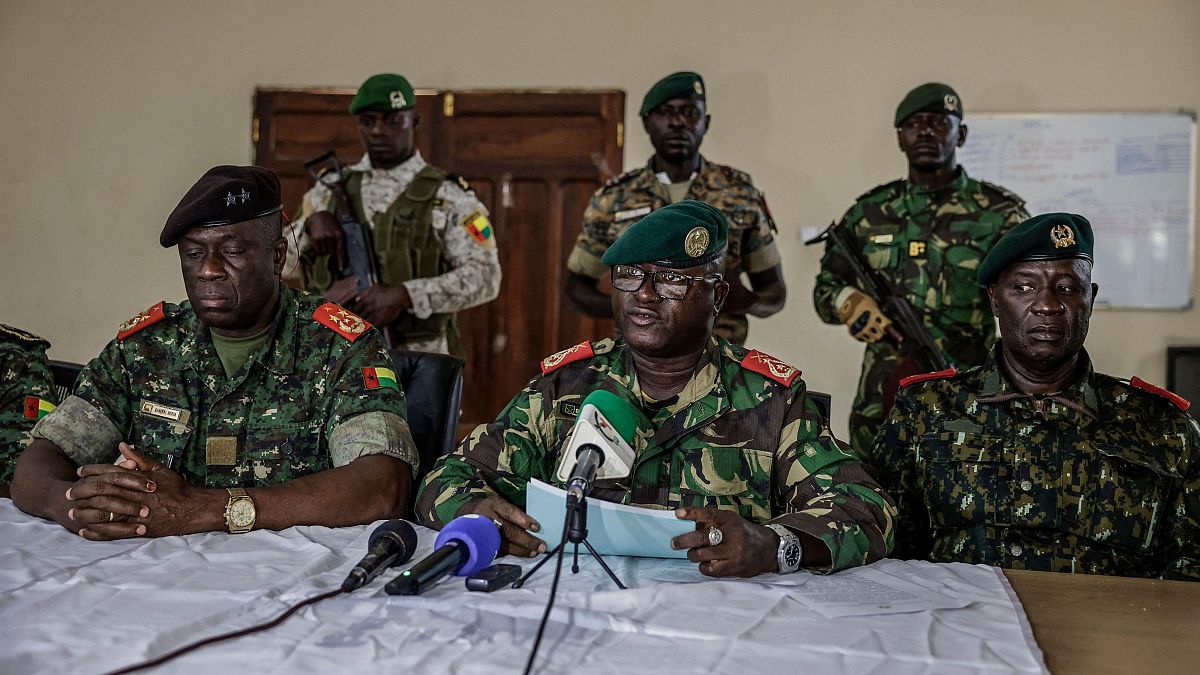
<h6><strong>Eduardo González</strong></h6> <h4><strong>The Galician Nationalist Bloc (BNG) has called on the Government to condemn the recent coup d'état in Guinea-Bissau and to demand, through bilateral diplomatic channels and before international organizations, the restoration of democratic constitutional order, the release of those detained, and the restoration of civil and democratic rights in the country.</strong></h4> In a non-binding motion registered on December 9 for debate in the Foreign Affairs Committee, the Mixed Parliamentary Group, at the request of BNG deputy Néstor Rego Candamil, recalls that, “on November 26, a military junta seized power in Guinea-Bissau, announced the dismissal of President Umaro Sissoco Embaló, suspended the ongoing electoral process, intervened in the media, imposed a curfew, and prohibited demonstrations and gatherings.” In those initial moments, the text continues, the military detained a number of prominent figures, including Domingos Simões Pereira, who served as Prime Minister of Guinea-Bissau from 2014 to 2015 and is the current President of the National People's Assembly. “These events occurred on the eve of the date set for announcing the results of the general elections, a process that took place without the participation of the main opposition party, the African Party for the Independence of Guinea and Cape Verde (PAIGC), and its candidate, Domingos Simões Pereira, after he was excluded from the electoral race,” the text continues. At the time of his arrest, Simões Pereira was at the campaign headquarters of Fernando Dias, the independent candidate whom the PAIGC endorsed after being excluded from the electoral process. Therefore, according to the BNG, “the military actions prevented the announcement of the results of the ongoing legislative and presidential elections, while they occupied the headquarters of the opposition candidate and illegally detained Domingos Simões Pereira, leader of the PAIGC, as well as other political figures and citizen representatives.” “The family of the detained politician, along with various social and political organizations, called on the entire international community to act decisively to restore democratic constitutional order in Guinea-Bissau and demand the release of Domingos Simões Pereira along with the other political leaders and citizens illegally detained,” it continued. “The BNG joins this request and demands that the Government condemn the actions perpetrated to prevent the expression of the legitimate will of the people of Guinea-Bissau and the consequent limitation of fundamental rights in the country and the persecution of citizens’ political rights. It also demands decisive action, through bilateral diplomatic channels and the international organizations of which the Spanish State is a member, to secure the release of those detained and the restoration of civil and democratic rights in Guinea-Bissau,” it adds. “In short, we demand the urgent implementation of actions at the international level that will allow for the immediate restoration of constitutional and democratic order, the release of illegally detained authorities and political leaders, and full respect for human rights,” the non-binding resolution concludes. <h5><strong>The coup and Spain’s “concern”</strong></h5> On November 27, the day after the coup, the Spanish government expressed its “concern about the events” in Guinea-Bissau and called for “calm, dialogue, and respect for the country’s democratic and constitutional norms.” “Spain reiterates its firm commitment to democracy in Guinea-Bissau and hopes for a swift restoration of institutional normality, allowing the resumption of the electoral process following the elections of Sunday, November 23,” the Ministry of Foreign Affairs stated in a press release. A military group led by General Horta N’ta seized power the day before the publication of the general election results. The military has suspended the ongoing electoral process, ordered the closure of the country’s borders and airspace “until further notice,” and decreed the closure of institutions and the suspension of activities by “media outlets.” The coup leaders (who call themselves the “High Military Command for the Restoration of National Security and the The National Police, under the command of the Public Order Committee, appointed General Horta N’ta as president of the new transitional government. N’ta had previously served as Chief of Staff to outgoing President and reelection candidate Umaro Sissoco Embaló. The coup leaders immediately deposed President Embaló, who was then arrested. His main rival in the elections, Fernando Dias da Costa, accused Embaló of orchestrating the coup to avoid defeat. Both candidates had declared victory in the elections. General Horta N’ta justified the coup by citing the need to end the “intense activity of drug trafficking groups” that, “taking advantage of the electoral process, have attempted to manipulate and ultimately capture democracy itself.” He asserted that the goal of the year-long transitional government was to end the “difficult and delicate” situation in the country and to combat drug trafficking and corruption.