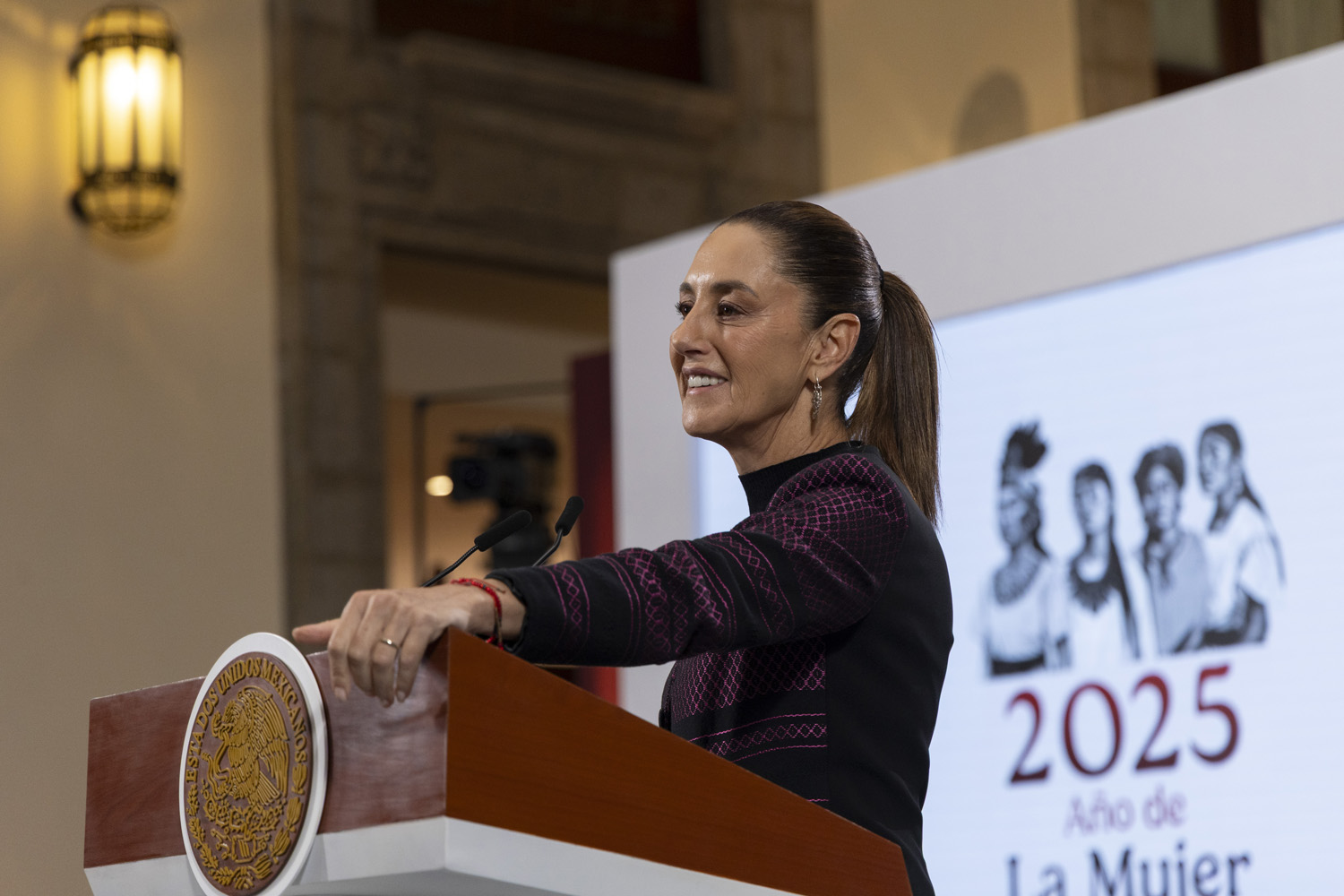
<h6><strong>Eduardo González</strong></h6> <h4><strong>The People's Parliamentary Group has called on the Government to promote a “diplomatic and cultural strategy specifically geared towards Mexico” that fosters “a rigorous, contextualized, and non-ideologized understanding of shared history.”</strong></h4> In a non-binding motion presented on December 11 for debate in the Foreign Affairs Committee, the PP states that, “since the re-establishment of diplomatic relations in 1977, Spain and Mexico have consolidated a strategic partnership based on historical, cultural, and human ties.” However, it continues, “since 2018, our relations have been compromised by accusations from the former Mexican president, in a letter addressed to His Majesty the King, in which he requested that Spain apologize for the ‘wrongs’ committed by the Spanish Crown against the indigenous populations of Mexico.” Relations between the two countries, according to the PP, “They transcend any government and cannot be affected by fleeting political circumstances or biased interpretations of the past.” “Both Spain and Mexico have built, over decades, a solid partnership based on mutual respect, cooperation, and the recognition of a shared heritage that constitutes one of the fundamental pillars of the Ibero-American community,” it adds. According to the People's Party, “in recent years, certain currents have tried to impose a distorted view of the Spanish presence in America, reducing centuries of shared history to a simplistic narrative of guilt.” This narrative, it continues, “ignores historical reality: cultural blending, the creation of institutions that endure to this day, the founding of universities and cities, the development of legal systems, and the birth of a linguistic and cultural space shared by more than five hundred million people.” In the People's Party's view, “it is essential to reclaim a balanced and rigorous view of the past, avoiding its use as a political tool,” and, therefore, it is necessary “to strengthen the strategic partnership between the two.” The motion calls on the two countries to look to the future with ambition and without allowing ideological narratives divorced from historical truth to erode a friendship that has proven to be lasting, profound, and especially valuable within the Ibero-American community. For all these reasons, the PP's motion urges the Government to "recognize the historical ties that bind Spain and Mexico, highlighting the shared legacy through language, culture, traditions, and human connections" and to "promote a diplomatic and cultural strategy specifically geared toward Mexico, fostering a rigorous, contextualized, and non-ideologized understanding of their shared history, reinforcing a relationship based on respect and cooperation." The People’s Group also urges the Government to "strengthen cooperation with Mexican universities, academic centers, and cultural institutions, promoting studies, exchanges, and programs that disseminate an objective and documented view of the history that both countries share" and to "ensure that Spain's foreign policy is conducted with historical responsibility and rigor, avoiding statements that could reinterpret the past." common.” The PP has repeatedly protested recent statements by Foreign Minister José Manuel Albares, in which he reaffirmed the relationship between Spain and Mexico and recalled the “pain and injustice inflicted upon indigenous peoples,” which “is also part of our shared history and we cannot deny or forget it.” Days later, Mexican President Claudia Sheinbaum applauded Albares’s words, which constituted “the first time a Spanish government official has spoken of lamenting the injustice.” Albares’s remarks came just days after Sheinbaum reiterated that her government is still “awaiting a response” to the letter from her predecessor, Andrés Manuel López Obrador, to King Felipe VI, urging him to apologize for the Spanish conquest.