Banner Iberia Español
Banner Telefónica
Banner Iberia Inglés
  • Login
Thursday, February 5, 2026
No Result
View All Result
  • es Español
  • en English
subscribe
thediplomatinspain
Publicaciones
  • Frontpage
  • News
    • Spain
    • World
    • The world in Spain
    • Diplomatic Breakfast
    • Diplomacy with a history
    • The bag
    • Social life
  • Analysis
    • Tribune
    • Trends
  • Embassies
    • Embassies Directory
    • Protocol
    • International legislation
  • Security and Defense
  • UNWTO News
  • Leisure
    • Libros
    • Culture & Art
    • Música
    • Movies
    • Niños
    • Espectáculos
    • Teatro
  • Diplomatic club
  • Vip Club
  • Frontpage
  • News
    • Spain
    • World
    • The world in Spain
    • Diplomatic Breakfast
    • Diplomacy with a history
    • The bag
    • Social life
  • Analysis
    • Tribune
    • Trends
  • Embassies
    • Embassies Directory
    • Protocol
    • International legislation
  • Security and Defense
  • UNWTO News
  • Leisure
    • Libros
    • Culture & Art
    • Música
    • Movies
    • Niños
    • Espectáculos
    • Teatro
  • Diplomatic club
  • Vip Club
No Result
View All Result
No Result
View All Result
thediplomatinspain
Home News Diplomacy with a history

The story of ‘Sinterklaas’, the Dutch Santa Claus who brings gifts from Spain

Redacción
27 de December de 2025
in Diplomacy with a history, Frontpage, News
0
The story of ‘Sinterklaas’, the Dutch Santa Claus who brings gifts from Spain

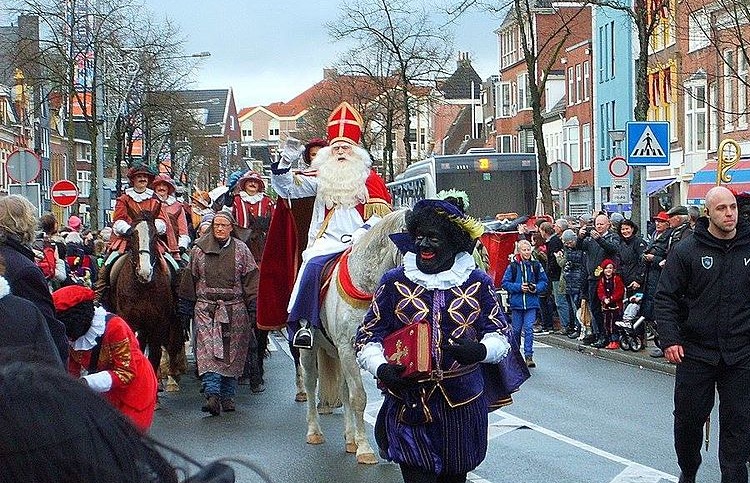
'Sinterklaas' walks through the streets of Groningen / Photo: Door Berkh, CC BY-SA 4.0, wikimedia

Share on FacebookShare on Twitter
Eduardo González

Christmas gifts in the Netherlands do not come from the East or Lapland. They come from Spain and their protagonist is none other than Santa Claus’s immediate predecessor, Saint Nicholas.

According to tradition, Saint Nicholas (Sinterklaas in Dutch), a bishop from the 4th century, appears on the night of December 5-6 laden with gifts for Dutch children, accompanied by his curious pages, the Zwarte Pieten (the Black Peters). The man is dressed in red and white, with a mitre and a staff, as befits a bishop, and many miracles are attributed to him, most of them related to children.

A very striking detail about Sinterklaas is his origin. According to tradition, he resides in Spain (some say Madrid, others Alicante) and arrives at the ports of the Netherlands on board a steamship, after which he rides a horse called Amerigo, accompanied by his pages, the Pedritos. This tradition, which has been celebrated since 1934 (except for a brief interruption due to the Second World War), is a very special moment for the Dutch and is usually broadcast live on television, as is the case with our own Cavalcade of the Three Wise Men.

The Spanish origin of Sinterklaas is attributed to some very indirect details of his biography. Nicholas was bishop of Myra, in western Anatolia (his homeland, in present-day Turkey), until the year 343. He died on 6 December 345 and was buried in Myra, but after this city was conquered by the troops of the Abbasid caliph of Baghdad at the beginning of the 8th century, his body was transferred to Bari. Bari is located in Puglia, in the south of Italy, and therefore in the so-called Kingdom of the Two Sicilies, which in the 16th century belonged to the Spanish Austrias. Probably for this reason, the Dutch associated the name of Nicholas with Spain. After the outbreak of the Dutch revolt against Philip II, Calvinists and Lutherans tried to eliminate the feast of St. Nicholas, but his enormous popularity, both among Catholics and Protestants, prevented this.

The feast of St. Nicholas is celebrated on December 6, the date of his death (and Constitution Day in Spain). For this reason, the night of December 5-6 is the night of gifts in the Netherlands, in part of Belgium, in some former Dutch colonies and, to a lesser extent, in some localities in Luxembourg, Austria, Switzerland, Germany, Poland and the Czech Republic.

The tradition crossed the Atlantic Ocean with the emigration of Dutch settlers to America, who maintained the feast of St. Nicholas in the colony of New Amsterdam. After its conquest by England in the 17th century, the city was renamed New York and Sinterklaas gradually became Santa Claus. The character later moved to England and France, where he became known as Papa Noel (Father Christmas), one of the great international icons of Christmas, popularised above all (but not only) by Coca Cola from the 1930s onwards and who, unlike Sinterklaas, travels with his gifts not from Spain, but from the North Pole.

ADVERTISEMENT
Previous Post

Spain congratulates the new president of Honduras, Nasry Asfura, backed by Trump

Next Post

Spanish Ambassador to the DRC discusses peace agreements with the M23 with President Felix Tshisekedi

Redacción

Redacción

Next Post
Spanish Ambassador to the DRC discusses peace agreements with the M23 with President Felix Tshisekedi

Spanish Ambassador to the DRC discusses peace agreements with the M23 with President Felix Tshisekedi

Recommended

Spain and Greece agree on the need for a joint deterrence mechanism in the EU

Spain and Greece agree on the need for a joint deterrence mechanism in the EU

2 days ago

Newsletter

"Stay informed through our pages and always stay one step ahead. With in-depth analysis, exclusive reports and comprehensive coverage of the events that are shaping our present, our newspaper is more than just news, it is a window to the future."

Newspaper archive

December 2025
M T W T F S S
1234567
891011121314
15161718192021
22232425262728
293031  
« Nov   Jan »

About Us

The Diplomat in Spain is the reference digital newspaper for diplomats and companies that want to be well informed.

© 2024 The Diplomat in Spain.

Welcome Back!

Login to your account below

Forgotten Password?

Retrieve your password

Please enter your username or email address to reset your password.

Log In
Gestionar consentimiento
Para ofrecer las mejores experiencias, utilizamos tecnologías como las cookies para almacenar y/o acceder a la información del dispositivo. El consentimiento de estas tecnologías nos permitirá procesar datos como el comportamiento de navegación o las identificaciones únicas en este sitio. No consentir o retirar el consentimiento, puede afectar negativamente a ciertas características y funciones.
Funcional Always active
El almacenamiento o acceso técnico es estrictamente necesario para el propósito legítimo de permitir el uso de un servicio específico explícitamente solicitado por el abonado o usuario, o con el único propósito de llevar a cabo la transmisión de una comunicación a través de una red de comunicaciones electrónicas.
Preferencias
El almacenamiento o acceso técnico es necesario para la finalidad legítima de almacenar preferencias no solicitadas por el abonado o usuario.
Estadísticas
El almacenamiento o acceso técnico que es utilizado exclusivamente con fines estadísticos. El almacenamiento o acceso técnico que se utiliza exclusivamente con fines estadísticos anónimos. Sin un requerimiento, el cumplimiento voluntario por parte de tu proveedor de servicios de Internet, o los registros adicionales de un tercero, la información almacenada o recuperada sólo para este propósito no se puede utilizar para identificarte.
Marketing
El almacenamiento o acceso técnico es necesario para crear perfiles de usuario para enviar publicidad, o para rastrear al usuario en una web o en varias web con fines de marketing similares.
Manage options Manage services Manage {vendor_count} vendors Read more about these purposes
Ver preferencias
{title} {title} {title}
Gestionar consentimiento
Para ofrecer las mejores experiencias, utilizamos tecnologías como las cookies para almacenar y/o acceder a la información del dispositivo. El consentimiento de estas tecnologías nos permitirá procesar datos como el comportamiento de navegación o las identificaciones únicas en este sitio. No consentir o retirar el consentimiento, puede afectar negativamente a ciertas características y funciones.
Funcional Always active
El almacenamiento o acceso técnico es estrictamente necesario para el propósito legítimo de permitir el uso de un servicio específico explícitamente solicitado por el abonado o usuario, o con el único propósito de llevar a cabo la transmisión de una comunicación a través de una red de comunicaciones electrónicas.
Preferencias
El almacenamiento o acceso técnico es necesario para la finalidad legítima de almacenar preferencias no solicitadas por el abonado o usuario.
Estadísticas
El almacenamiento o acceso técnico que es utilizado exclusivamente con fines estadísticos. El almacenamiento o acceso técnico que se utiliza exclusivamente con fines estadísticos anónimos. Sin un requerimiento, el cumplimiento voluntario por parte de tu proveedor de servicios de Internet, o los registros adicionales de un tercero, la información almacenada o recuperada sólo para este propósito no se puede utilizar para identificarte.
Marketing
El almacenamiento o acceso técnico es necesario para crear perfiles de usuario para enviar publicidad, o para rastrear al usuario en una web o en varias web con fines de marketing similares.
Manage options Manage services Manage {vendor_count} vendors Read more about these purposes
Ver preferencias
{title} {title} {title}
  • Login
No Result
View All Result
  • Frontpage
  • News
    • Spain
    • World
    • The world in Spain
    • Diplomatic Breakfast
    • Diplomacy with a history
    • The bag
    • Social life
  • Analysis
    • Tribune
    • Trends
  • Embassies
    • Embassies Directory
    • Protocol
    • International legislation
  • Security and Defense
  • UNWTO News
  • Leisure
    • Libros
    • Culture & Art
    • Música
    • Movies
    • Niños
    • Espectáculos
    • Teatro
  • Diplomatic club
  • Vip Club

© 2024 The Diplomat in Spain.

Go to mobile version
  • English
  • Español