
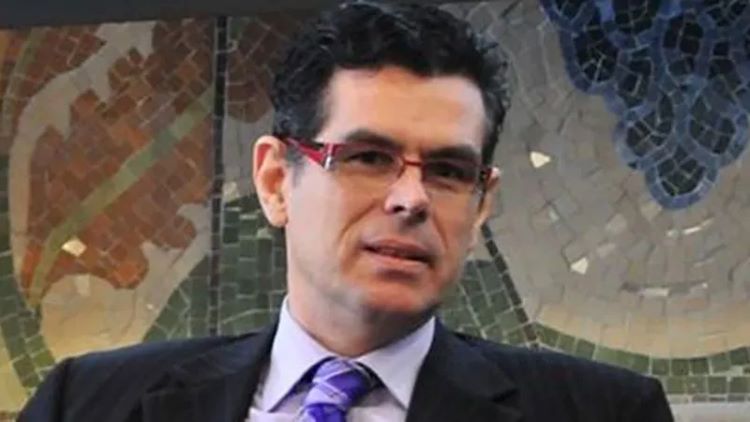
Eduardo González
The Association of Spanish Diplomats (ADE) has asked Prime Minister Pedro Sánchez to put an end to “the serious anomaly of the Diplomatic Service still operating under Francoist regulations from 1955.” In its response, Moncloa has referred any decision on this matter to the Undersecretary of the Ministry of Foreign Affairs.
At the beginning of November, the president of the ADE’s Board of Directors, Alberto Virella, sent a letter to Pedro Sánchez denouncing “the complete indifference of the Minister of Foreign Affairs,” José Manuel Albares, to their requests to replace the current Regulations governing the Diplomatic Service, sanctioned by the dictator Francisco Franco in 1955, with regulations that are “not only unquestionably constitutional, but also in line with a modern organization.”
“A modern nation like Spain and a progressive government like ours allow a Francoist regulation to remain in force: the 1955 Regulations for the Diplomatic Service,” Virella warns.
“This decree, sanctioned by the dictator, has been stripped of several articles over the years, which have been formally repealed. However, as anyone can verify in the consolidated version available on the BOE website, shameful relics remain, such as the ‘courts of honor’ (to which 11 articles are dedicated), references to the ‘National Movement,’ or to ‘the Spanish Territories of the Gulf of Guinea and Spanish possessions in Africa,’ to name just a few examples,” asserts the president of ADE.
“This decree, sanctioned by the dictator, has been stripped of several articles that have been formally repealed, but, as anyone can verify in the consolidated version available on the BOE website, shameful relics such as the ‘courts of honor’ (to which 11 articles are dedicated), the references to the ‘National Movement,’ or to ‘the Spanish Territories of the Gulf of Guinea and Spanish possessions in Africa,’ to cite just a few examples,” the president of ADE asserts.
“Having removed from the Ministry of Foreign Affairs buildings all elements that could evoke the dictatorial past, in accordance with Law 20/2022 on Democratic Memory, we find it very difficult to understand why we should have to coexist in this Ministry not only with a symbol but with a Francoist regulation,” he continues.
“On the other hand, it seems clear to us that this regulation must be urgently replaced through the approval of the draft regulations, the preparation of which was completed at the beginning of 2023,” Virella warns. “The new regulations will not only be unquestionably constitutional but also in line with a modern organization, so that they contribute to its effective operation, accountability, and transparency,” he concludes.
Moncloa refers to Foreign Ministry
In the reply letter, signed on November 24 by Diego Rubio, Director of the Cabinet of the Prime Minister, Moncloa acknowledges receipt of Virella’s letter, thanking him for “the communication and attention shown to matters relating to the Diplomatic Service,” and assures him that, “as he knows, the Government of Spain maintains its firm commitment to effective foreign policy fully consistent with the constitutional principles that govern our social and democratic state under the rule of law.”
However, the letter continues, the Prime Minister’s Office merely takes “note” of “the issue raised” and invites the ADE to “follow up directly with the Undersecretariat of the Ministry of Foreign Affairs, European Union and Cooperation, the competent body for Foreign Service personnel matters.” “I trust that the Undersecretariat and the Ministry will be able to attend to you with the attention and detail you deserve,” it concludes.
“Albares’ passivity”
Following the response from Moncloa, published last week by the ADE itself, the Association lamented that, “after several weeks, both the Undersecretary and the Minister maintain their passivity and disdain for this practically unanimous demand from the Spanish diplomatic community.”
“The ADE has requested a copy of the draft of the new regulations, which we understand is ready to be presented to the Council of Ministers for approval, without receiving any response,” it continued. “We have also requested a meeting with the Undersecretary to make definitive progress on this issue, and no date has been set,” it added. “The ADE considers this attitude inexplicable and outrageous, clearly contrary to what the Prime Minister’s Office has indicated,” it concluded.
Last October, the ADE asked the various parliamentary groups to approve the Royal Decree containing the draft of the new Regulations for the Diplomatic Service, in order to put an end to “the blatant anomaly of having a Diplomatic Service regulation dating back to 1955.” The ADE regretted that the PSOE (Spanish Socialist Workers’ Party) “has not agreed to schedule a meeting” with its representatives, despite its “repeated requests,” and reiterated its “availability” to meet with the Socialist members of parliament “should they decide to change their minds.”
The new Regulations for the Diplomatic Service, which aim to bring greater transparency and predictability to the appointment of personnel to posts abroad, including ambassadors, began to be drafted under Foreign Minister Arancha González Laya and continued under Albares from July 2021. The drafting of the new text began after the Supreme Court ruled to annul the regulations approved in July 2014 by the Mariano Rajoy government due to a procedural defect, finding that they had not been subject to collective bargaining following an appeal filed by the Independent Union of the State Foreign Service (SISEX).
However, the drafting process was delayed. In April 2023, once the text was finalized, the ADE issued a statement expressing its generally positive assessment of the new Regulations for the Diplomatic Service, considering that they strengthen the influence of diplomats in appointments.