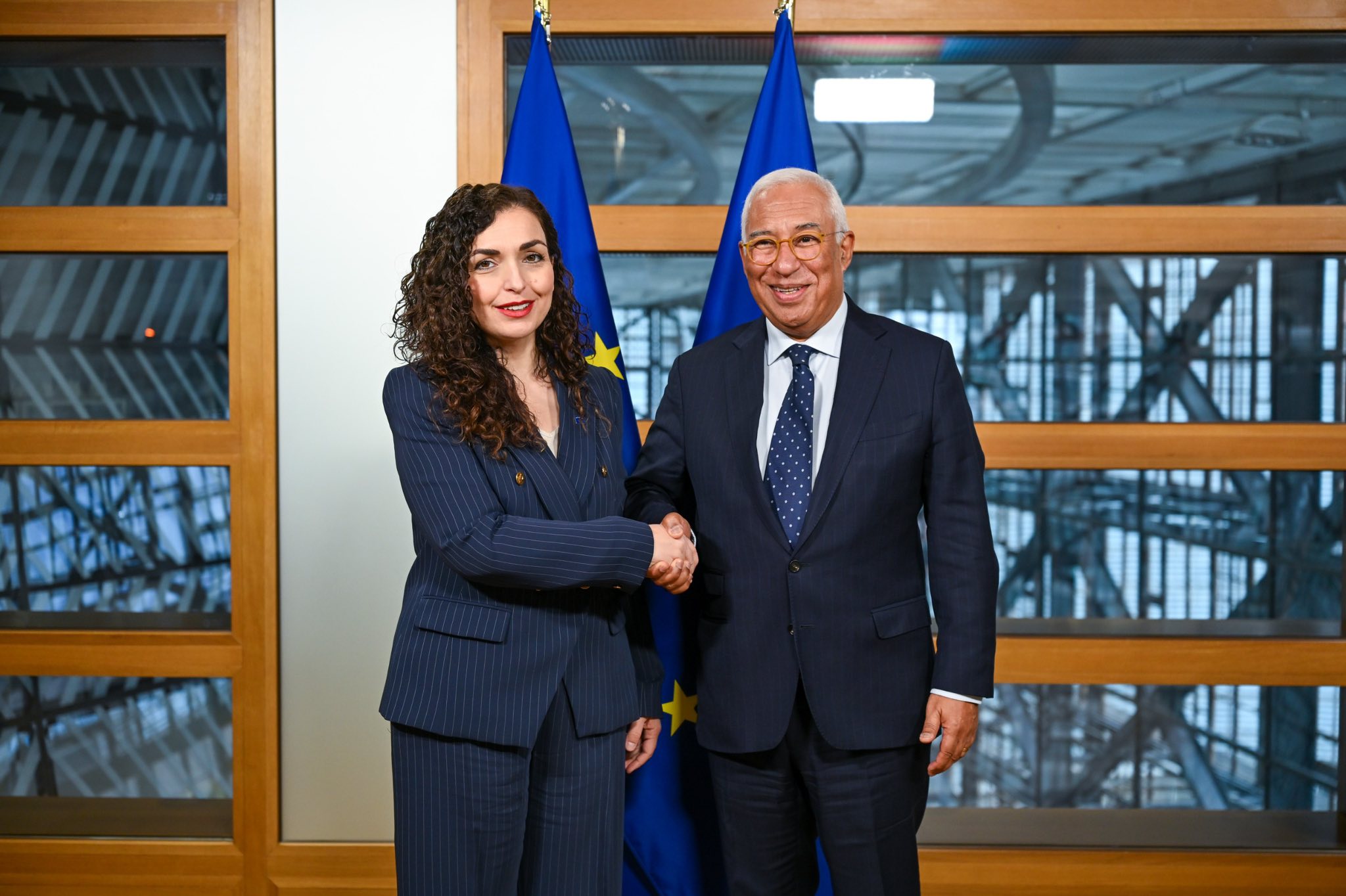
<h6><strong>Eduardo González</strong></h6> <h4><strong>The President of Kosovo, Vjosa Osmani, expressed her hope on Wednesday, December 17, in Brussels, that her country will have the “support of all member states” to obtain “candidate status for accession to the European Union.” Spain is one of the five EU member states that have not yet recognized the independence of the former Serbian territory.</strong></h4> Osmani made these statements after meeting with the President of the European Council, António Costa, and the EU High Representative for Foreign Affairs and Security Policy, Kaja Kallas, within the framework of the EU-Western Balkans Summit, in which European leaders addressed the status of the candidacies of the countries aspiring to join the European Union and in which the President of the Government, Pedro Sánchez, defended a Europe that integrates the Western Balkans in the future “in consistency with European foreign policy and values”, because the enlargement represents “an ambitious investment in terms of stability, prosperity, peace and security”. “We hope that, as soon as possible, we will have the support of all member states so that Kosovo, on its own merits, can obtain candidate status for accession to the European Union,” the Kosovar President stated, as quoted on the Presidency's website, after meeting with Costa. “I thanked the High Representative for her continued support for Kosovo’s European integration,” he declared after her meeting with Kaja Kallas. Speaking to Euronews ahead of the summit, Vjosa Osmani stated that, “if a merit-based criterion were applied,” her country would already have candidate status, “but it is complicated because of five countries that do not recognize us.” “We hope they understand that if Kosovo becomes part of the Union, not only would the Kosovar people benefit, but it would also be strategically important for the entire continent,” she added. Kosovo unilaterally declared its independence from Serbia on February 17, 2008. More than 110 United Nations countries have already recognized Kosovo as a state, including 22 European Union countries. Spain, Spain, one of the five EU member states that do not recognize Kosovo (along with Greece, Cyprus, Slovakia, and Romania), has stated that it will only grant recognition once Serbia and Kosovo reach an agreement. Spain has maintained this position from the outset to avoid the repercussions that accepting a unilateral declaration of independence could have on the Catalan conflict. In the summer of 2022, Pedro Sánchez, during a tour of the Western Balkans (which included Albania and Serbia), reaffirmed Spain's opposition to Kosovo's unilateral independence, after his Albanian counterpart defended the territorial sovereignty of this Albanian-majority territory. Sánchez affirmed that Spain "has been and will continue to stand with Serbia" in this matter. Kosovo. In January 2024, Foreign Minister José Manuel Albares asserted that Spain's recognition of Kosovo's passport was solely in response to an EU decision and did not represent a change in the Spanish government's long-standing opposition to the unilateral declaration of independence of the former Serbian province.