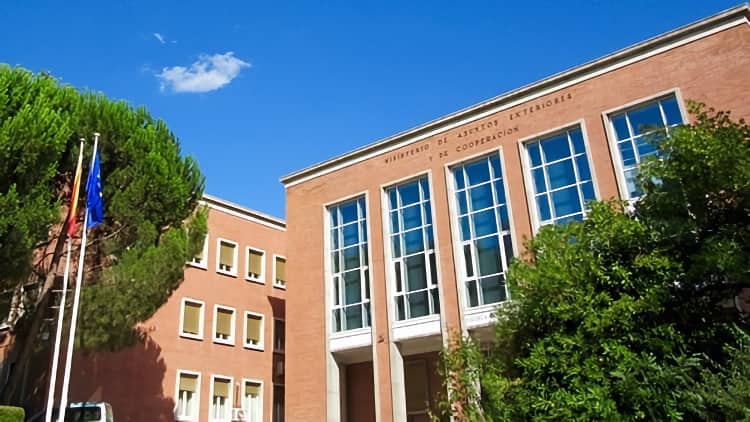
<h6><strong>Eduardo González</strong></h6> <h4><strong>The Ministry of Foreign Affairs has announced the selection process for entry into the Diplomatic Service through the general open access system. A total of 36 positions have been announced, four of which are reserved for people with disabilities.</strong></h4> According to the announcement, signed on December 5th by the Undersecretary of Foreign Affairs, Xavier Martí Martí, and published this Monday, December 15th, in the Official State Gazette (BOE), applicants must be Spanish citizens and hold a university degree. The call for applications, according to the Official State Gazette (BOE), “will take into account the principle of equal treatment between women and men with regard to access to public employment, in accordance with Article 14 of the Spanish Constitution, Organic Law 3/2007 of March 22, for the effective equality of women and men, as well as the Council of Ministers Agreement of October 7, 2025, which approves the Fourth Plan for Gender Equality in the General State Administration and in Public Bodies linked to or dependent on it.” Indeed, the most recent competitive examination for entry into the Diplomatic Service (corresponding to the 77th class) registered more women than men for the first time in history, as reported last July. The first graduating class with more women than men was the LXXIV (2022-2023), with 21 women and 14 men, and the second was the 2024-2025 class (LXXVI), with a total of 17 women and 11 men. The first graduating class with equal numbers of men and women was the previous one, the LXXIII, with 17 men and 17 women. “At the Ministry of Foreign Affairs, we want to democratize access to the diplomatic service and make it accessible to all of you,” declared Foreign Minister José Manuel Albares on Monday in a video posted on social media. Therefore, on the Ministry's and the Diplomatic School's websites, in addition to all the necessary information, candidates will be able to find free study materials and “also a system of study aids,” he added. At the beginning of last November, the Ministry of Foreign Affairs published the fifth call for applications for its aid program to prepare for the competitive examinations for the Diplomatic Service. Its main objective, as stated that day by José Manuel Albares, is to help any aspiring diplomat access these exams “regardless of their place of residence or economic status. The program was created in 2020 to provide participants with the basic training necessary to prepare for the examinations for entry into the Diplomatic Service: multiple-choice tests, English and French language courses, essay writing, and topic presentations. The intention to “democratize” access to the Diplomatic Service, proposed by Albares practically since he took office in July 2021, is related to the widespread belief that many of those who pass the competitive examination are relatives of diplomats. Although it doesn't entirely reflect reality, it is very common to see familiar surnames repeated, and some of these candidates have the advantage of having lived abroad with their families and being fluent in one of the languages required for the competitive examination. In any case, preparing for the competitive examinations for the Diplomatic Service is expensive, especially for those who don't live in Madrid, who have to cover the costs of relocation and living in the Spanish capital, sometimes for three or four years.