
Carlos Uriarte Sánchez
Professor of Law and President of Paneuropa Spain

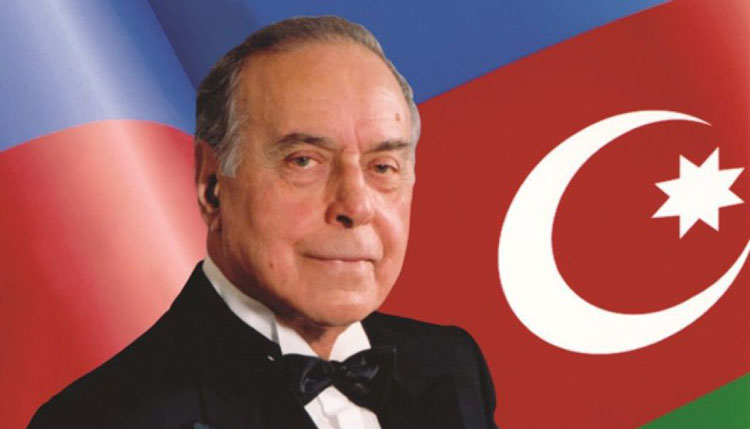
Heydar Aliyev died on December 12, 2003, in Cleveland. This year marks the 22nd anniversary of his death. Today, history remembers him as the father of modern Azerbaijan. He guided the country with intelligence, prioritizing the guarantee of its sovereignty and the liberation of occupied territories, developing a balanced foreign policy and a sound energy policy. Historical milestones such as the “Contract of the Century,” the construction of the Baku-Tbilisi-Ceyhan (BTC) oil pipeline, and the TANAP (Trans-Anatolian) and TAP (Trans-Adriatic) gas pipelines, within the framework of energy partnerships between Azerbaijan and Western companies, marked significant achievements. He led the country through a difficult period and successfully laid the foundations for the new Azerbaijan.
Today, Azerbaijan is resolutely pursuing lasting peace and has become a key player in the normalization process in the region, continuing to exert active regional influence as a middle power. Since 2020, the country has been particularly strengthened by the restoration of its sovereignty and territorial integrity. The Washington Peace Summit held on August 8, as well as the signing of the Tripartite Joint Declaration and other important documents, are currently being implemented. The closure of the OSCE Minsk Process structures has been completed, signifying international recognition of the new post-conflict reality in the region. These are very important developments. The parliamentary elections in Armenia are scheduled for June 7, 2026. Following these elections, a constitutional reform referendum is planned, which would redefine the organization of the state, potentially including significant modifications to governance, the institutional structure, or those that contribute to achieving peace with Azerbaijan.
Azerbaijan has also been developing an effective energy policy focused on hydrocarbons, transforming the country into a hub for energy and transport routes between Central Asia, the Caspian region, and the Black Sea. Azerbaijan plays a key role in logistical, energy, and transport interconnections between Central Asia, the South Caucasus, the Middle East, and Europe. In this regard, the main energy corridors between Central Asia and Europe via Azerbaijan are the Baku-Tbilisi-Ceyhan (BTC) oil pipeline and the South Caucasus Pipeline (SCP). /BTE), that is, Baku-Tbilisi-Erzurum; the Southern Gas Corridor (SGC), which is a set of strategic gas pipelines that carry Azerbaijani gas to Europe: the SCP (Azerbaijan-Georgia-Turkey), the TANAP (Trans-Anatolian Pipeline), and the TAP (Trans Adriatic Pipeline, which crosses Turkey-Greece-Albania-Italy). Interconnecting Central Asian gas (especially from Turkmenistan) through the potential Trans-Caspian Pipeline (TCP) is also under study. All of this represents a clear alternative to Russian gas.
Furthermore, due to its geographical location, Azerbaijan is at the crossroads of Eurasia and is a strategic link in Eurasian connectivity, leading to increased cooperation with Europe through traditional and green energy corridors. This is a consequence of the existence of transport corridors between Central Asia and Europe that pass through Azerbaijan, making the country a hub. Essential logistics on these routes with European countries include the Trans-Caspian International Transport Route (TITR), a strategic trade route between China and Europe (China-Kazakhstan-Caspian Sea-Azerbaijan-Georgia-Turkey-Europe). It helps bypass the Russian route and is faster than the traditional maritime route through Suez; the Baku-Tbilisi-Kars Railway (BTK); and the Port of Alat (Baku International Sea Trade Port), Azerbaijan’s main logistics hub, facilitating traffic between the Kazakh ports of Aktau and Kuryk, as well as the Turkmen port of Türkmenbasy. Azerbaijan also has special economic zones, such as the Alat Free Zone (AFEZ), to attract investment, manufacturing, and re-export.
In short, Azerbaijan is a vital energy and trade bridge between the oil- and gas-rich Central Asian countries (Kazakhstan, Turkmenistan and Uzbekistan) and the European Union at a key moment when Europe seeks to diversify its energy sources and logistics routes. Therefore, the Caspian region is thus becoming a distinct corridor to counter Russian or maritime routes. We must remember Azerbaijan’s membership in important regional cooperation and integration processes (the Central Asian Community, which Azerbaijan recently joined along with Kazakhstan, Uzbekistan, Kyrgyzstan, Tajikistan, and Turkmenistan). Azerbaijan is already participating in the “C6” (Common Six) and the Organization of Turkic States (OTS).
At the same time, Azerbaijan is also undergoing a diversification process to reduce its dependence on gas and oil. To this end, it is investing in other sectors such as agriculture and agribusiness, tourism, manufacturing and processing, information and communication technologies (ICT and the digital sector), transportation, logistics and trade, renewable energy, and community services, as well as economic and social development (affordable housing, financial services, and vocational training).
Furthermore, Azerbaijan plays a central role as a regional stabilizer. It has emerged as a middle power not only in the South Caucasus, but its diplomacy also plays a significant mediating role between Turkey and Israel. Azerbaijan and Israel share a common sense of identity, a shared cultural, linguistic, and religious unity, which could be summarized by the phrase attributed to Heydar Aliyev: “one nation, two states.” Relations with Israel are characterized by a strategic alliance based on military, energy (Azerbaijan supplies Israel with approximately 40% of its oil), and intelligence cooperation, marked by strong interdependence: Azerbaijan provides energy and a strategic location, while Israel contributes technology, weapons, and political support. This relationship has a significant geopolitical component: both countries collaborate on regional security, particularly given Azerbaijan’s proximity to Iran. Therefore, these are positive relations for both countries and play a key role in the geopolitical balance of the South Caucasus and the Middle East. On the other hand, regarding the relationship between Azerbaijan and Iran: it operates within a framework of pragmatic cooperation (it’s worth remembering that there is a significant Azerbaijani population, comprising around 20% of the Iranian population). Cultural, economic, and historical ties have traditionally served as a foundation for maintaining a channel of dialogue, despite occasional political disagreements; it’s worth noting that numerous Azerbaijani and Persian poets and writers shared language and traditions. In 2025, there appears to have been a pragmatic willingness on both sides to cooperate based on economic and cultural interests, overcoming incidents such as the one in January 2023 at the Azerbaijani embassy in Tehran. Furthermore, the close cooperation between Azerbaijan and Israel, particularly in intelligence matters, generates some distrust among Iranian authorities. Iran, a traditional ally of Armenia, seems to prefer maintaining a pragmatic profile with respect to Azerbaijan due to the new geopolitical landscape, despite its friendships with Western countries and Israel. For all these reasons, Azerbaijan could play an important mediating role between the Jewish state and the greater Shiite state.
Currently, under the leadership and supervision of President Ilham Aliyev, Foreign Minister Jeyhun Bayramov, along with the rest of the ministry’s diplomats, is focusing efforts on consolidating Azerbaijan’s position as a stabilizing force in the region. Peace, regional connectivity, economic security, and sustainable development are the top priorities on the country’s future diplomatic agenda.
Following the successes of COP-29 held in Baku, Azerbaijan will host World Environment Day and the thirteenth session of the World Urban Forum (WUF13) in 2026. These two global platforms will combine sustainable urbanization, sustainable housing, clean energy infrastructure, and the mobilization of funds to combat climate change under the banner of regional and global responsibility. In this way, Azerbaijan demonstrates its firm commitment to working with the rest of the international community in various formats and platforms at a time when international cooperation requires greater trust and effectiveness.
In conclusion, given the emerging new global system, whose final configuration is currently unpredictable due to increasing complexities and a multipolar international context, collaboration with Azerbaijan in numerous strategic areas is more necessary than ever, as the country is increasingly contributing to Europe’s energy security. The Azerbaijan of December 12, 2025, is not the same as it was twenty-two years ago when he passed away, nor is it the same as the one he encountered in 1993 when he first assumed the presidency. However, the foundations upon which the new Azerbaijan was built, as well as the guiding principles of its policy, remain present and continue to inspire President Ilham Aliyev and the new generation of leaders.