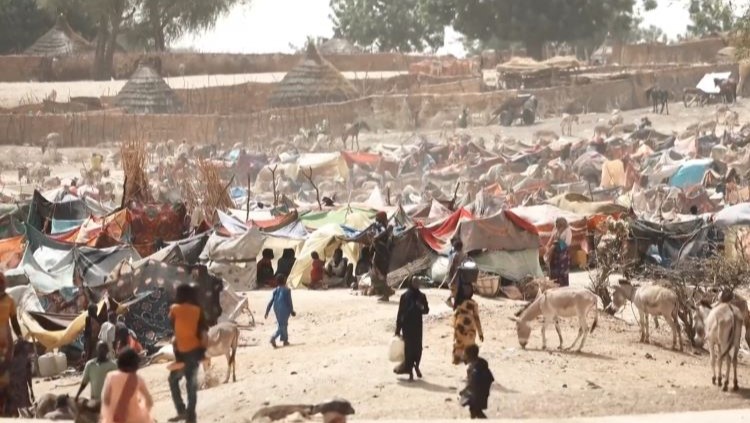
<h6><strong>Eduardo González</strong></h6> <h4><strong>The Socialist Parliamentary Group has urged the Government to “strongly condemn the ethnic atrocities perpetrated by the combatants in the Sudanese civil war,” which include “summary executions, massacres, rapes, attacks against humanitarian workers, looting, kidnappings, and forced displacements.”</strong></h4> In a non-binding motion registered on November 26 for debate in the Congress plenary session, the Socialist Group warns that, “after more than a year and a half of clashes between the Sudanese Armed Forces (SAF) and the Rapid Support Forces (RSF), the country is mired in one of the worst humanitarian crises in the world.” “The violence, mass displacement, and collapse of basic services have pushed millions of people already living in extreme conditions to the breaking point,” it continues. The “main victim” of this situation, they denounce, “is the civilian population, who once again, amidst the chaos and devastation caused by the dramatic conflict between the SAF and the RSF, have had to abandon their homes to try to escape the violence of the combatants, torture, sexual violence, and ethnic cleansing.” “If we don’t take measures to prevent this, history will repeat itself, and we risk reliving the genocide suffered two decades ago,” they add. The PSOE also warns that, according to reports from the Office of the UN High Commissioner for Human Rights, “thousands of cases of sexual and gender-based violence have been documented, used as a weapon of war by both sides for the purposes of ethnic humiliation and forced displacement.” Furthermore, “hunger, caused and exacerbated by this new armed conflict, is spreading throughout the country,” the Socialist Group continues. “The UN and the European Union estimate that 24.6 million people are suffering from acute food insecurity and warn of a possible widespread famine if humanitarian access is not restored,” it adds. Another consequence of this third civil war in Sudan is “a new displacement crisis, the largest in the world, with especially devastating effects on women and girls,” the PSOE asserts. According to OCHA, 9.9 million people are internally displaced, and the total number of displaced persons within and outside the country exceeds 14 million. “53% of displaced persons are women, and 90% of refugees in neighboring countries—Egypt, Chad, South Sudan, Ethiopia, and Uganda—are women and children,” the text warns. “Given the gravity of the situation, it must be remembered that all parties to the conflict are responsible for the protection of civilians,” the PSOE reiterates. “Both the Sudanese Armed Forces (SAF) and the Rapid Support Forces (RSF) made clear commitments in the Jeddah Declaration (May 2023) to respect international humanitarian law and human rights,” and “the UN Security Council and the Office of the UN High Commissioner for Human Rights continue to urge accountability and compliance with these obligations,” it concludes. Therefore, the non-binding resolution urges the Government to “strongly condemn the ethnically motivated atrocities perpetrated by the combatants in Sudan’s civil war, including summary executions, massacres, rape, attacks against humanitarian workers, looting, kidnappings, and forced displacement,” and to “support the humanitarian organizations—both local and international—that are working tirelessly and under extremely challenging conditions to provide assistance to the people of Sudan.” The text also advocates for the initiation of negotiations and mediation initiatives leading to an immediate cessation of hostilities and calls for a humanitarian pause from the warring parties to guarantee “immediate, safe, unconditional, and non-discriminatory humanitarian access to people in need.” The PSOE also believes that the parties must cooperate with the independent international fact-finding mission for Sudan, “regardless of the rank and affiliation of the perpetrators of the violations, thus responding to the need for accountability for violations of international law and international human rights law, in accordance with international standards,” and insists on the need to “reaffirm the sovereignty, unity, and territorial integrity of Sudan” and to “urge all foreign actors to cease providing military support to the parties and refrain from any action that exacerbates tensions and fuels the conflict.”