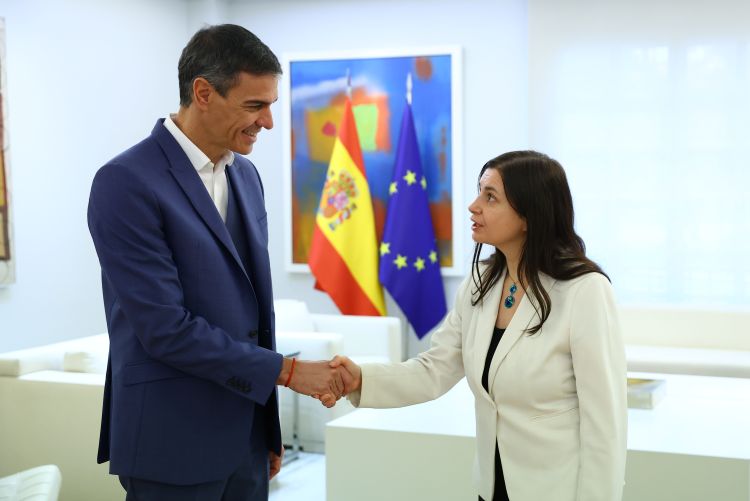
<h6><strong>Eduardo González</strong></h6> <h4><strong>The Prime Minister, Pedro Sánchez, met this Friday, December 5, with the President of the General Council of Spanish Citizenship Abroad, Violeta Alonso Peláez, to whom he highlighted the modernization of services provided through the Consular Digitalization Plan.</strong></h4> The objective of the meeting, according to a press release from Moncloa, was to address “improvements in services for Spanish citizens abroad.” In particular, Prime Minister Sánchez emphasized “the progress made both in strengthening in-person services at consulates and in modernizing service delivery thanks to the Consular Digitalization Plan, access to the upcoming electronic headquarters, and the launch of new applications,” the same source added. Violeta Alonso was received the previous day by the Minister of Foreign Affairs, José Manuel Albares, with whom he discussed “progress in consular digitization, the new consulates, and the increase in staff to meet the needs of the Democratic Memory Law,” as the Minister wrote on social media. Last June, Albares announced, during the presentation of the 2024 Consular Report, that the Government invested 115 million euros last year in the consular digitization process, with particular attention to the Consular Digitization Plan, which will allow for the implementation of a new electronic headquarters. In addition, at the beginning of July, the Ministry completed the implementation of the DICIREG digital Civil Registry in all Spanish diplomatic missions abroad. The rollout of DICIREG, an electronic platform that allows for the transition from traditional physical paper records to a single, fully digitized Civil Registry for all of Spain and for consular offices, was carried out in coordination and collaboration with the Ministry of the Presidency. Following the presentation of the Consular Report, the Association of Spanish Diplomats (ADE) acknowledged that both DICIREG and the Consular Digitization Plan will be, in the future, “useful tools for improving service to citizens.” However, it warned that these “new systems—which require extensive training and additional tasks to transition from paper to digital (digitization, cancellation of registry entries, etc.)—are being implemented in the worst possible scenario, marked by excessive workloads and staff shortages.” “Therefore, the implementation of a consular digitization process does not eliminate the urgent need for a substantial increase in consular staff,” it added. Furthermore, the deadline for applying for Spanish nationality under the 2022 Democratic Memory Law, which was processed by Spanish consular offices in various countries, expired on October 22. The affected associations have called for a new law of this kind without time limits, and Violeta Alonso herself warned that, “not only is it necessary, but it is essential to have a definitive law so that these benefits are permanent and also cover some situations that have not been addressed in this law.”