
Eduardo González
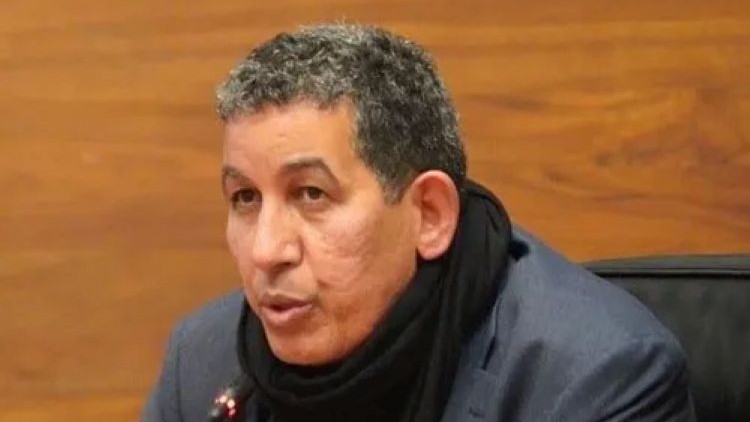
The Polisario Front representative in Spain, Abdulah Arabi, has warned the Spanish government that “if it does not put a stop to Morocco’s expansionist ambitions, once the occupation of Western Sahara is consolidated, the next target will be the Canary Islands.”
Arabi made these statements in a Polisario Front press release issued on the occasion of the thirteenth High-Level Meeting (HLM) between Spain and Morocco, which took place this Thursday, December 4, in Madrid.
According to Abdulah Arabi, “it has been confirmed, as the Polisario Front repeatedly warned, that Morocco’s sole objective was to subordinate bilateral relations with Spain to its position regarding Western Sahara,” he asserted.
“This led the Prime Minister (Pedro Sánchez) to dismantle, in March 2022, the greatest consensus on Spanish foreign policy to date,” veering “towards a foreign policy contrary to Human Rights and the most basic principles of International Law,” he continued. “Almost four years after that letter was sent, Morocco continues to dictate the pace and direction of relations, which should be questioned to what extent they are strategic for Spain,” he warned.
“It is worth remembering, with regard to Spain, that despite its attempt to evade responsibility through the Madrid Tripartite Agreements, whose 50th anniversary was recently commemorated, it remains the administering power of the territory,” Arabi asserted. “Today, Spain continues to manage the airspace over Western Sahara,” he reminded.
“The people of Western Sahara continue to resist the occupation and its consequences half a century later, and therefore, unfortunately, have enough experience to be able to warn Spain with good reason that, if it does not put a stop to Morocco’s expansionist ambitions, once the occupation of Western Sahara is consolidated, the next target will be the Canary Islands,” he concluded.
The High-Level Meeting and the UN Resolution
The High-Level Meeting was chaired by Pedro Sánchez and the Prime Minister of Morocco, Aziz Akhannouch, and included the participation of the Minister of Foreign Affairs, José Manuel Albares, and other members of the Government, all from the PSOE (Spanish Socialist Workers’ Party).
This was the second high-level meeting since Pedro Sánchez’s surprising decision to endorse Morocco’s autonomy plan for Western Sahara “as the most serious, credible, and realistic basis for resolving this dispute,” a “historic shift” that was rejected by the rest of the parliamentary spectrum, including the government partners, and which allowed them to overcome a very serious diplomatic crisis with Rabat.
In protest against that decision, the ministers from Unidas Podemos boycotted the previous Higher Assembly of the European Union (RAN), held in Rabat in February 2023, and the same has happened this time with the current junior partner in the coalition government, Sumar, which has also strongly criticized Sánchez and Albares’s policy on Western Sahara.
In the joint declaration adopted this Thursday at the Higher National Assembly in Madrid, Spain reiterates “Spain’s position on the Western Sahara issue, expressed in the Joint Declaration of April 7, 2022” and, therefore, “welcomes the adoption of United Nations Security Council Resolution 2797 of October 31, 2025, which supports negotiations on Western Sahara “based on Morocco’s proposal for autonomy with a view to achieving a just, lasting and acceptable solution to the dispute for all parties,” and underlines that “genuine autonomy under Moroccan sovereignty could be the most feasible solution.”
Indeed, Morocco could invoke this UN resolution to achieve two of its main objectives in its standoff with Spain: complete control of Sahrawi airspace and the expansion of maritime boundaries and, consequently, of submarine exploration.
On the one hand, Spain has managed the airspace of Western Sahara since 1976 (in its capacity as Western Sahara is considered a “non-self-governing territory pending decolonization,” according to the UN, by mandate of the International Civil Aviation Organization (ICAO). However, the territory’s airports are controlled by Morocco, which has militarily occupied the former Spanish colony since 1975. According to Moroccan government sources, the Security Council resolution could legitimize Rabat’s claim to control the airspace.
Meanwhile, Spain has requested the UN to extend its maritime zone to 350 nautical miles. However, if Western Sahara is considered part of Morocco, the maritime boundary would have to start from the coast of the former Spanish territory, which would allow for the inclusion of some of the Canary Islands’ waters within Morocco’s jurisdiction.